
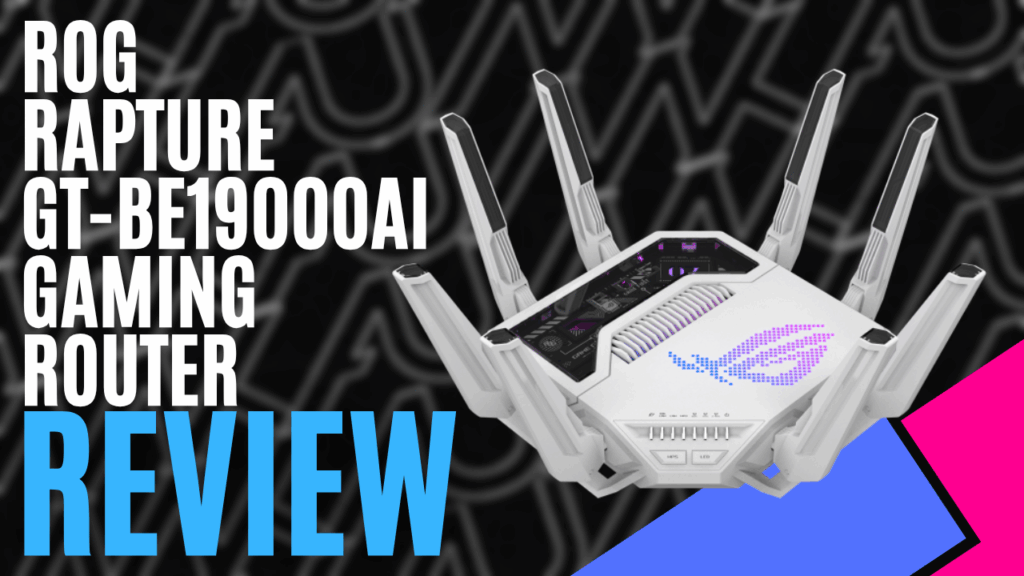
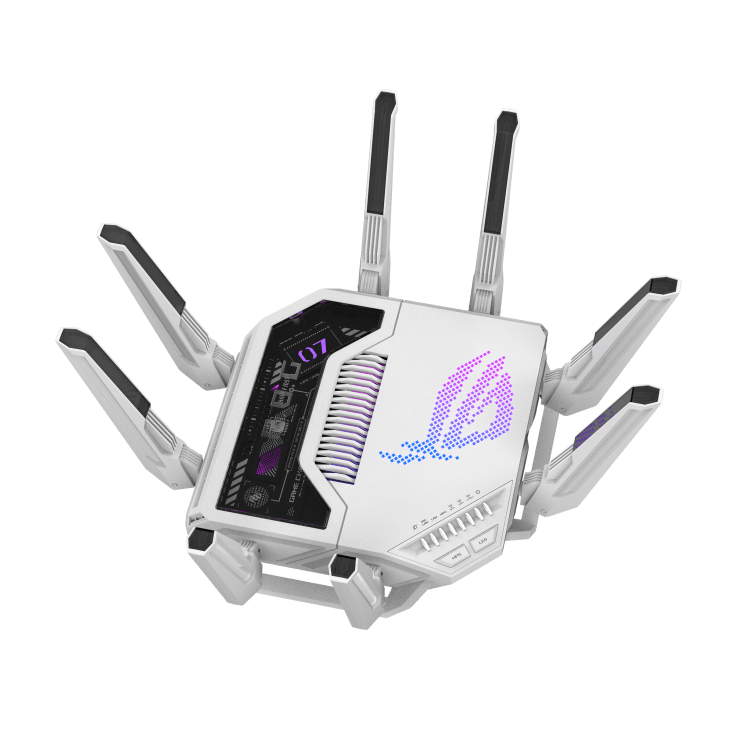
The ASUS ROG Rapture GT-BE19000AI Gaming Router feels less like a standard home networking device and more like something pulled straight from a sci-fi command centre. Between the massive chassis, aggressive ROG styling, glowing RGB logo, and eight towering antennas, there’s no hiding who this router is aimed at. Thankfully, underneath all the gamer-focused presentation sits some genuinely impressive technology that pushes well beyond what most current routers are capable of.
At the centre of the ASUS ROG Rapture GT-BE19000AI Gaming Router is WiFi 7 support, delivering a combined tri-band throughput of up to 19Gbps across the 2.4GHz, 5GHz, and 6GHz bands. That alone is enough to place it among the fastest consumer routers currently available, but ASUS has also packed in support for 320MHz channels and 4096-QAM, allowing significantly higher data throughput and lower latency than previous WiFi generations.
Of course, raw speed numbers only matter if they translate into real-world performance, and thankfully, they do. Multi-Link Operation allows compatible devices to intelligently combine or switch between wireless bands to maintain stable connections under load, resulting in smoother streaming, lower latency during online gaming, and far less network congestion when multiple devices are active simultaneously. Even with gaming PCs, consoles, smart home devices, streaming services, and downloads all competing for bandwidth, the router remained consistently responsive.
One of the more unique aspects of the ASUS ROG Rapture GT-BE19000AI Gaming Router is its dedicated AI Core. ASUS refers to it as the world’s first AI gaming router, and while that initially sounds like pure marketing language, there’s actually quite a bit happening behind the scenes.
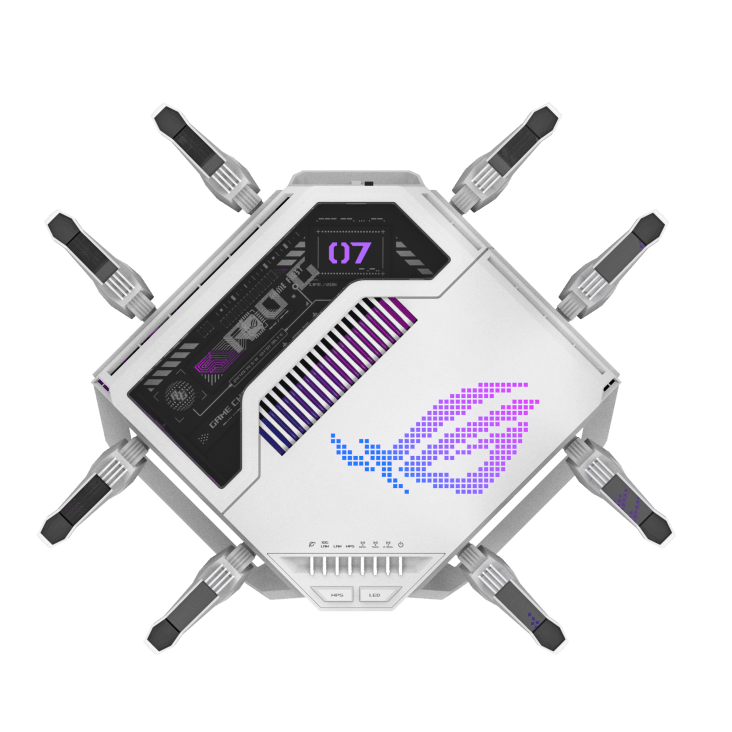
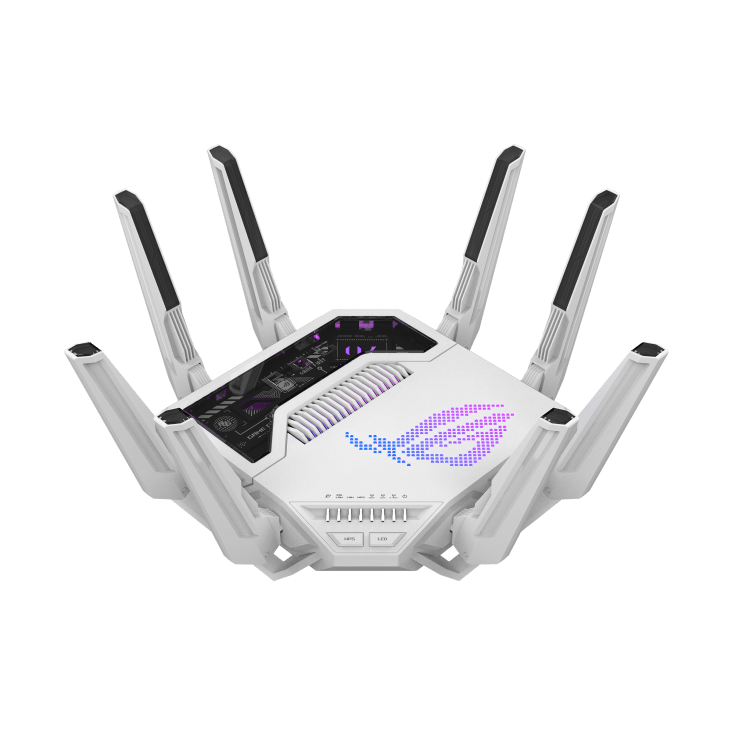
Alongside the router’s 2.6GHz quad-core processor, the separate Neural Processing Unit handles AI-enhanced optimisation features independently, allowing the system to intelligently manage traffic, prioritise gaming, manage devices, and maintain network stability without impacting core routing performance.
That AI functionality also opens the door to Docker support, allowing users to run services like Home Assistant or Frigate directly on the router. Although it might be aimed more at advanced users and smart home enthusiasts than at the average household, it does offer surprising flexibility for those who want their router to do more than just act as a wireless access point.
Gaming remains the biggest focus though, and ASUS throws practically every gaming feature imaginable into the mix. The dedicated Gaming Network creates a separate SSID specifically for gaming devices, automatically enabling the router’s triple-level game acceleration features without forcing users to manually configure each device. AI Game Boost then works in the background to dynamically prioritise traffic, while Adaptive QoE continuously monitors network traffic and adjusts priorities in real time, rather than relying on static rules.
The dedicated 10G gaming port is another standout inclusion, automatically prioritising traffic from connected gaming devices with zero setup required. Features like OpenNAT and GTNet further improve online experiences by simplifying port forwarding and optimising routes to game servers based on real-time latency rather than simply choosing the shortest path.
Mobile gaming also receives proper attention, and with the ASUS Router app, Mobile Game Mode can prioritise mobile traffic with a single tap, helping reduce lag spikes during online matches when the rest of the household is hammering the network with streaming or downloads.
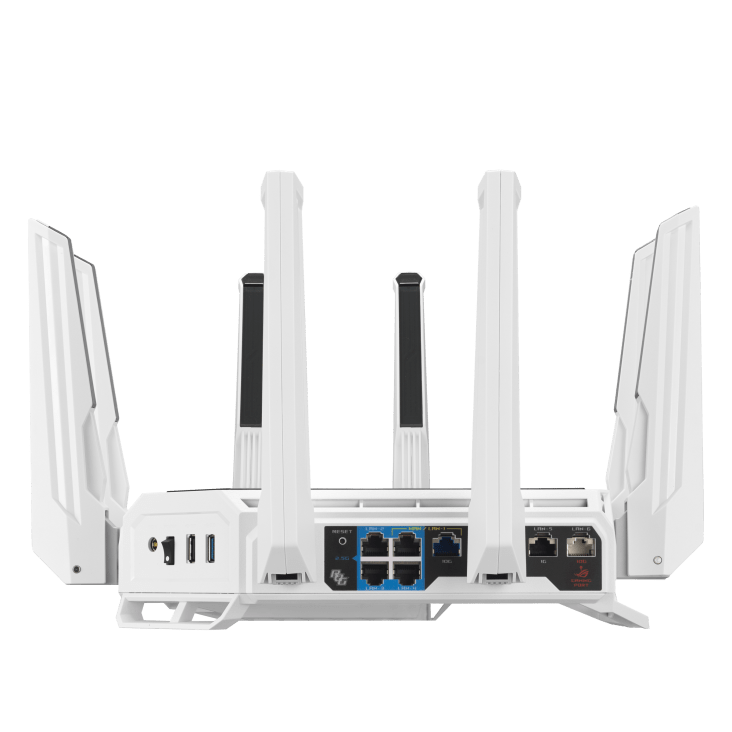
Connectivity is excessive in the best possible way, with the router including dual 10G ports, four 2.5G ports, an additional Gigabit LAN port, dual USB ports, and support for up to 20G link aggregation. Altogether, wired bandwidth can reach up to 31G, which is comfortably beyond what most homes currently need, but it ensures the router feels prepared for future upgrades, multi-gig internet connections, NAS setups, or even home studio environments.
ASUS also deserves credit for making such a feature-heavy router relatively approachable. The ASUSWRT interface remains one of the cleaner router operating systems available, while the ASUS Router mobile app keeps setup and day-to-day management simple enough for less technical users. Features like Guest Network Pro, VLAN support, and separate SSIDs for gaming, VPN, or IoT devices make network segmentation far easier than it sounds.
Security is another strong point, with AiProtection including advertisement blocking, tracker blocking, malicious site protection, parental controls, and intrusion prevention, all without requiring an additional subscription fee. Combined with VPN support, VPN Fusion, and instant secure remote access through Instant Guard, the router offers far more protection than most standard consumer networking gear.
The ASUS ROG Rapture GT-BE19000AI Gaming Router is undeniably excessive, but that is also exactly the point. ASUS has built a router designed not only for modern gaming and streaming, but for increasingly connected homes packed with smart devices, high-bandwidth workloads, and demanding users. Between the AI-powered optimisation tools, blisteringly fast WiFi 7 performance, enormous wired capacity, and genuinely useful gaming features, this is one of the most ambitious consumer routers currently available.

The Good
- Dedicated AI Core adds useful optimisation features
- Strong security suite included without subscription fees
- Exceptional WiFi 7 performance with tri-band speeds up to 19Gbps
- Outstanding wired connectivity with dual 10G ports and multiple 2.5G ports
- Practical gaming-focused features
The Bad
- Physically very large and difficult to hide
- More advanced features may be overkill for average households







 SuBZeRO2K
 Spotify
 Anchor
 iTunes