Something fundamental shifted in the media industry over the last three years – and most people missed it while it was happening.
It was not a single announcement. It was not one landmark acquisition or one viral cultural moment that changed everything overnight. It was quieter and more deliberate than that. It was Netflix adding a games tab to its app and saying nothing about it in the press release. It was Disney buying studios between Marvel film releases as though it were routine housekeeping. It was Amazon doubling down on Twitch while simultaneously laying cloud infrastructure across three continents. It was Apple bundling interactive experiences into a subscription service alongside music and television as though the three had always been equal pillars of human leisure.
By 2026, the question inside every major boardroom is no longer “should we enter gaming?” It is “how far behind are we – and can we catch up?”
The audience did not wait for an invitation. Players – a word that no longer meaningfully describes a niche demographic but rather the majority of connected people under 45 on earth – migrated toward interactive media years ago. The film studios, streaming giants, sports leagues and music labels are now sprinting toward an audience that already made its choice, already built its habits, and already decided where it wants to spend its time and money.
This is the story of why every major brand is becoming a interactive brand in 2026. And why those that do not move decisively may not recognise themselves by the end of the decade.
The Gamification of Everything – A New Language of Engagement
The most revealing sign that interactive media has fundamentally won the culture wars is not found inside a game at all.
It is found in the platforms that have nothing to do with traditional titles – and yet look, feel and function exactly like them.
Across digital leisure, sports and online platforms, those that once competed purely on content volume have reached a collective realisation that content alone no longer holds a modern audience. What holds an audience is progression. Reward. The feeling that showing up today builds toward something that showing up yesterday started.
These principles were invented by designers and refined over forty years of player behaviour research. Today they are being implemented across every corner of digital life.
Nowhere is this shift more visible than on the Casino Godz site – an online casino and sportsbook built entirely around a Norse mythology universe – Valhalla, Odin, runes, frost. The platform combines a 10,000+ game library with a full sportsbook, a daily Wheel of Fate spin, VIP progression tiers and weekly cashback rewards. What sets it apart from traditional casino platforms is its structure – functioning far closer to an RPG advancement system in the way it rewards loyalty, progression and daily engagement. The Norse aesthetic speaks directly to a generation raised on God of War and Assassin’s Creed Valhalla – the same audience that MKAU Gaming covers every day.
The Numbers That Rewrote Corporate Strategy
The statistics that triggered the great gold rush toward interactive media are not ambiguous.
According to Statista’s Global Video Game Industry report, the global market generated an estimated $522.5 billion in revenue in 2025 – a figure that comfortably surpasses the global box office and recorded music industry combined. Mobile alone contributed $126 billion of that total, delivered through devices already sitting in the pockets of virtually every human being on earth. The Big Three – Nintendo, Microsoft and Sony – generated more than $45 billion in combined quarterly revenue, with the PlayStation 5 having sold nearly 90 million units worldwide. And despite a post-pandemic normalisation of deal flow, the industry still recorded 172 mergers and acquisitions in 2025 alone as companies from every sector scrambled to own pieces of the ecosystem before consolidation made entry prohibitively expensive.
These are not niche numbers. These are numbers that reshape five-year strategies at the board level.
But raw revenue is only half the story. What truly accelerated every major brand’s pivot was something more structural – the realisation, backed by years of engagement data, that interactive experiences hold audiences longer, more deeply and more loyally than any passive format ever designed. A viewer finishes a film and leaves. A player finishes a session and plans the next one. That difference – seemingly small – is the entire competitive battleground of the modern attention economy.
The same data reveals a tension that makes the story even more compelling from a business perspective. Despite record-breaking revenues, the growth rate is projected to slow. Titles have become more expensive. Publishers have anchored enormous audiences inside live service products – Fortnite, Genshin Impact, Destiny 2 – that demand hundreds of hours of investment and make players deeply reluctant to switch to anything new. Studios have become more risk-averse as a result. The industry is, in some measurable ways, becoming more conservative precisely as outside brands are pouring in with aggressive ambitions.
The irony is sharp: every major brand is chasing this space at the exact moment its explosive organic growth is beginning to plateau. Whether they are arriving at the right moment or just missing the peak will define the next chapter of media history.
The Pioneers Who Proved the Model Works
Netflix made the first major move that the broader industry took seriously. Quietly launching Netflix Games as a benefit included within existing subscriptions, the platform initially attracted scepticism – a streaming service making titles felt like a distraction from its core identity. The calculus looks entirely different now. Subscribers who engage with Netflix Games show measurably higher retention rates, and the studio acquisition strategy that followed has given Netflix a growing catalogue delivered without additional cost to the consumer. The friction is gone. The habit is forming.
Disney’s approach has been broader and more structurally ambitious. Rather than building a separate product, Disney has been systematically weaving interactive experiences into the fabric of its existing ecosystems. The Marvel universe, Star Wars interactive experiences and the deliberate integration of Disney IP into major platforms represent a strategy built around a single insight: characters and worlds are worth more as interactive experiences than as films alone. A child who grows up playing as a Marvel character develops a relationship with that IP that no two-hour film can replicate or compete with.
Amazon’s journey has been the most publicly turbulent. New World’s stumble, Crucible’s withdrawal, the slow and expensive build of Luna cloud – Amazon has learned its lessons at considerable cost and considerable visibility. But the underlying asset – Twitch – remains one of the most strategically valuable properties in modern media, sitting at the precise intersection of live content, community and commerce that no competitor has successfully replicated. Amazon has not won this space yet. But it has not retreated either, and the infrastructure it continues to build suggests the ambition remains fully intact.
Apple, characteristically, chose a different angle entirely. Apple Arcade reframed interactive experiences not as a destination but as a quality standard – a curated subscription that placed titles alongside music and film as equal expressions of creative culture. The message was quiet and deliberate: this belongs here, at the premium end, alongside the things we have always called art.
Why This Is the Most Valuable Audience on Earth
Beyond engagement metrics, the industry’s migration toward interactive media is driven by something brand strategists have understood for years: players are the most brand-loyal audience in any leisure vertical.
Affinity developed through interactive experiences is significantly deeper and more durable than affinity developed through passive media. A player who spends forty hours inside a game world does not just remember the experience – they associate it with some of the most engaged, rewarding and emotionally resonant moments of their leisure life. That association is worth considerably more than a thirty-second advertisement, a product placement in a film, or a sponsored social media post that disappears inside an algorithm within hours of being published.
This is why the 172 acquisitions recorded in 2025 were not all about buying studios in the traditional sense. Many were about buying access – to engaged audiences, to proprietary behavioural data, and to the design talent capable of building experiences that hold people in ways that traditional media formats were never architected to achieve.
The audience that grew up with a controller in hand is now the primary consumer demographic for every leisure category on earth. Reaching them where they already live – inside interactive experiences, inside gamified ecosystems, inside worlds they have chosen to inhabit – is no longer a marketing strategy. It is the only strategy that reliably works at scale.
What This Means for the People Who Actually Play
For players, the large-scale migration of major brands into their space carries genuine promise alongside legitimate risk.
The promise is straightforward. More investment means higher production values, larger budgets, more ambitious experiences and greater mainstream cultural legitimacy for a medium that spent decades being dismissed as a lesser form of human expression. When Disney, Netflix and Amazon compete seriously for this audience, the quality ceiling rises for everyone inside the ecosystem.
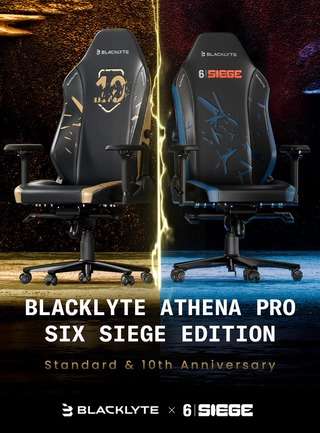
The evidence is already appearing at a local level too. Warner Bros. Pictures and DC Studios recently demonstrated exactly this instinct in Australia and New Zealand – partnering with ASUS ROG on a gaming gear promotion tied directly to the Supergirl film release. Rather than a cinema ticket giveaway or a streaming tie-in, one of Hollywood’s biggest studios chose hardware as its primary promotional vehicle – ROG headsets, keyboards, mice and chairs – to reach the audience it most wanted to connect with. That is not a coincidence. That is a strategy.
The risk is subtler but worth monitoring carefully. As conglomerates bring their IP, their scale and their data-driven content strategies into this space, the creative independence that has historically defined the medium’s greatest achievements comes under real pressure. The experiences that shaped culture – built from genuine creative vision rather than franchise extension logic – came from studios operating with a degree of freedom that large corporations do not naturally preserve after acquisition.
The indie countermovement is already responding with purpose. As major brands flood in from every direction, smaller studios are doubling down on the creative risks and original ideas that conglomerates cannot afford to take. The tension between corporate scale and independent creativity will define the next decade as much as any technological shift or market trend currently on the horizon.
The Verdict
This did not become the world’s largest leisure industry by accident. It got there because it understood, earlier and more completely than any other medium, how human beings actually want to engage – actively, progressively, with a genuine sense of agency, ownership and reward that passive formats were never designed to provide.
Every brand now entering the space is making the same fundamental acknowledgement: the future of audience engagement was designed by developers, and every other vertical is only now catching up.
The $522.5 billion market is not the destination. It is the proof of concept.
The real competition – the one every major brand on earth has now entered – is for the most engaged, most loyal and most valuable audience in the history of human leisure.
And that competition has barely started.



 SuBZeRO2K
 Spotify
 Anchor
 iTunes