
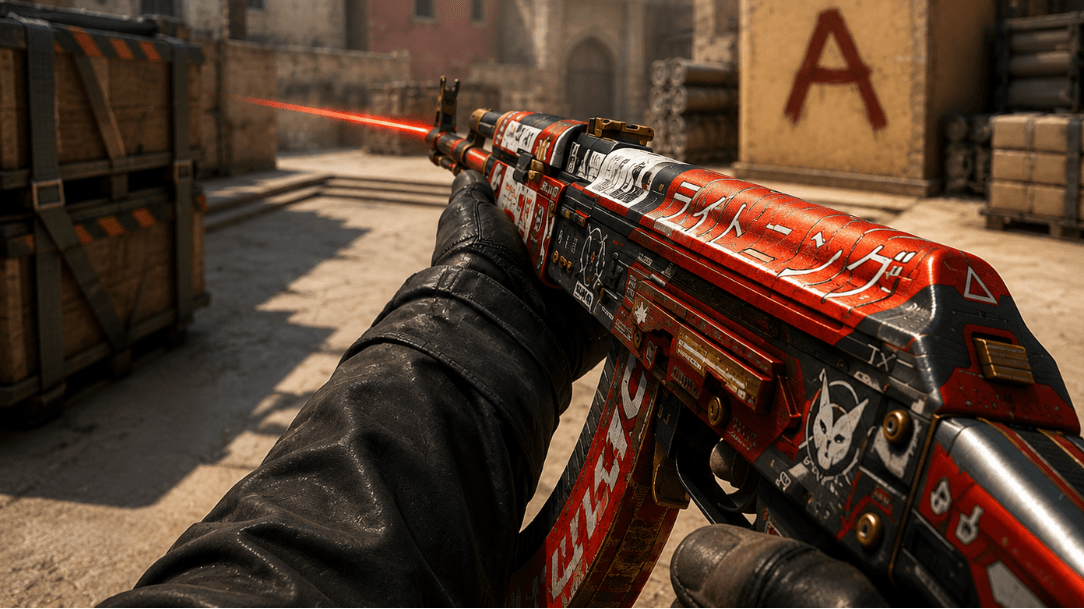
If you quit playing somewhere around 2022 and just opened Counter-Strike 2 for the first time this year, your reaction was probably some version of “wait, I still have all this?” That’s a common moment. A lot of players assumed the engine switch would wipe their collections, or at least scramble the value of everything they’d built up over a decade of case openings and trades. Neither happened — but the CSGO-to-CS2 transition still changed the skin economy in ways that are worth understanding before you touch your old inventory.
Here’s what actually carried over, what’s shifted since, and what it means for your account if you’re just now getting back into trading.
Your CSGO Skins Are Still There — And They Look Better
When Valve migrated Counter-Strike: Global Offensive to the Source 2 engine in 2023, every skin, knife, glove, sticker, and case in every player’s inventory moved over automatically. Nothing was deleted, nothing was locked behind a paywall, and nothing needed to be manually claimed. If you owned it in CSGO, it’s sitting in your CS2 inventory right now.
What did change was how those items look. Source 2’s lighting and material rendering is a real step up from the old engine, and a lot of finishes — particularly anything with metallic or reflective surfaces, like Case Hardened patterns or Doppler knives — visibly improved. Float values technically carried over the same underlying numbers, but because the new engine renders wear more accurately, some skins that looked rough in CSGO now show noticeably less damage on screen, and vice versa. It’s worth re-inspecting anything you’re planning to sell, since the visual presentation genuinely affects what buyers are willing to pay.
The Migration Didn’t Break the Economy — But 2025 Almost Did
For the first year or two after the switch, the skin economy behaved pretty much like it always had. Trading volume held up, prices tracked the usual patterns around Majors and case releases, and the “engine swap will tank everything” fear turned out to be overblown.
Then, in October 2025, Valve made a change that had a much bigger effect than the migration itself. A new update introduced trade-up contracts that let players convert five Covert-rarity (red) skins directly into a knife or a pair of gloves. Until that point, knives and gloves could only enter the game through case openings at extremely low odds, and that scarcity was baked into their pricing. Overnight, that scarcity model broke. Estimates put the resulting market-wide value loss somewhere in the $2–3 billion range within 48 hours, with some premium knife and glove holdings reportedly losing half or more of their value almost immediately.
It’s a genuinely useful case study if you’re holding legacy CSGO items: supply assumptions that felt permanent for a decade can change with a single patch note.
What’s Changed for Legacy Skins Specifically
The knock-on effects of that update are still shaping the market in 2026, and they land differently depending on what kind of legacy items you’re sitting on.
- Standard knives and gloves are now craftable through trade-ups, which means their supply is no longer tightly controlled by drop rates alone. If your inventory is knife-heavy, don’t assume 2023-era pricing still applies — check current values before you decide whether to hold or move them.
- Discontinued cases and out-of-rotation collections have actually benefited. Since Valve can’t add new supply to a case that’s no longer active, items from retired collections have seen a real bump in demand as traders rotate toward assets that can’t be diluted by future updates.
- Weekly drop rewards got squeezed further in January 2026, when a Valve update quietly removed several collections from the weekly playtime reward pool. Skins that used to be common, low-effort drops suddenly became harder to obtain, and prices on some of those items moved accordingly.
- Rare patterns and tournament stickers have held up best of all, mostly because there’s no mechanical way for Valve to increase their supply after the fact.
None of this means your legacy inventory lost value across the board — it means the value is now distributed differently than it was in CSGO, and it’s worth checking current pricing item by item rather than trusting what you remember from a few years ago.
Trading Legacy Skins in 2026: What’s Actually Different
If the last time you traded was during the CSGO era, a few practical things have changed:
- Trade holds still apply the same way. Items you receive in a trade are locked for seven days regardless of which platform you use — that rule didn’t change with the engine.
- Bot platforms have gotten faster and more reliable. Every major trading site rebuilt its pricing and bot infrastructure around CS2, and most now settle trades in one to two minutes rather than the slower manual processes some sites used in the CSGO days.
- Float and pattern checks matter more. Because the new lighting can make low-float items look noticeably better than their CSGO screenshots suggested, it’s worth re-verifying float and pattern index before trading anything valuable, rather than relying on old memory or outdated listings.
- Security expectations have gone up. Phishing attempts and fake trade bots are still common, so sticking to platforms that use Steam’s official Trade API and verified trade codes matters more than ever if you’re dusting off an account you haven’t touched in years.
If you’re sitting on a legacy inventory and want to consolidate it into current-meta skins, refresh a loadout, or just see what your old items are actually worth today, using a bot-based platform is generally the fastest way to do it — you’re matched against live inventory instantly instead of waiting on a P2P buyer to notice an old listing.
If that’s the route you’re taking, you can trade csgo skins directly and get a current valuation on the spot rather than guessing based on 2023 prices.
Should You Hold or Trade Your Legacy Inventory?
There’s no universal answer here, but a couple of practical rules of thumb are worth keeping in mind:
- If you’re holding standard knives or gloves, understand that the trade-up system means their long-term scarcity story has changed. That doesn’t make them worthless, but it’s a different risk profile than it was two years ago.
- If you’re holding discontinued case items or retired collections, there’s a reasonable argument for patience — that supply genuinely can’t grow, which is the one thing that’s protected value consistently through every update so far.
- If you just want to simplify an old, scattered inventory into fewer, better items, this is a reasonable time to do it, since bot platforms now price legacy items accurately and settle almost instantly.
Final Words
Nothing about the CSGO-to-CS2 switch itself put your old inventory at risk — everything carried over, and most of it looks better than it used to.
The real shifts came afterward, through economy updates that changed how scarcity works for certain item types. If you’re just getting back into the game after a break, the smart move isn’t panic-selling or assuming nothing’s changed — it’s checking current values on what you’re holding and deciding item by item what’s worth keeping.



 SuBZeRO2K
 Spotify
 Anchor
 iTunes