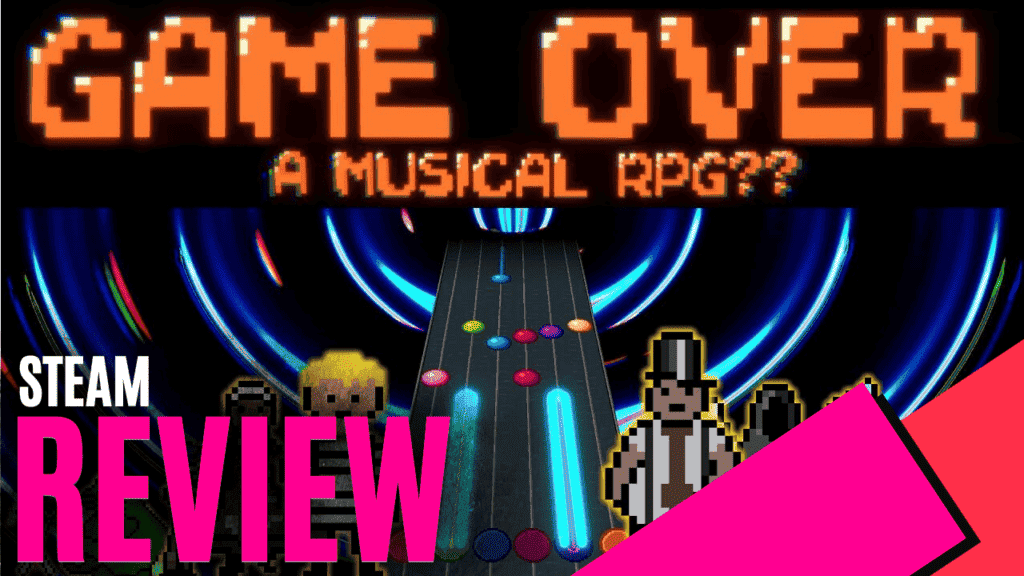
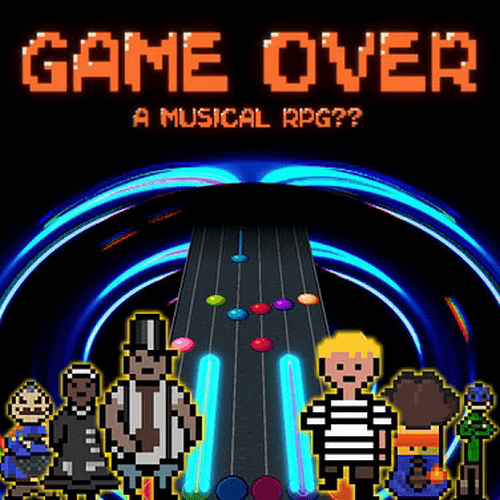
The game beginning when the story ends is not what one expects when booting up an RPG for the first time. I was face-to-face with the “big bad” of ‘Game Over – A Musical RPG?’ within moments of loading into its pixelated fantasy world. Aussie dev, Jake Houston, produced a musical masterpiece in his solo passion project of 5 years’ worth of passion behind, and found plenty of ways to bring the funky and fun consistently.
My first moments as the “hero” saw me in an epic rock battle against an incredibly intimidating dragon. Much to my glee, as a “tutorial boss”, I was able to effectively down him within minutes while learning the guitar-hero-esque battle system. In this world, you don’t beat enemies with physical violence; instead, you beat them with…you guessed it, beats in a sweet musical smackdown. Afterwards, I saved the princess as one does and then experienced the surprisingly low-key aftermath of my hero’s efforts, that is, until things started getting weird.
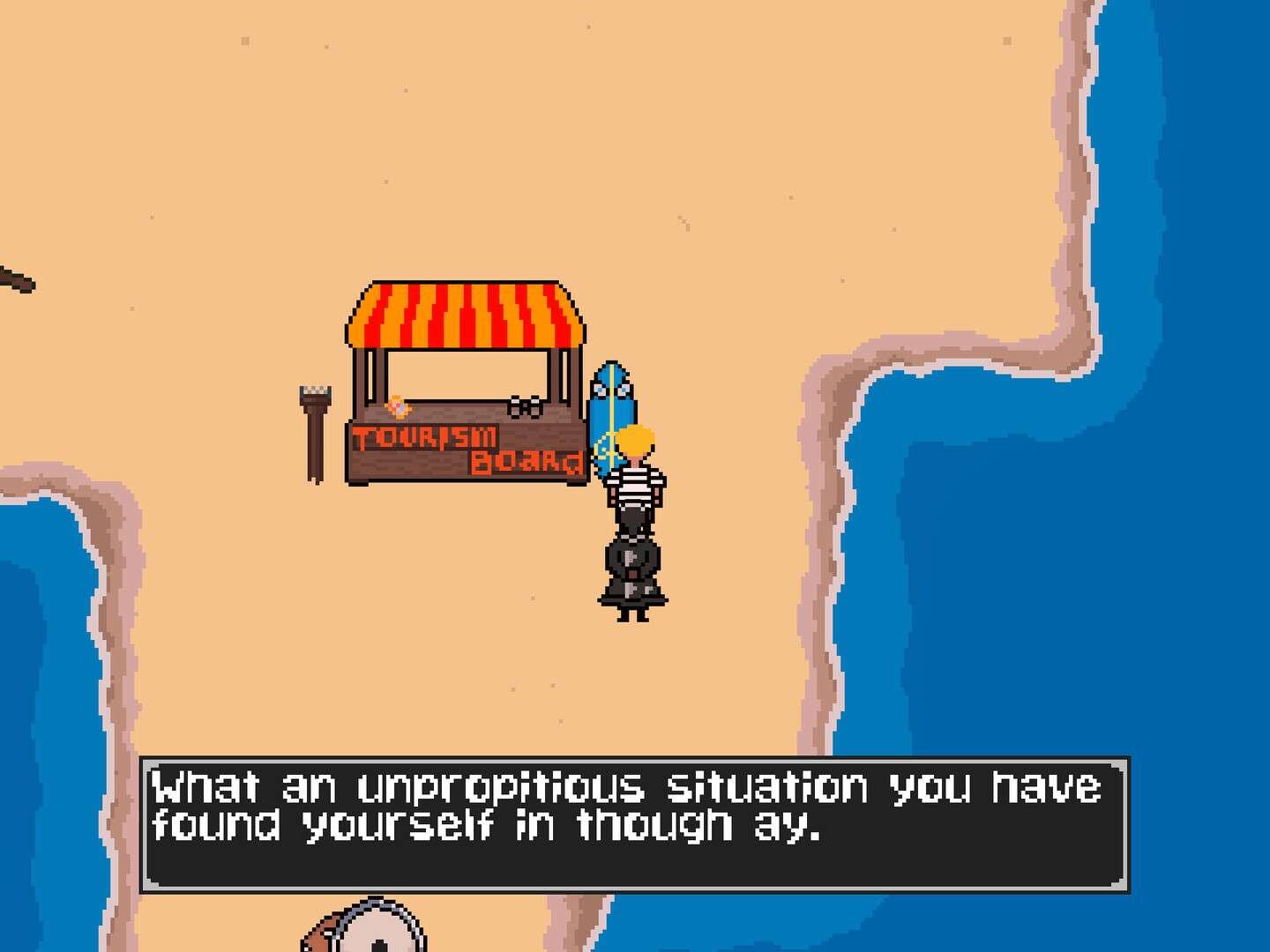
My dude winds up in Stringfield, and I stroll around town. The pixelated graphics had that excellent nostalgia for the good old days of the 80s and early 1990s. Characters are cute and quirky, with most of the population being some variation of anthropomorphic musical instruments, such as a big-chinned sentient violin, who did not appreciate it being pointed out that this is only the stringed-instrument locals of this one town.
There are various zones dedicated to each type of instrument, from the strings of Stringfield to the woodwind harmonies playing from the mouths of the residents of the Windy Woods – these are just the first two areas. The world is jam-packed with charming NPCs – all speaking in their little musical tones, tooting, strumming or bopping along. There’s essentially an entire orchestra in the regions beyond that that adds to the magic.
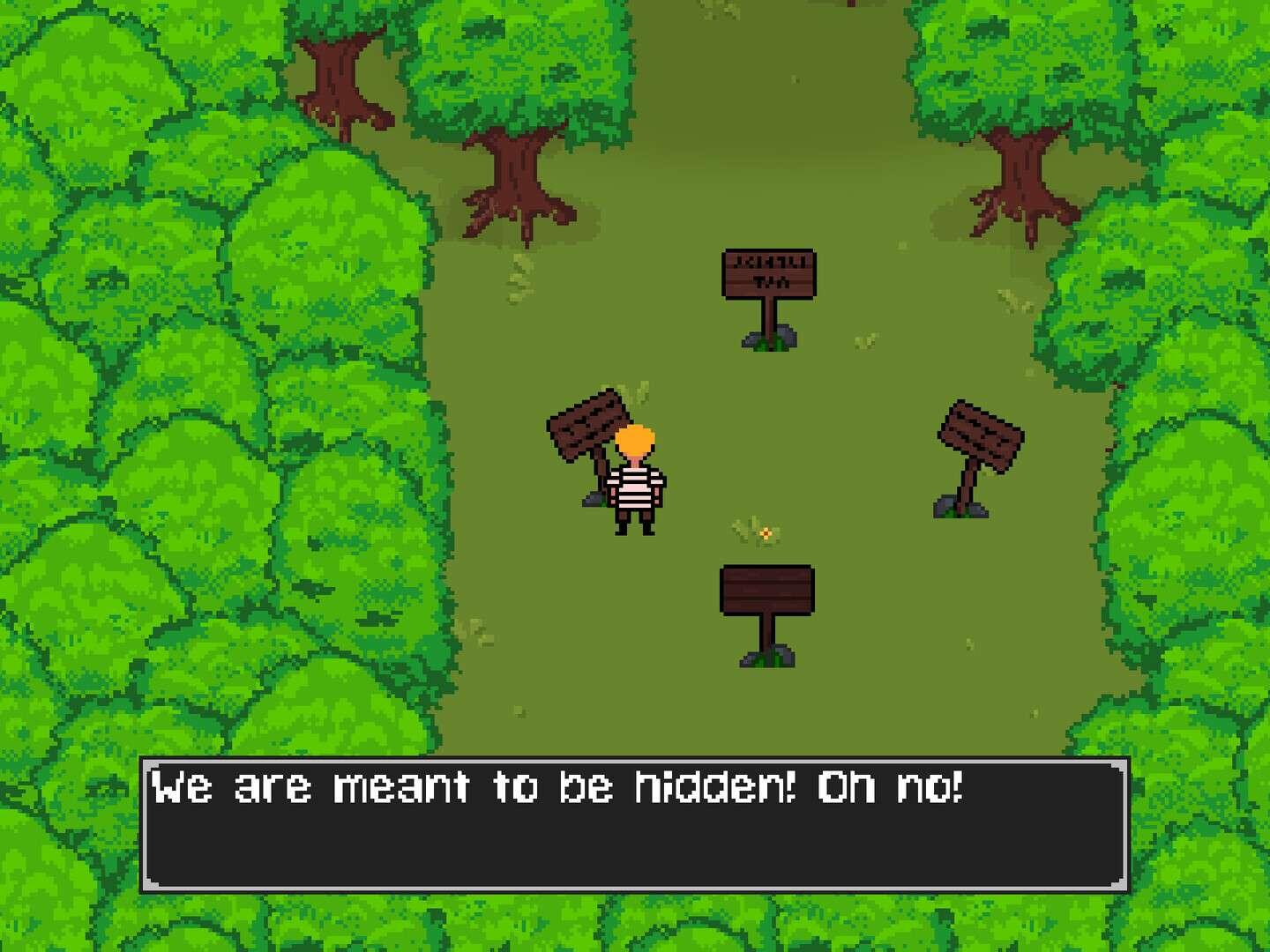
The real impacts of our hero saving the day set a much more significant threat into motion. This is an entirely next-level quest; at some points, I even felt a twinge of fear when events took a turn. The ominous and eerie don’t take too much of the spotlight; the endearing gameplay and script take centre stage.
Gameplay is not limited to epic musical battles; like its inhabitants, there’s a considerable amount of things to see, do, and hear. I found myself completing bizarre tasks for villagers, somewhat challenging rhythm-based platforming, and engaging in “Froghorn Battles,” which resemble another pixellated critter-fighting series—only with 100% frogs. To top it off, a few pattern-recognition-based puzzles exercised my ears and memory.
Of course, what would a musical RPG be without a massive dose of catchy songs to vibe to? No two tunes felt too similar, covering an enormous selection of genres, from classic orchestral pieces, epic rock numbers, take-me-to-church moments, Jazzy numbers, EDM, trip-hop and more. All of which slapped so hard – there wasn’t a dud in the bunch. To top it off, loving nods to popular music and pop culture references brought intense glee to the already hilarious game.
Game Over – A Musical RPG? didn’t go easy on me. Hitting notes on a controller or keyboard with fairly limited lives can result in a loss quickly, and as someone as woefully uncoordinated as I am, this could be my downfall. From the first guitar battle, I was pumped up but unprepared for the hand-eye coordination that musical battles require. Thankfully, “Nigel Mode”, a tribute to the dev’s dad, who also lacks such dexterity, is there for those like us.
This mode auto-plays the music duels for you. While it helped, it took out a relatively large portion of the gameplay rather than just reducing the number of prompts that needed to be hit. Button-mashing is not an option with limited lives, which I burned through within moments of encounters, so Nigel mode ended up being a necessary evil.
Though Nigel mode doesn’t affect platforming sections and puzzles, some skill is needed. It’s much more lenient with unlimited tries, which is a blessing as some can take time to master. With very little in the way of “side quests” rather than a few optional interactions, some standards are here, but Game Over – An RPG Musical? Marches to the beat of its own drum.
The real difficulty is deciding what kind of hero you want to be. Moral choices during dialogue can lead to consequences; sometimes, being good results in something bad or vice versa. It’s tempting to be chaotic, and if you’re not careful, you might tell someone they are ugly, and their sweater makes them look fat or end up with a not-so-heroic title. My protagonist was dubbed “The Bland and Indecisive” after attempting to be as true-neutral as I could be.
My moral compass was somewhat intact, but I am keen to revisit and an absolute monster to prove to the naysayers I’m not a stick in the mud. I got a kick of how the game seemed to know precisely where my immature gamer brain went at every turn, making for some laugh-out-loud results, especially during a particular fill-in-the-blanks scenario.
The game runs gloriously with minimal performance issues, and the graphical or audio noises that seemed off that I did experience were utterly intentional. It may be a tad overwhelming for some eyes and ears in some parts, but overall, it’s a small price to pay for a wonderfully weird few hours.
Game Over – A musical RPG? is an audio-visual feast. I can see this as a chart-topper with indie darlings like Undertale. Jake Houston’s efforts paid off with an experience I’ll be raving about for some time. I’m ready for an encore performance with my second playthrough.

The Good
- Incredible musical moments
- A variety of rhythm, platform and puzzle-based gameplay
- Great world-building and visuals
- Hilarious script and charming characters
The Bad
- Some puzzles can take some time to master
- Nigel mode negates a large portion of gameplay
- Some visual and audio effects may be overload for some players




 SuBZeRO2K
 Spotify
 Anchor
 iTunes