
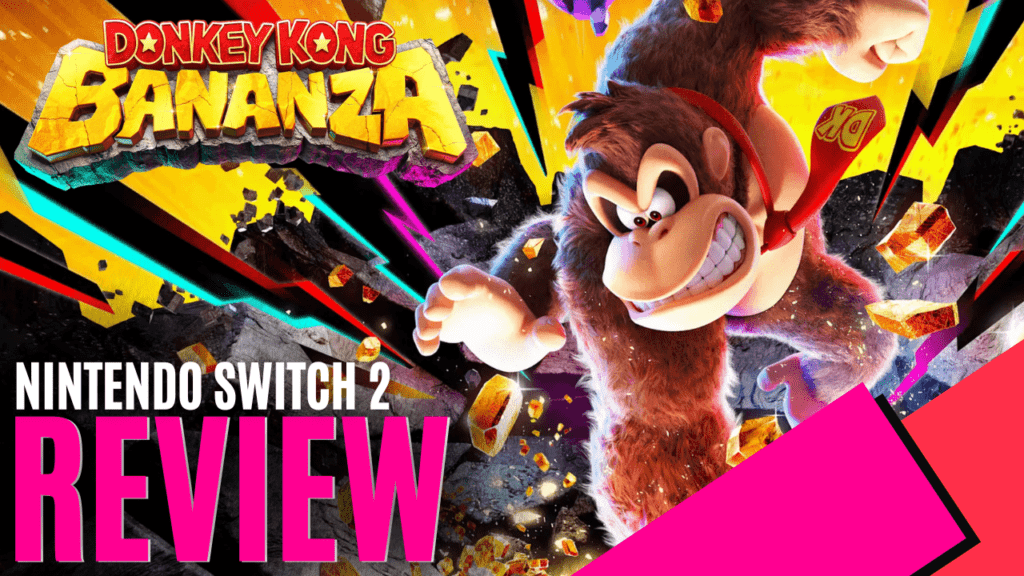
For years, Donkey Kong has lived in the shadow of his platforming peers, occasionally leaping into the spotlight but never quite holding it. That changes now. With Donkey Kong Bananza, Nintendo has created something bold, beautiful, and bananas in the best way possible. This isn’t just DK’s return to 3D, it’s a full-blown reinvention. A chaotic, tactile, destructible, co-op-fueled reinvention that reminds you why this ape was king in the first place.
While digging for the mysterious Banandium Gems, part fruit, part precious stone, on Ingot Isle, Donkey Kong’s hard-earned haul is stolen by the ruthless Void Company. Moments later, he’s sent tumbling into the depths below, as the sinister mining syndicate pushes toward the planet’s core in pursuit of a wish-granting power buried far beneath the surface.
Eager to chase down the villainous trio and reclaim his stolen bananas, DK crosses paths with Pauline, who quickly takes on the role of trusty sidekick. To everyone’s surprise, she discovers that her singing has a unique power; it can aid DK on his journey in some truly unexpected ways.
Together, the duo plunges into a network of sprawling subterranean worlds known as Layers, tracking Void Co. while scooping up leftover Banandium Gems, and unlocking powerful Bananza transformations from ancient underground Elders. Their goal? Beat Void Co. to the core of the planet, and whatever wish-granting force lies waiting there.
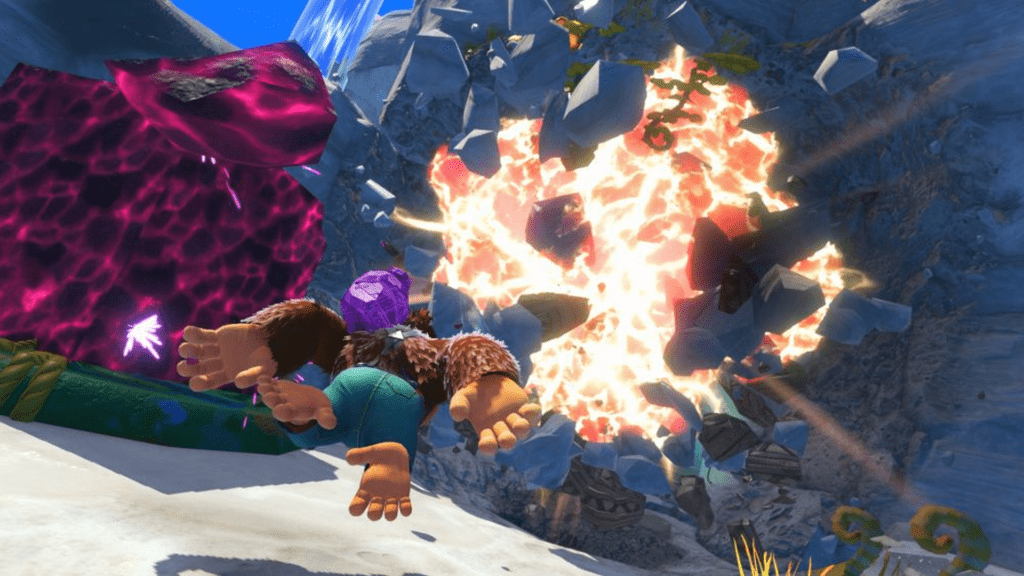
Bananza takes the idea of destructive environments and weaves it into every layer of design. Smashing things isn’t just satisfying, it’s necessary. DK doesn’t solve puzzles with levers or switches; he obliterates them. You’ll break walls to create new paths, collapse bridges to access hidden alcoves, and even solve traversal challenges by literally shaping the level as you go.
However, what makes this mechanic shine is how carefully it is considered. Levels aren’t just playgrounds, they are mazes, filled with secrets that reward observation, not brute force. Some secrets are tucked behind breakable terrain that looks almost ordinary. Others require combo transformations, and Pauline’s sound-based abilities just to access. There’s trust here between designer and player, a shared belief that if you’re paying attention, the world will open up.
Gone are the days of power-ups that felt interchangeable. In Bananza, Donkey Kong’s temporary animal transformations, earned by collecting mystical jungle fruit and activated via Pauline’s songs, feel like tools that fundamentally change how you play.
What’s clever is how flexible these powers are. Some puzzles have multiple solutions depending on which transformation you use. Others tease areas you can’t reach right away, planting the seed for backtracking once you’ve expanded your toolkit.
What could’ve been a basic sidekick role blossoms into something far more. Pauline is fully integrated into both the narrative and the gameplay, particularly in co-op. As a playable partner, she provides melodic attacks, unlocks transformation altars, and manipulates platforms with her singing voice. She’s not there to follow, she’s there to elevate the moment-to-moment play.
Their banter grows more charming over time, and the story subtly builds a rapport that’s more “buddy adventure” than “save the damsel.” It’s low-key some of Nintendo’s best co-op character storytelling to date.
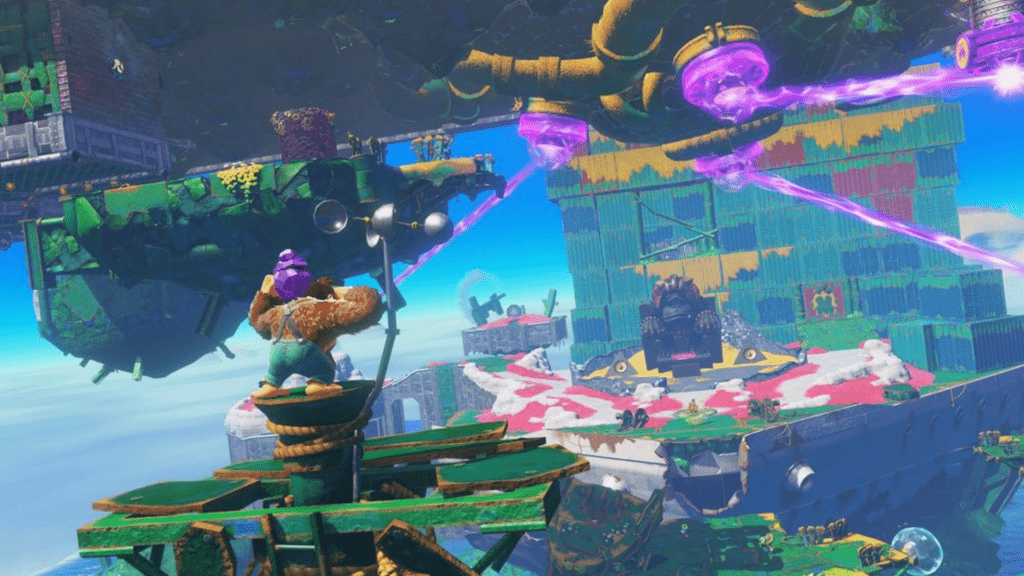
Visually, Bananza is staggering. It might be the best-looking game on the Switch 2 to date. The animation is fluid and full of personality, from DK’s exaggerated windups to Pauline’s elegant swings. Biomes are richly detailed, with living elements, fluttering bugs, shifting foliage, and weather patterns that feel reactive and alive.
You’ll tear through temple ruins, glide over lava-filled caves, climb crystalline mountains, and bounce through neon-lit jungle nightclubs. Each biome introduces new ideas, and rarely does one overstay its welcome.
The score complements this beautifully. Expect funk, tribal percussion, big brass, and vocal harmonies that respond to gameplay. And yes, several tracks remix classic Donkey Kong themes in unexpected ways. It’s a joy to the ears.
Every couple of levels, Bananza dials things up with a big moment. Sometimes it’s a chase through a collapsing jungle rig, other times, it’s a boss fight against a mechanized jungle abomination.
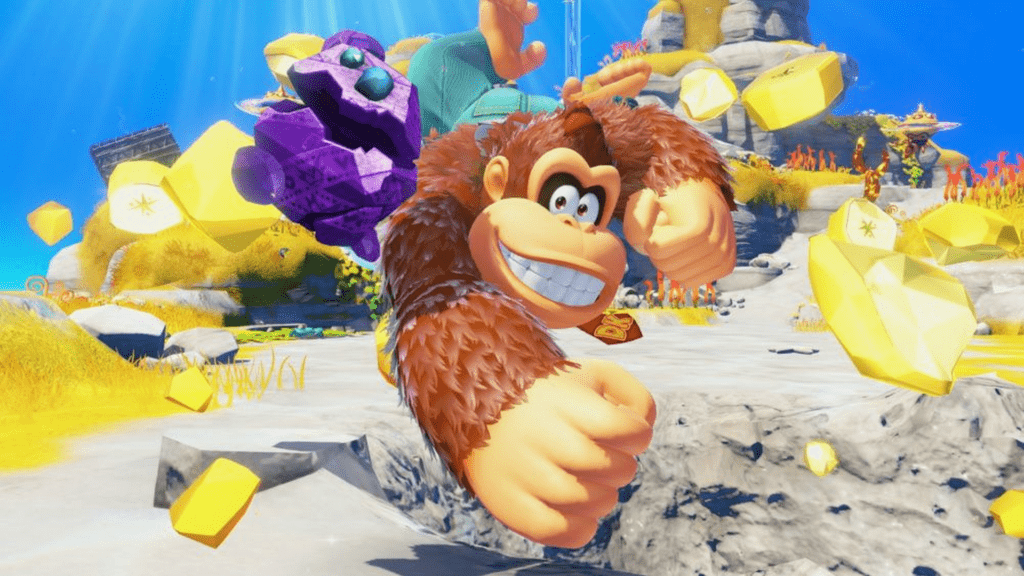
Boss fights are frequent and satisfying, using environment, transformation, and co-op mechanics all at once. They require more than just pattern recognition; they want you to interact with the world around you to turn the tide.
But not everything is perfect in paradise. A few minor issues linger. The dynamic camera, while mostly smart, occasionally locks at awkward angles during 2.5D-to-3D transitions. Additionally, some late-game collectibles are hidden so well that they feel unfair without a guide. A clearer in-game map or a hint system would be helpful. That said, these issues rarely slow you down for long, and the game is generous with checkpoints and re-entry systems.
Donkey Kong Bananza is an evolution, not just for DK, but for 3D platformers in general. It’s bold, unpredictable, and overflowing with ideas. But more than anything, it’s fun. The kind of fun that makes you lean forward on the couch, laugh out loud when a plan works or fails, and keep playing long after you should’ve gone to bed.
Nintendo didn’t just make a great Donkey Kong game. They made a celebration of everything the character could be, and then built it out of wood, stone, music, and joy.
Whether you’re chasing 100% or just barreling through the main path with a co-op buddy, Bananza earns its place as one of the best platformers in years, and a likely Game of the Year contender.

The Good
- Destruction driven exploration that constantly surprises
- Transformations feel meaningful, not gimmick
- Pauline adds heart and gameplay variety
- Gorgeous visuals, smooth animation, and varied biomes
- Set pieces and boss fights are genuinely memorable
- Packed with secrets, replayability, and charm
The Bad
- Camera occasionally misbehave
- Some collectibles are too well hidden for their own good






 SuBZeRO2K
 Spotify
 Anchor
 iTunes