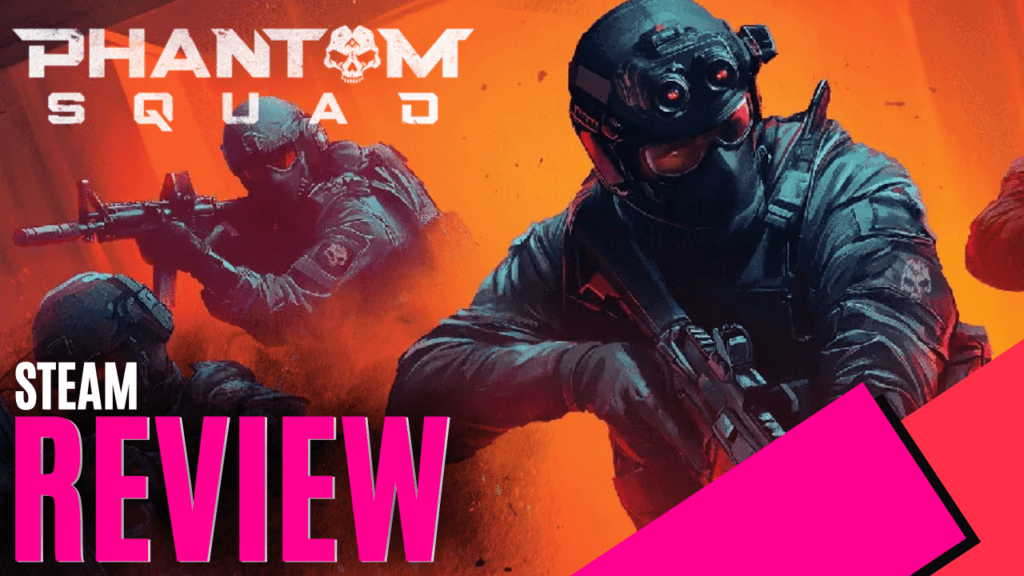
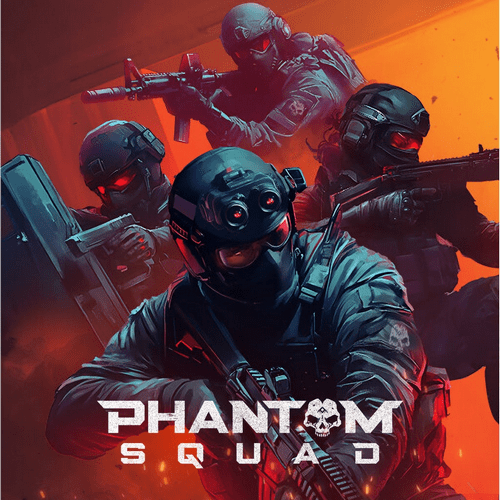
Phantom Squad enters the tactical shooter genre with a promise of tense infiltration missions, sleek squad-based mechanics, and a high-tech modern warfare backdrop. Developed by Ctrl Freak and published by Super Rare Originals, it caters to fans of stealth-heavy gameplay and squad control, offering a hybrid of real-time tactics and third-person action. But does it deliver on its black-ops fantasy, or does it get lost in the fog of war?
At its core, Phantom Squad is a top-down tactical squad-based shooter that places players in control of a four-person elite unit. Missions are structured around infiltration, sabotage, extraction, and occasionally, open combat. The emphasis is on stealth and planning rather than brute force.
Each person in your squad can choose a class to execute for the chosen mission. These range from: Recon (Scout w/Sniper rifle), Breacher (Tank/Shotgun expert), Hacker (Disable cameras, hack drones), and Support (Healer w/smoke grenades). Commands can be issued in-game (as of this writing, there does not appear to be a time delay on how often you can use those commands, so they tend to be a tad spammed in-game via trolling). Regardless of its audio hiccups, once you and your team are in sync, the game makes every role feel critical.
Your approach to the mission is also critical. You can choose to go full on Rambo and assault/run and gun your way through every map and included enemy. Or, live out your spy-genre fantasy by taking the stealth approach. The game leans more towards the stealth approach, offering higher XP rates and occasional hidden intel rewards.
Should you and your team of sleuths be uncovered during your approach, combat is very intense! The game provides cover through in-game objects (e.g., crates, barrels, walls, other rooms, etc.). Revealing your team will test your reflexes, may alert nearby enemies, and quickly force you and your team to replan your strategy.
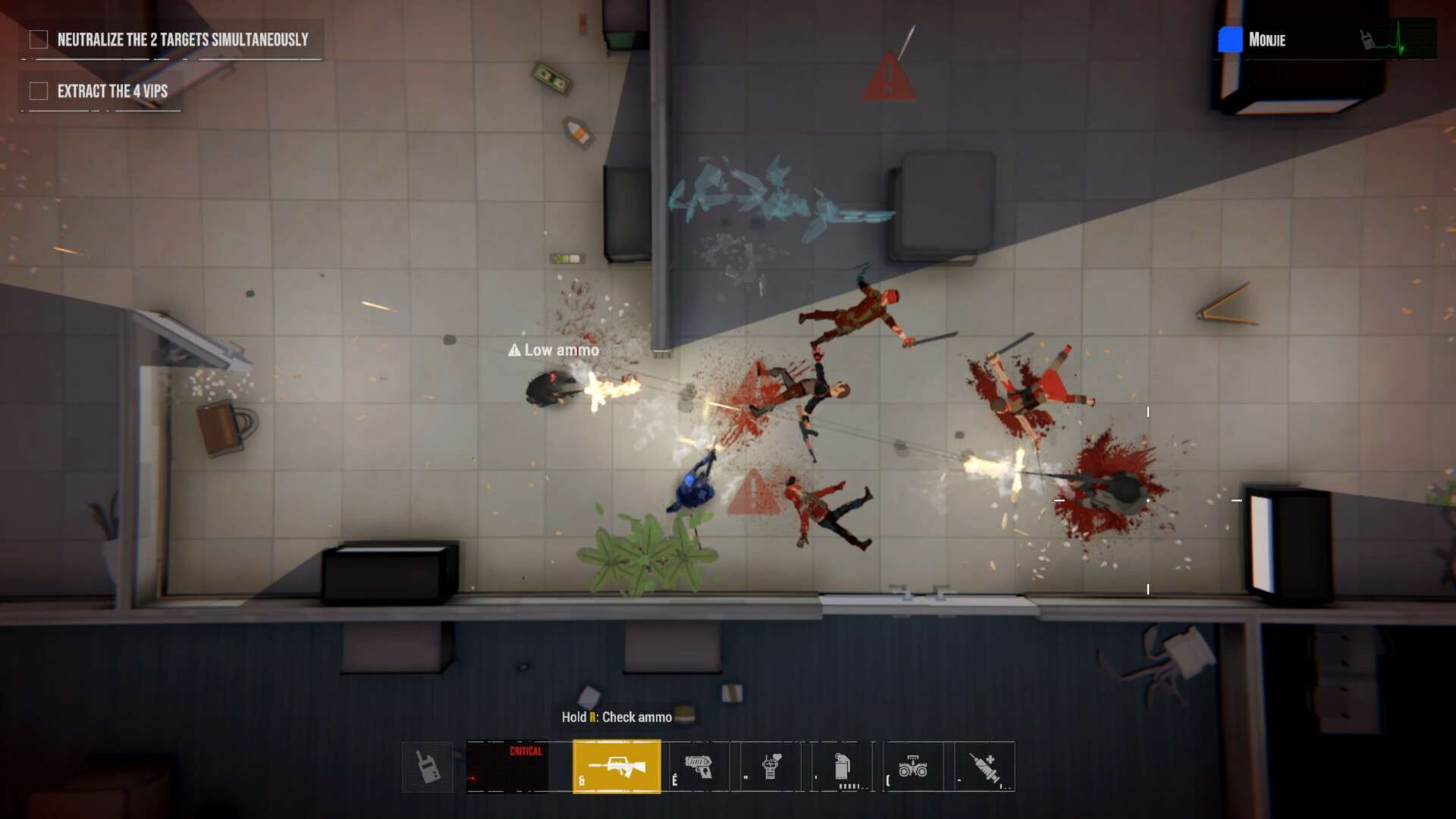
One of Phantom Squad’s unique features is ‘Ghost Pathing’. An in-game mechanic, causing the game to be paused in real time, allowing the player to view enemy patrol points, issue commands, and set wait timers. It’s like programming a SWAT team to execute a choreographed assault. The feature is incredibly useful for late-game missions, turning your run-and-gun mentality into a synchronised offensive blitz.
Your squad can also be upgraded. After completing missions, you return to a home base safe house, allowing you to change your loadout, test out your newly unlocked equipment, and swap roles. The AI is sometimes, how to say, seemingly from another planet in some missions. By that, we mean that, on some occasions, the AI will float or clip through walls, which does ruin the whole ‘element of surprise’ approach. In stating this, the team at Ctrl Freak is heavily active on both Steam and Discord, optimising and squashing any bugs that may appear.
We must also stress that, although this game advertises itself as both single-player and multiplayer, the game’s strength lies in its multiplayer approach. As of this writing, if you choose the single-player option, there are no bots or AI team members to control, leaving you to impersonate ‘John Wick’ and suffer from a lonely post-game experience. Thankfully, via their Discord, Ctrl Freak has set up channels to communicate with other Phantoms to add each other to your Steam friend list and team up together.
Controls are intuitive on both mouse and keyboard, as well as controller, featuring WASD movement, right-click to take cover, and Q/E for leaning, peeking through, opening doors, and interacting with in-game objects. Left click is your go-to for shooting your weapon of choice. Per your chosen loadout, other weapons and items are listed in a clean, easy-to-view toolbar at the bottom of the screen, with numerical numbers assigned to specific weapons/items, allowing for fast-paced inventory switching.
Phantom Squad isn’t chasing photorealism, but its stylised, near-future look serves it well. Environments range from rain-soaked Eastern European cities to minimalist desert bases. Textures are crisp, lighting is dynamic (especially in low-light stealth segments), and character models are distinct, if a little stiff in idle animations.
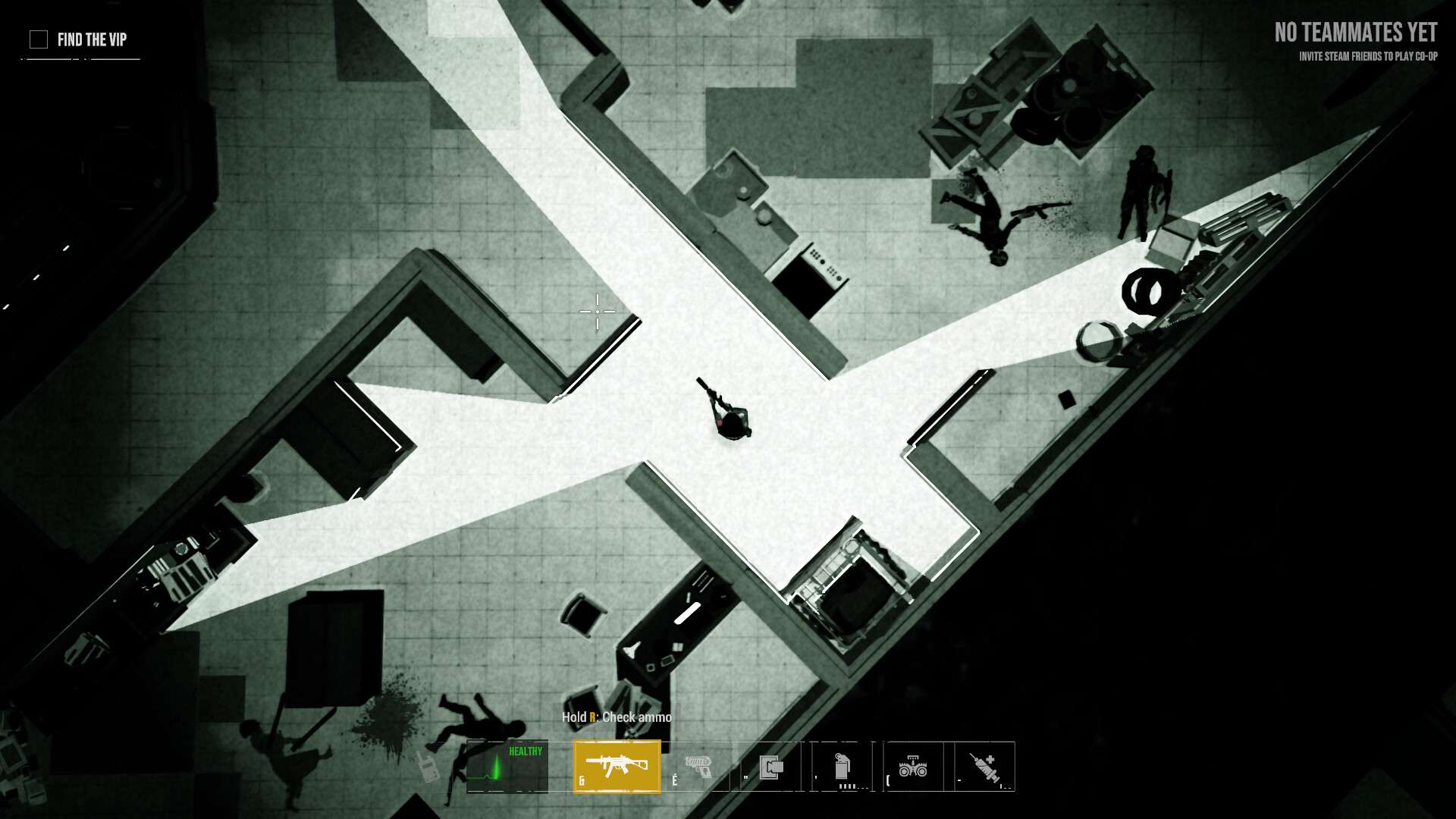
Some of the artwork is reminiscent of the early stick-figure and Newgrounds website flash animation. That’s not to say the game artwork is dated, definitely not. If anything, the chosen art style is a familiar throwback to the days of point-and-click run-and-gun games, which will have you engaged from the get-go.
The UI leans into the high-tech espionage theme, with slick HUD elements and mission briefings that resemble a classified military dossier. Visual storytelling through drones, CCTV feeds, and thermal vision helps immerse you deeper into the covert ops world.
Sound is a key gameplay element in Phantom Squad. The team has spent the time to properly invest in clear SFX. Every footsteps echo differently on concrete versus metal grates, and enemies can be heard murmuring around corners. Silenced weapons have a satisfying pop, while heavier gear has its clunk.
The soundtrack blends minimalist synth with cinematic swells, ramping up during moments of tension without overwhelming the scene. Voice acting is competent but lacks emotional depth. Some dialogue does have a very ‘read from the page’ feeling, without any specific emotional depth, which does hinder certain storyline or mission-based importance.
Phantom Squad is a love letter to fans of stealth and squad tactics. While not groundbreaking, it delivers a satisfying blend of tension, strategy, and action with enough unique features to stand out. With a little more polish, especially in animation and AI, it could become a staple in the genre. As it stands, it’s a solid pick for players who prefer brains over bullets.

The Good
- Deep Tactical Gameplay: Smart command interface and Ghost Pathing system allow layered strategy
- Immersive Audio: Excellent environmental sound design enhances stealth mechanics
- Stylised Graphics: Clean, tech-inspired visuals with moody lighting
- Replayability: Multiple mission approaches, unlockable gear, and permadeath Ironman mode for hardcore players
The Bad
- Stiff Character Animation: Some janky movements break immersion
- Mid-Tier Voice Acting: Functional, but lacks personality or emotional depth
- Occasional AI Bugs: Enemy patrols sometimes clip through walls or freeze
- Limited Multiplayer: Co-op exists but lacks polish compared to single-player




 SuBZeRO2K
 Spotify
 Anchor
 iTunes