
Move over Gwent, there’s a new addictive card game in the world of the Witcher – Reigns: The Witcher by Nerial and Devolver Digital tasks its players to face a whole entirely different beast to Geralt’s usual foe, replacing them with a deck of cards in a game of wit and wiles – an addictive one at that.
CD Projekt Red’s Witcher series has us take on the role of the charming bard, Dandelion, who takes centre stage to weave tales of the Witcher, Geralt, through a series of encounters, with the main adversary being a game of odds. The goal of Dandelion’s musical storytelling is to achieve fame and glory amongst patrons of taverns and witnesses of his performances, but turns out they’re a tough crowd to please.
At the start of a run, the player is dealt three “Inspirations”, wonderfully cute illustrated cards, each adding a condition or effect to the run. It might be something like certain groups being more hostile, being unable to say no to humans, opening an ongoing questline that carries over to future rounds, or a goal to achieve, like aiding a cult or perhaps a troubled troll.
The card draw can make a huge difference, especially when conditions clash with one of the goals but aid another, finding that sweet spot to balance out the needs and wants between man, non-humans, and sorcerers, all while keeping up with monster-slaying – and keeping this fictional Geralt alive – is tough work.
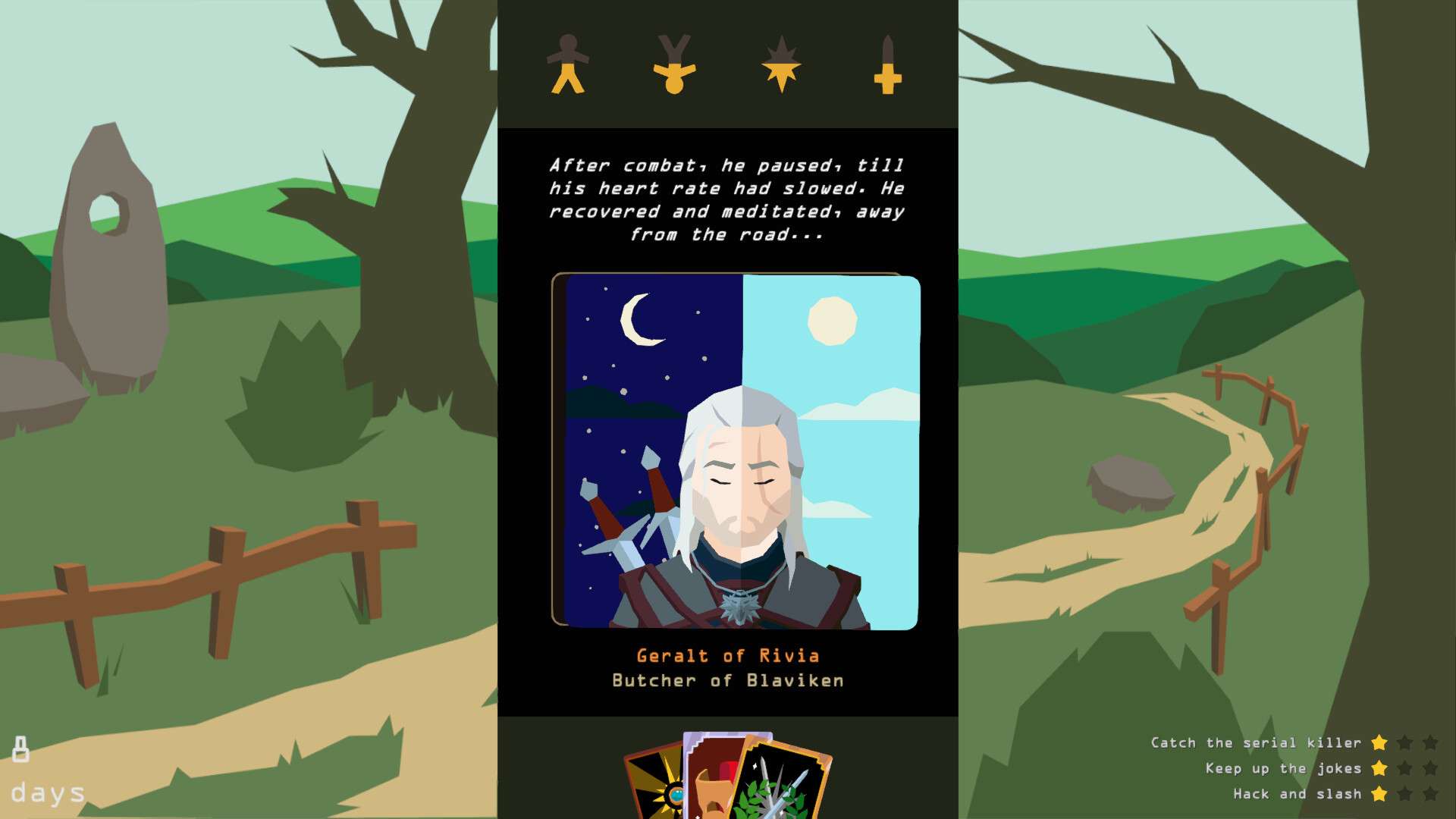
All it takes is one wrong choice to tip the scales too far in satisfaction versus dissatisfaction amongst all the factions – air or hinder one too much, and you may find yourself dealt an end-game death card of death at a cheese contest or being toasted by a dragon.
Most ways to go out are pretty hilarious, so sometimes bad choices resulting in Geralt’s demise can be pretty entertaining. Unlocking more ways to be killed feels like a victory in itself.
For Dandelion’s performances to pop off, Geralt must survive as long as possible, with each encounter representing a day survived. The further I got into a run, the more decision-making paralysis I got, with one wrong move possibly tipping the scales too far one way. In no way did this discourage me from ceaselessly engaging in back-to-back games to reach the elusive three stars on each card.
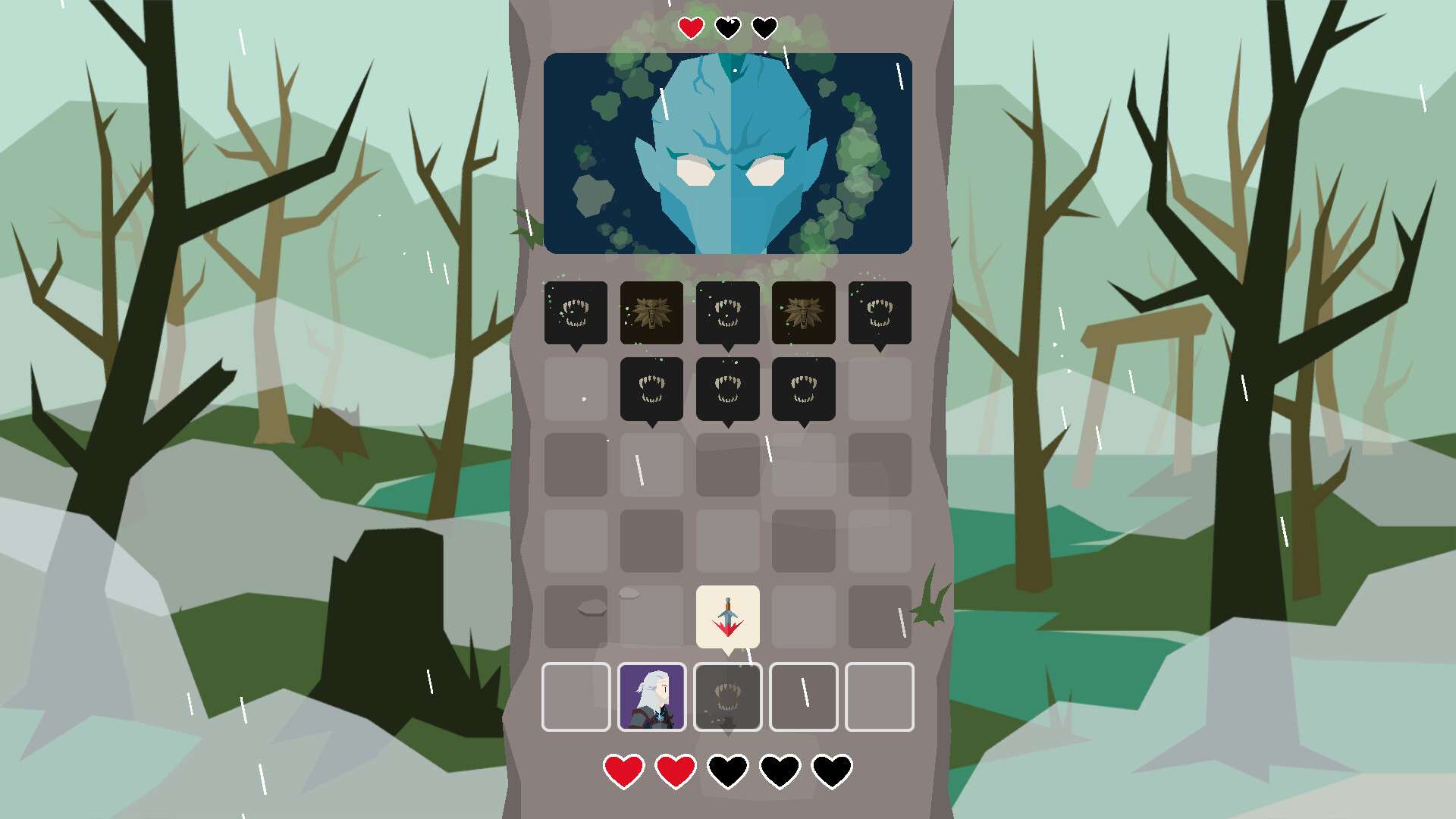
With two choices for each encounter card, there tends to be a path of least resistance enough to get you to the next day, but that can change with one wrong move – but that’s all part of the fun. Throw in the occasional combat encounter, which comes in the form of a grid-based fight, throwing the signature Witcher “Signs” (think fire bursts and telekinetic force) at adversaries, adding a little more variety to the mix.
The more you play, the more applause Dandelion gets, and when reaching the next level, unlocking scenarios for Dandelion to perform songs with specific demands in Song Puzzles, calling you to pick out the cards that represent aspects of Geralt and his potential fates or flaws.
One small gripe I had with Reigns: The Witcher was that Dandelion never actually sings, which seems like a waste of the bard. What minimalistic music there is has a great tavern-like, upbeat vibe, but it seemed somewhat tone-deaf to Dandelion’s talents.
There’s enough in Reigns: The Witcher to keep dorks like me happy, but it’s definitely different to the large-scale action-adventure of the mainline series, which might not appeal to all gamers. It’s short and relatively simple, tic but does require a reasonable amount of tact to succeed in.
Reigns: The Witcher gives that weird little dopamine hit of gambling against all odds with significantly less real-world implications – maybe a little lost sleep and addiction, but redirected to a noble plight in Witcher work. For fans of the Witcher series and those looking for a short but moreish game to master, Reigns: The Witcher might be worth the fanfare.

The Good
- Addictive, quick gameplay
- Charming spin on the Witcher world
- Witty, wacky storytelling
The Bad
- Limited gameplay loop
- It may be too simplistic for some
- Strongly luck-based





 SuBZeRO2K
 Spotify
 Anchor
 iTunes