I’ll be honest: I never was a fan of The Division. Rough start to a review, right? But hear me out.
In 2016, Ubisoft released The Division 1: a deep, grim look at a pandemic breaking out during the holiday period. Although facing strong competition from titles such as Uncharted 4 and the relaunched DOOM, The Division garnered a sufficient following to earn a sequel. Since the launch of The Division 2 in 2019, gaming has evolved, and as such, The Division franchise has evolved alongside it.
Having stumbled across the first game myself, I can proudly state that I’m now an avid fan of The Division franchise, having played (and paid) for most of the available Division-based content.
With that context in mind, let’s turn to The Division Resurgence itself. Tom Clancy’s The Division Resurgence takes Ubisoft’s snow-dusted, virus-ravaged formula and reshapes it for a broader, more accessible audience. Built with mobile in mind (but can be played on PC through adapters or emulators), the sudden shift from the console/PC homebase brings with it an interesting question: can a scaled-down Division experience still deliver the weight, atmosphere, and tactical satisfaction the series is known for?
The answer is complicated.
Thankfully, Resurgence sticks closely to The Division’s DNA: third-person cover shooting, loot-driven progression, skill-based combat, and a steady treadmill of missions and upgrades all feel common and familiar. You move through a version of New York City, similar to The Division 1, which seems to set the story somewhere between The Division 1 and The Division 2.
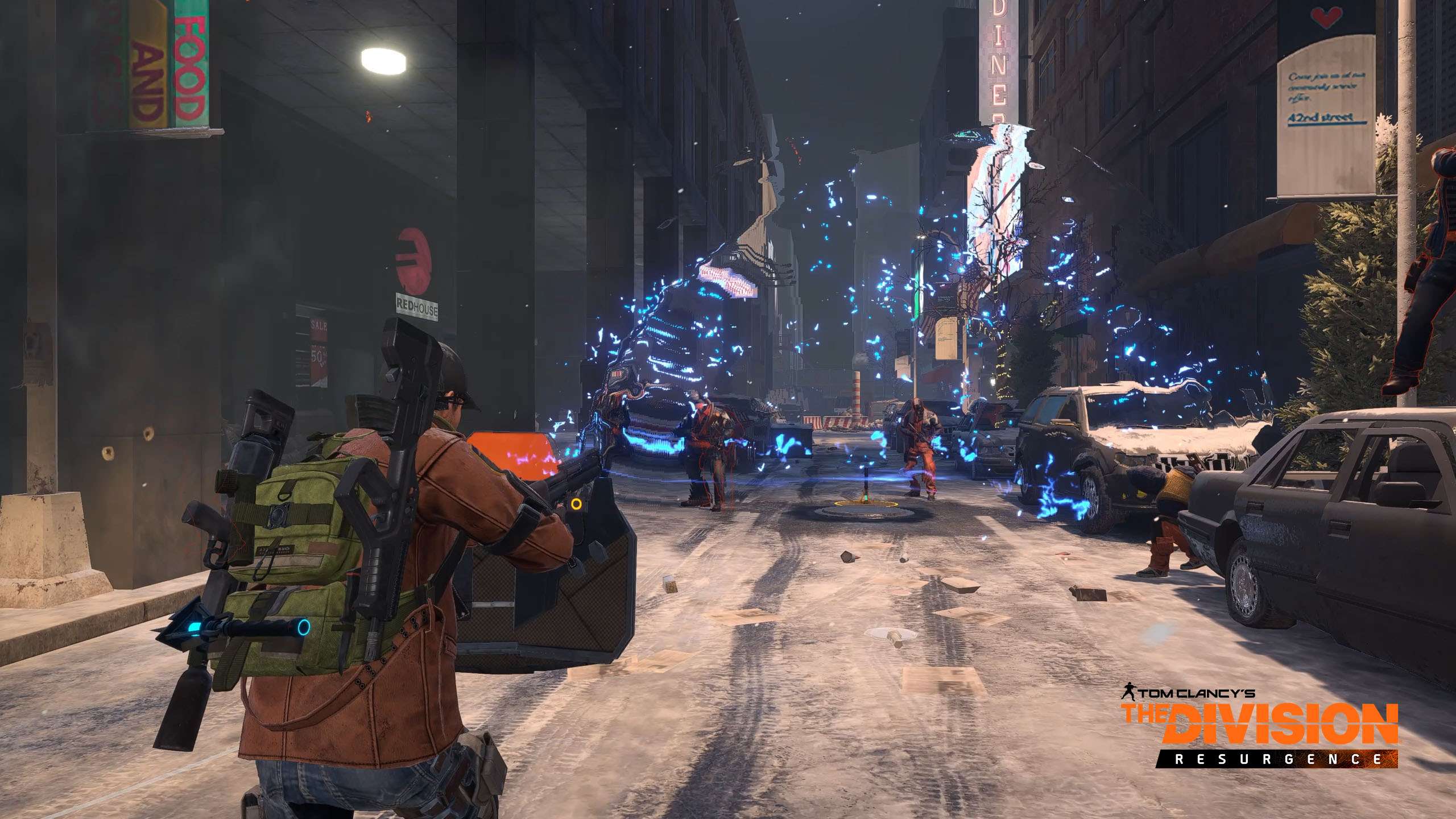
After being deployed as a first wave agent, only to have fallen into a coma, you awaken to find that the outbreak and the globe are both in dire need of help. As such, you are revived, restored, and redeployed into the field to take on the unknown.
Quickly enough, you discover that the unknown is revealed to be various splinter groups, also known as factions. Fans of The Division 1 and 2 will notice a few returning enemies, such as Raiders, Rikers, and Cleaners. However, a new entry to the series is The Freeman, who are armour-wearing, heavy machine gun-toting villains. Though varying in weaponry and location, the factions all share one like-minded goal: They’re the right side, The Division is wrong, and anyone who disagrees is most likely shot and killed.
Tough crowd, right?
Gunplay is solid, if slightly simplified. Weapons move and feel like they have weight, cover mechanics feel responsive, and abilities add a tactical layer that encourages positioning and timing over run-and-gun chaos. Once again, all familiar traits that keep the game feeling like hanging out with an old friend, only that friend is on your phone, and not really with you per se… You get what I mean.
Where the cracks begin to show is in its depth. Compared to its mainline releases, the systems feel streamlined, to the point of being quite dull or basic. Enemy AI can be predictable, mission structures repeat quickly, and the loot loop, while satisfying in bursts, lacks the long-term engagement of a full-scale Division title.
Still, if playing in shorter sessions, it works. The pacing is tighter, progression is faster, and there’s a constant sense of forward momentum, if only for a lack of depth. It may look and feel like The Division, but the weight and perhaps intensity just isn’t there.
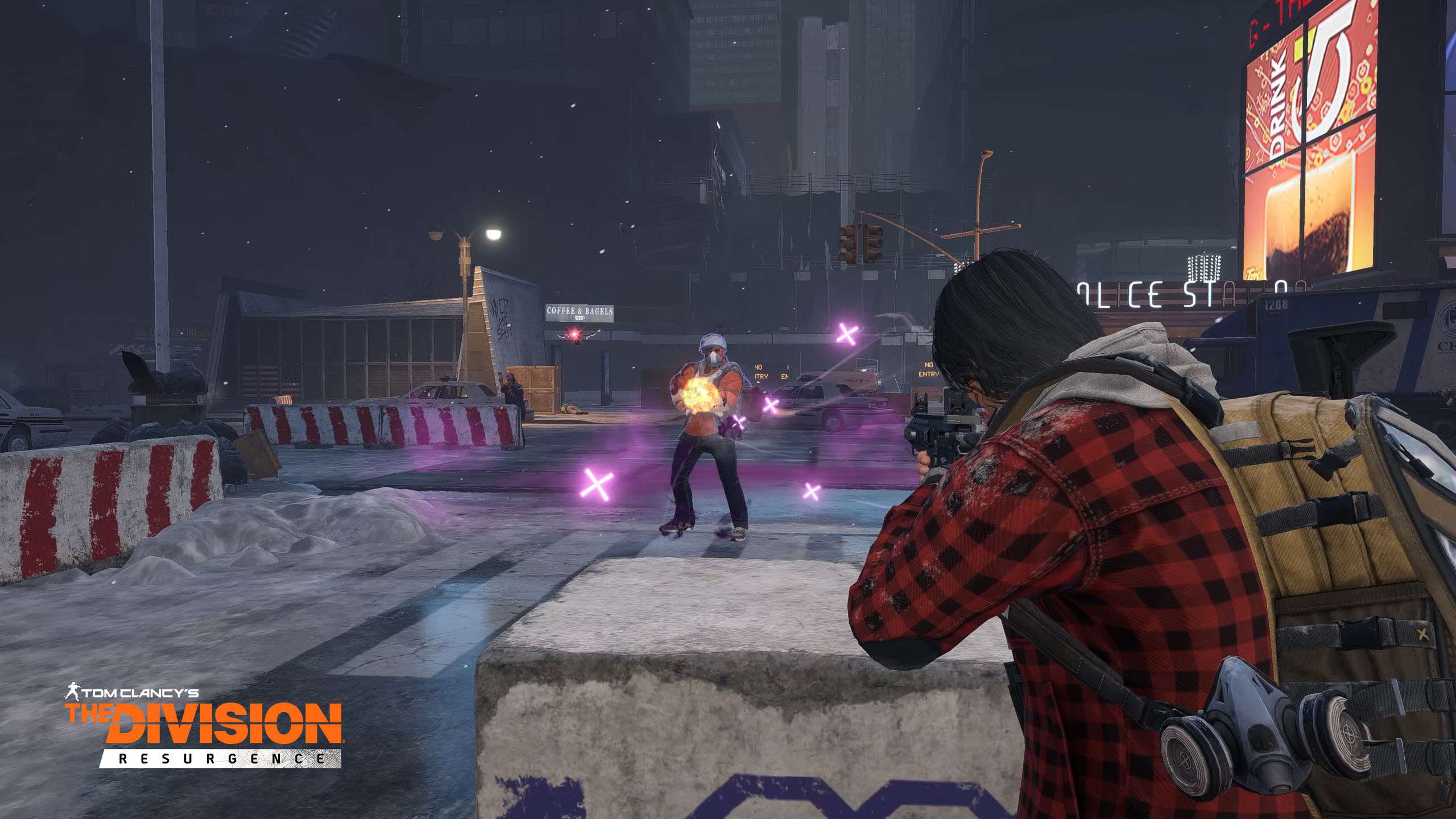
To help counterbalance this downside, specialisations are included in this mobile release, sharing similar traits and/or skills to the mainline series entry. Veteran players will rejoice at the inclusion of series favourites Demolitionist, Combat Medic & Tech Operator, with a newly renamed entry in the form of Bulwark.
Though not having the in-depth tech tree as the PC/console version, the specialisations have been mixed and matched with what can only be described as ‘the best of the best’ traits and skills of each tree. This is a clever upgrade to the series, as it allows new and returning players to switch up and change their playstyle on the go, with each new tech choice bringing both freedom and strategic approaches to the game.
Another shared gameplay element of the mainline series is the open-world activities. Without a doubt, one of the most powerful traits of The Division series, the open world in this mobile-based chapter brings along common entries such as Bounties, Campaign Quests, Open world/timed events, and loot puzzles. Though manageable solo, the mobile version does allow instant matchmaking on the go, which makes those terrifyingly difficult boss battles more manageable with a buddy or two along for the ride.
Though currently leaning heavily on the PvE aspect, PvP and PvPvE modes are also available. Though we had initially wanted to try this mode, we encountered server-based errors that weren’t allowing us to initiate or test this mode.
Given its mobile release, an onscreen layout presents itself in the form of a joystick, allowing you to move around the world. Other on-screen options include the press-to-initiate style of weapon swaps, abilities, and additional movement options, such as forward rolls or ducking behind cover. Again, compared to its original mainline games, adjusting to the in-game screen can feel slightly awkward at times, which does take some getting used to.
If applicable, we would recommend having some sort of video game Controller support. Using a controller does make the game a bit easier to handle, but it still has its glitchy, unresponsive moments.
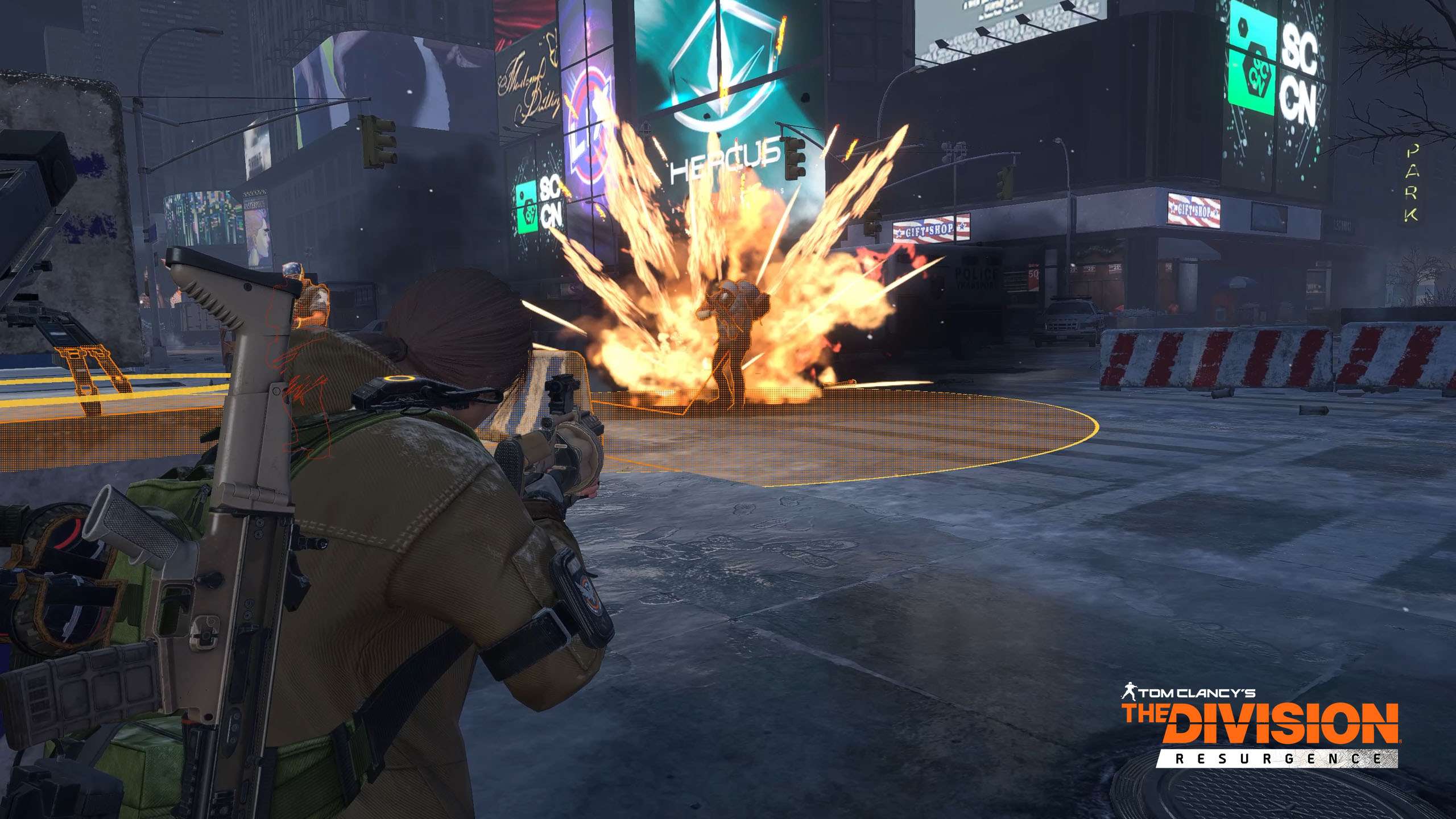
Visually, Resurgence punches above its weight. Character models, lighting, and environmental detail are surprisingly strong for a game designed with mobile hardware in mind. Snow effects, reflections, and weather conditions give the world a grounded, atmospheric feel.
That said, there’s a noticeable step down in texture resolution and environmental density compared to mainline entries. Some areas feel slightly empty, and finer details don’t always hold up under closer inspection. Naturally, mobile devices lack the hardware and support that a console/PC can provide, but given that aspect, what we’ve come to expect from this franchise is slightly let down by its lack of visual strength.
Performance is generally stable; we encountered a variety of server-based issues throughout our review time. Frustrating as it may be, Ubisoft does seem to be aware of the issues, and updates will continue to be released, providing both support and an eventual resolution.
Remarkably, the audio design is this game’s biggest asset and remains consistent with the series’ identity. Gunfire has a satisfying punch, environmental sounds build tension, and the soundtrack leans into subtle, cinematic tones rather than overwhelming action beats. Voice acting and mission dialogue are… how do I say this, there? It’s adequate but less impactful than previous franchise entries. It does the job, but rarely stands out.
The Division Resurgence is a streamlined take on a beloved formula. It carries the essence of the series, but slightly stumbles in matching franchise depth. For avid mobile gamers, it’s approachable, easy to pick up, and delivers satisfying tactical combat in shorter sessions, but it struggles to keep you invested. For newcomers, Resurgence is a sufficient entry point into The Division universe. For veterans and returning players, it feels more like a companion piece than a true successor.

The Good
- Solid core Division gameplay loop
- Strong atmosphere and recognisable world design
- Accessible progression and faster pacing
- Good performance on a wide range of systems
- Tactical combat is still satisfying, be it in short bursts
The Bad
- Noticeably reduced depth compared to mainline games
- Repetitive mission structure
- Server issues affecting playability
- Enemy AI lacks challenge over time
- Long-term engagement feels limited




 SuBZeRO2K
 Spotify
 Anchor
 iTunes