
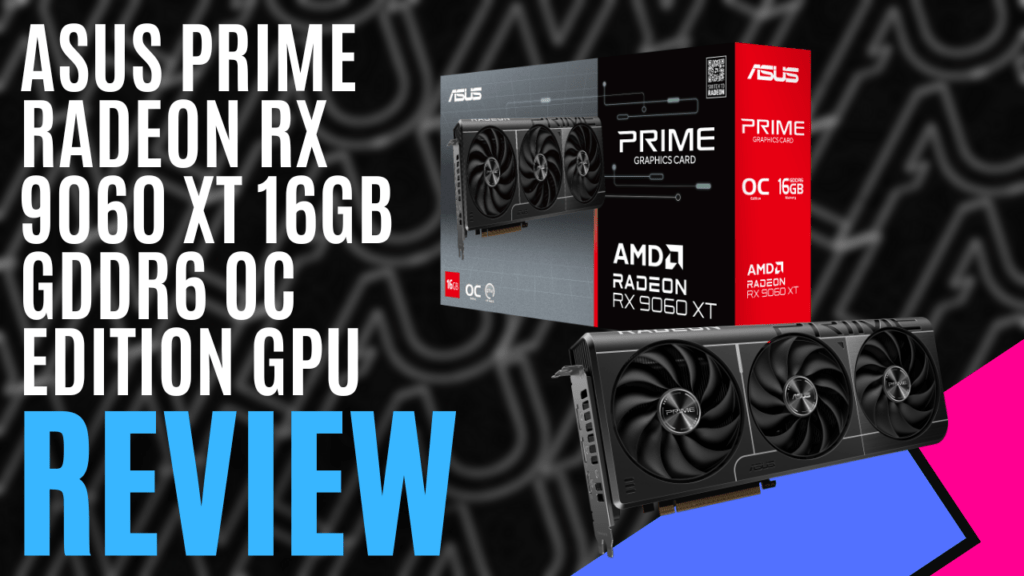
It’s hard to believe that I’ve only reviewed a single AMD graphics card since ASUS helped us build our benchmarking PC. Currently built on the ASUS ROG Strix Z790-I Gaming WIFI Motherboard, power is delivered by the TUF Gaming 1000W Gold White Edition PSU, the ROG Strix LC III 360 AIO Cooler keeps the processor nice and cool, and is neatly packaged in a white TUF Gaming GT302 ARGB case. That said, it’s about time we swapped out the ROG Strix Gaming GeForce RTX 4070 OC Edition GPU.
With the end of the financial year in full swing, many of us are scrolling through our wishlists and trying to decide how best to spend our tax returns. Some of us will go all out on one or two items, while the rest of us will be a bit more budget-conscious, and that’s where the latest GPU we’ve received slots in.
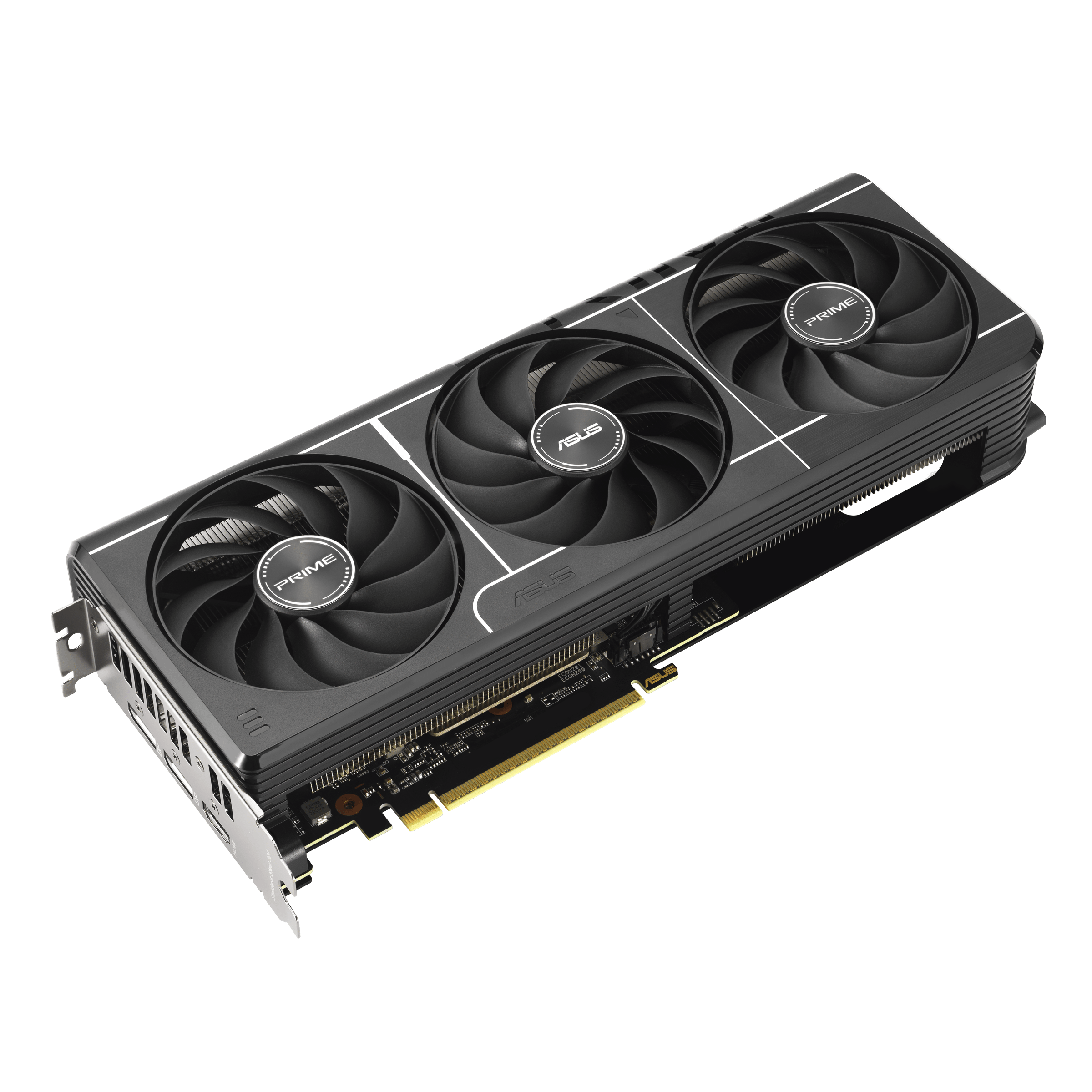
The ASUS Prime Radeon RX 9060 XT OC Edition graphics card is “Primed for Power”, boasting 16GB of GDDR6 video memory that charges in at 20 Gbps using a 128-bit interface and 2048 Stream Processors. In default mode, the GPU achieves game clock speeds up to 2740MHz, with the potential to boost up to 3330MHz in OC mode with the aid of GPU Tweak III.
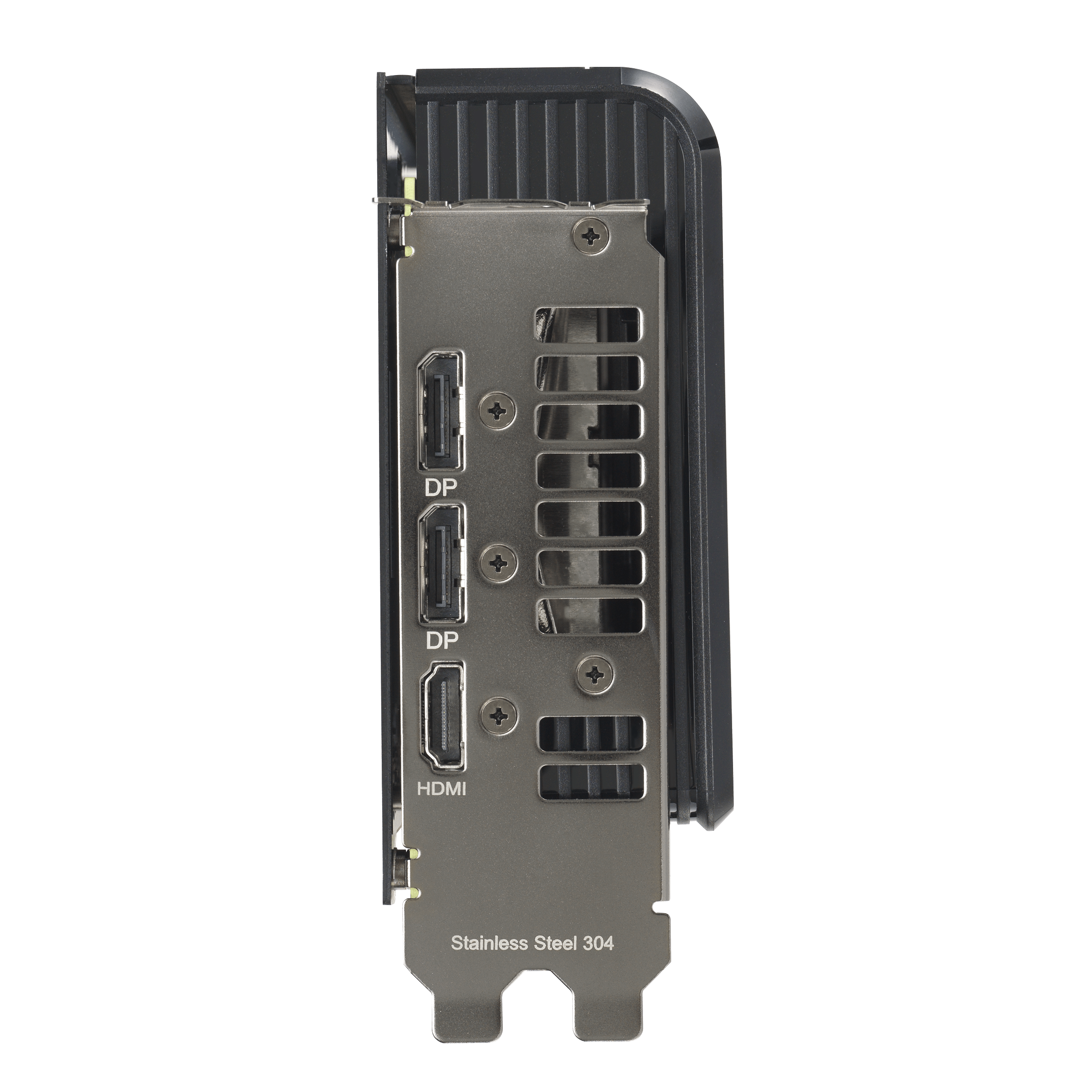
Interfacing through PCIe 5.0 and powered by a single 8-pin connection, it supports OpenGL 4.6, is capable of achieving resolutions of up to 7680 x 4320, and can split your display over a maximum of three monitors. These can be connected through the single HDMI 2.1b port or the two DisplayPort 2.1a connections.
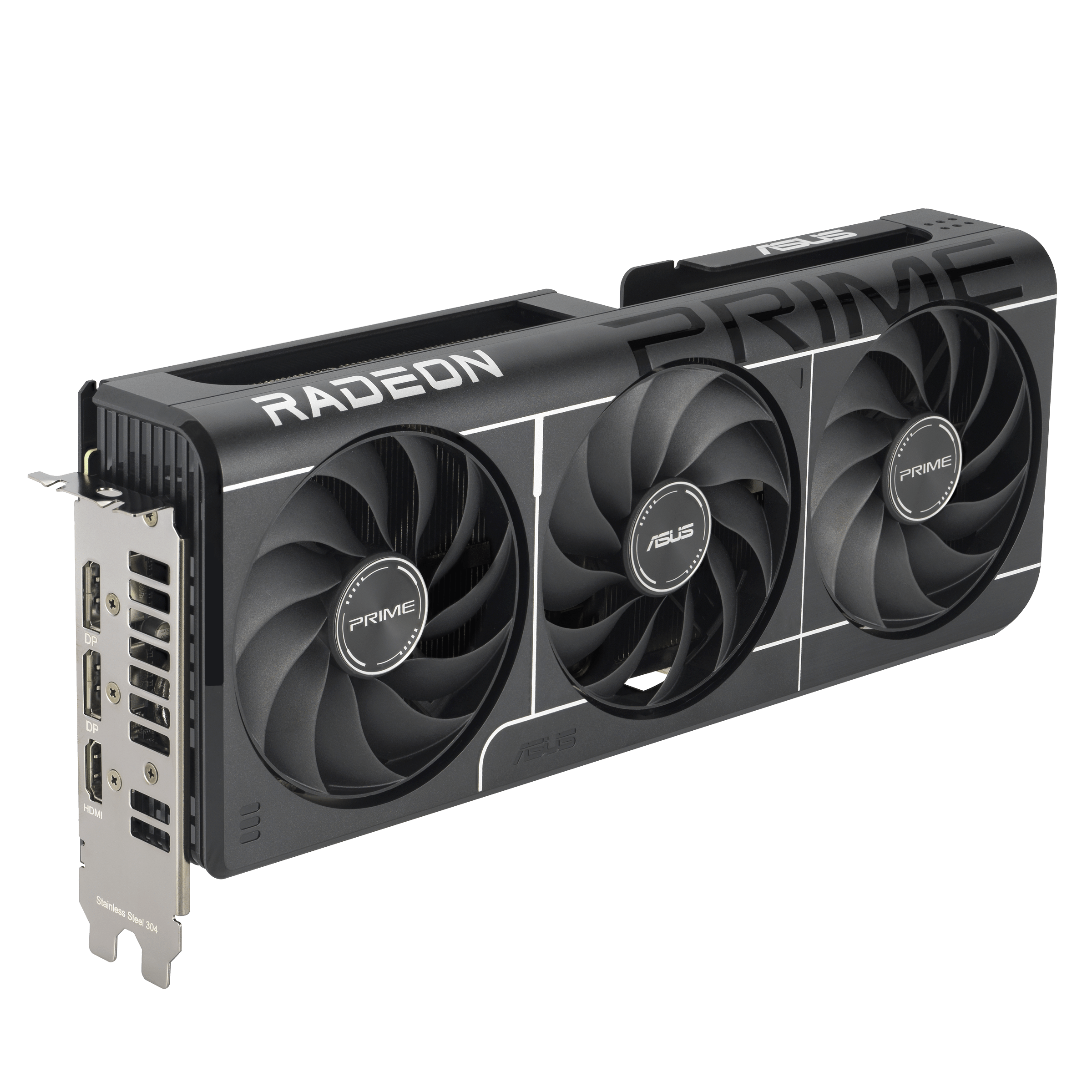
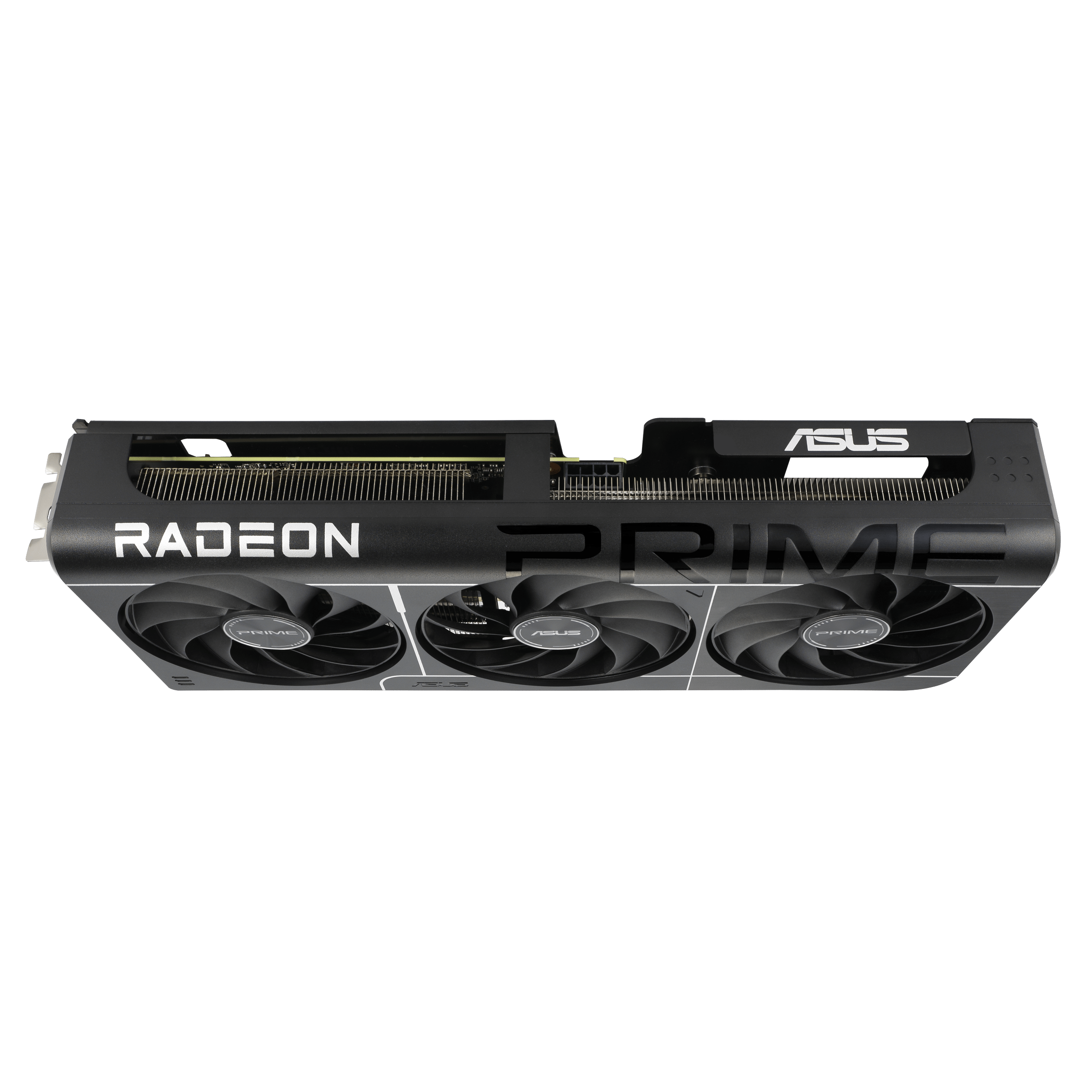
It’s cooled by three Axial-Tech fans, built with a smaller hub, longer blades, and a barrier ring to push more air with less turbulence. As a side benefit, it also means that the airflow is quieter. Along with the dual-ball fan bearings, you can enjoy your PC in relative quiet, with the bearings also nearly doubling the lifespan. These work hand in hand with a vented backplate, designed to maximise airflow, and the ASUS MaxContact Design, a machining process that increases the surface area for the heat spreader for greater heat dissipation.
Although the ASUS Prime Radeon RX 9060 XT OC Edition graphics card isn’t part of the TUF Gaming range, it still benefits from several similar design features, the first of which is the ASUS GPU Guard. A special adhesive is used to secure the four corners, reducing the risk of cracks and disconnects if the card encounters any flex. To prevent flex, the PCB has been reinforced with a protective backplate to add structural integrity. The bracket is made from 304-grade stainless steel, offering additional strength and resisting corrosion.
It also features a Dual BIOS on board, a small switch that allows you to toggle between Performance mode, where the fans have an aggressive power curve to keep the card cooler from the very beginning, and Quiet mode, where the fans have a less aggressive power curve, keeping them quieter for longer. With such a robust cooling system and specs that appear to draw a significant amount of power, I was surprised to see that the recommended power supply was only 550W.
When it comes to performance, the ASUS Prime Radeon RX 9060 XT OC Edition graphics card is somewhat comparable to the ROG Strix Gaming GeForce RTX 4070 OC Edition GPU we have in our benchmark PC. Booting up Cyberpunk 2077 once more, graphics presets were set to Ultra, and the resolution was set to 1440P.
Both cards averaged around 45 FPS, and although the ASUS Prime Radeon RX 9060 XT OC Edition graphics card utilised higher clock speeds and more VRAM to achieve this, it stayed cooler and drew less power. With Ray Tracing enabled, as well as FSR/DLSS and frame generation, the ROG Strix Gaming GeForce RTX 4070 OC Edition GPU pulled ahead, averaging 60FPS over the ASUS Prime Radeon RX 9060 XT OC’s 40FPS average.
So if that’s the case, why would I recommend the ASUS Prime Radeon RX 9060 XT OC Edition graphics card? The answer is simple; It all comes down to bang for your buck.
The ASUS Prime Radeon RX 9060 XT OC Edition graphics card comes incredibly close to matching the performance of higher-tier gaming-focused graphics cards, and in some cases, it even wins out. It has lower power requirements, meaning you don’t necessarily need to upgrade your power supply. Boosted clock speeds put it in the top 9% of graphics cards, and the default clock speeds put it in the top 35%. You won’t run out of memory with 16GB of VRAM, but the slower memory speed, lower interface value, and AMD FSR hold it back.
When it comes to pushing graphics settings to the extreme, the ASUS Prime Radeon RX 9060 XT OC Edition graphics card can’t quite match the performance of some of the others, but it remains a very capable card. For what is essentially half the price of the equivalent NVIDIA card, I can accept a lower frame rate; after all, 40 FPS is still better than what you see at the cinema.

The Good
- Very competitive pricing
- Similar baseline performance to higher-tier GPUs
- Commendable high-end performance
- Lower power requiremen
- Amazing cooling
The Bad
- Not as capable at Frame Generation and Upscaling as higher-tier cards





 SuBZeRO2K
 Spotify
 Anchor
 iTunes