
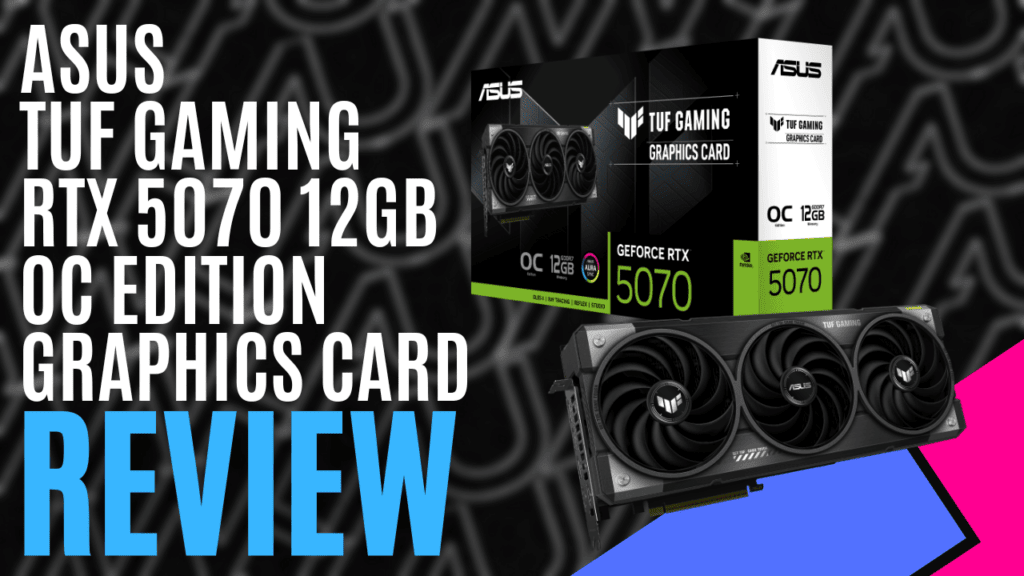
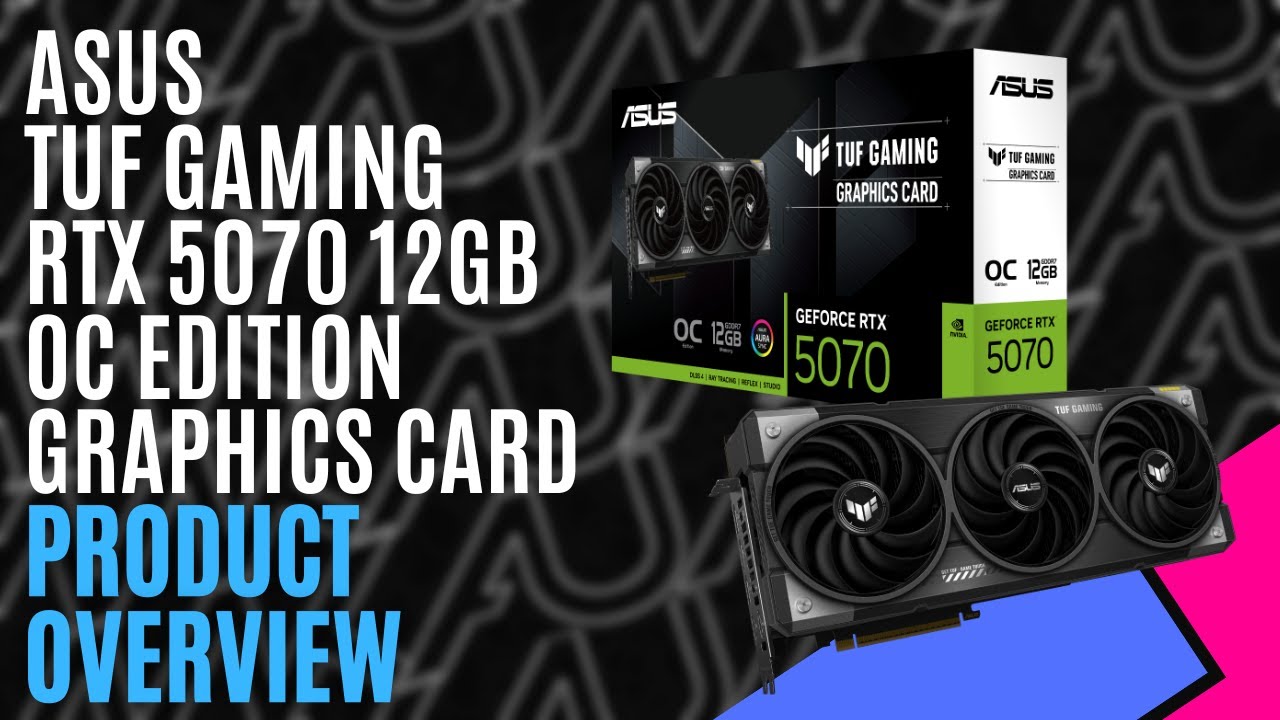
After giving us the chance to try the TUF Gaming GeForce RTX 5080 OC Edition graphics card back in March, ASUS sent us the TUF Gaming GeForce RTX 5070 OC Edition graphics card to check out. We’ll be using the benchmarking system kindly provided by ASUS to make the comparison.
So you know what we’re working with, it’s built on the ROG Strix Z790-A Gaming WiFi II Motherboard, with the CPU cooled by a ROG Strix LC III 360 AIO Cooler, powered by the TUF Gaming 1000W Gold White Edition PSU, all comfortably housed in a white TUF Gaming GT302 ARGB case.
The ASUS TUF Gaming GeForce RTX 5070 OC Edition graphics card follows many of the same design and engineering characteristics as the TUF Gaming GeForce RTX 5080 OC Edition graphics card.
It comes with the same Protective PCB Coating to prevent damage caused by dust, debris, and moisture, as well as military-grade TUF Chokes and MOSFETS, and TUF 5K Black metallic capacitors, all designed to help the GPU withstand the same rigorous testing conditions that the TUF Gaming GeForce RTX 5080 OC Edition graphics card was subjected to.
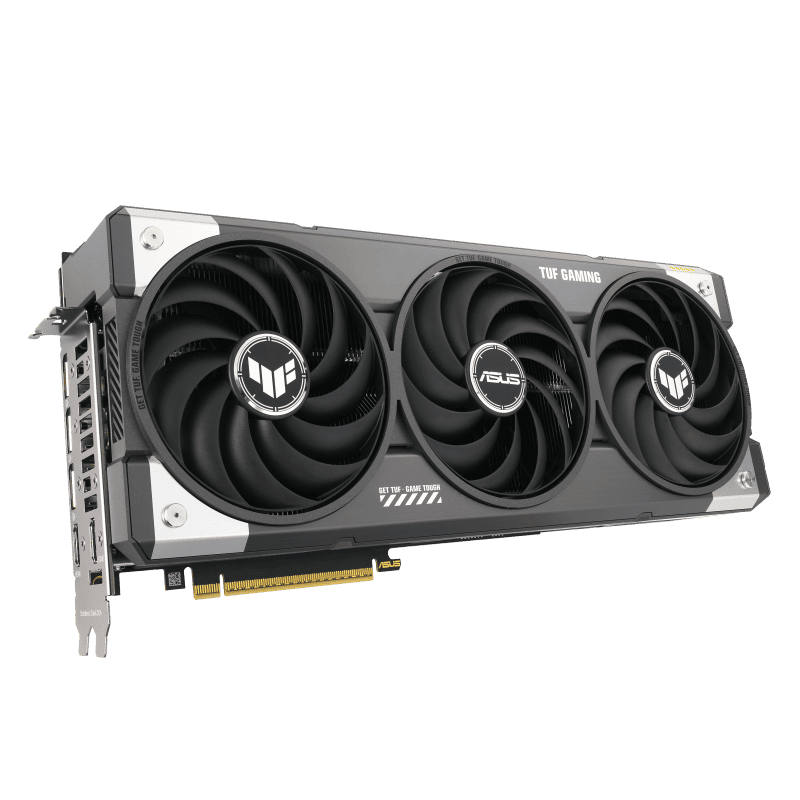
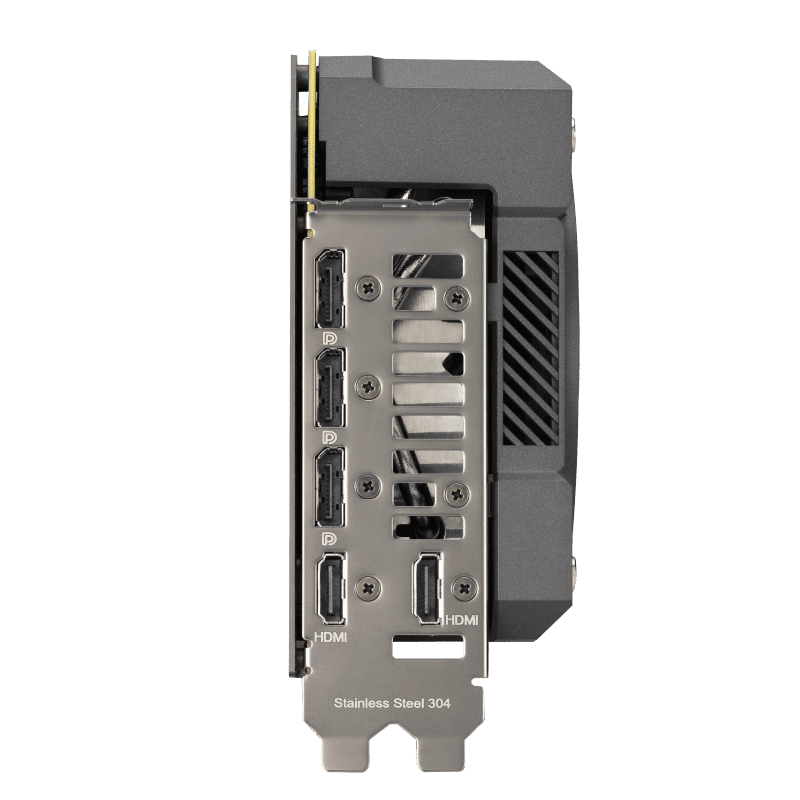
It even supports the same resolution support, 7680 x 4320, and supports up to four monitors using the two HDMI 2.1B ports and three DisplayPort 2.1B connections. As the two cards are so similar in their appearance and engineering, if you want to know more, I’d suggest reading over the review I wrote for the ASUS TUF Gaming GeForce RTX 5070 OC Edition graphics card.
The main difference, as you can probably guess, is the overall performance, with the ASUS TUF Gaming GeForce RTX 5070 OC Edition graphics card coming with 12GB of GDDR7 VRAM, memory speeds of 28 Gbps, an OC Clock speed of 2542MHz, and AI Performance supporting 988 TOPs.
These numbers are very similar to what we see in the ROG STRIX Gaming RTX 4070 OC Edition that we normally keep in the benchmarking system, but there are a few things to consider.
Firstly, the ASUS TUF Gaming GeForce RTX 5070 OC Edition graphics card uses the faster GDDR7 VRAM, with memory speeds of 28Gbps against the 4070’s 21Gbps. It also uses 5th Generation Tensor Cores with support for DLSS 4 and has just over double the AI Performance. Still, it does have a slightly higher power requirement, and it is recommended for use with 750W power supplies.
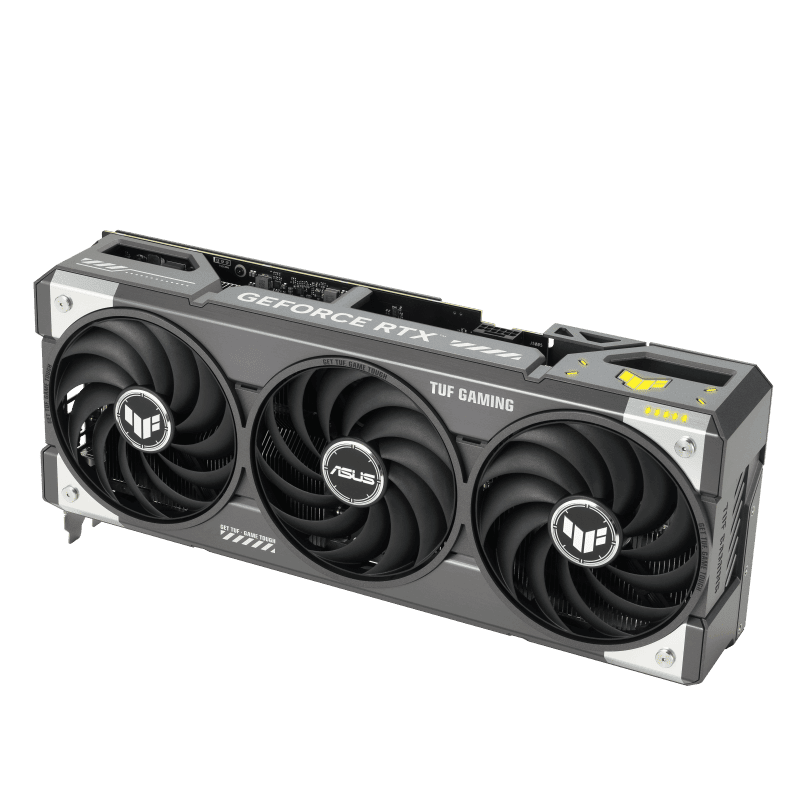
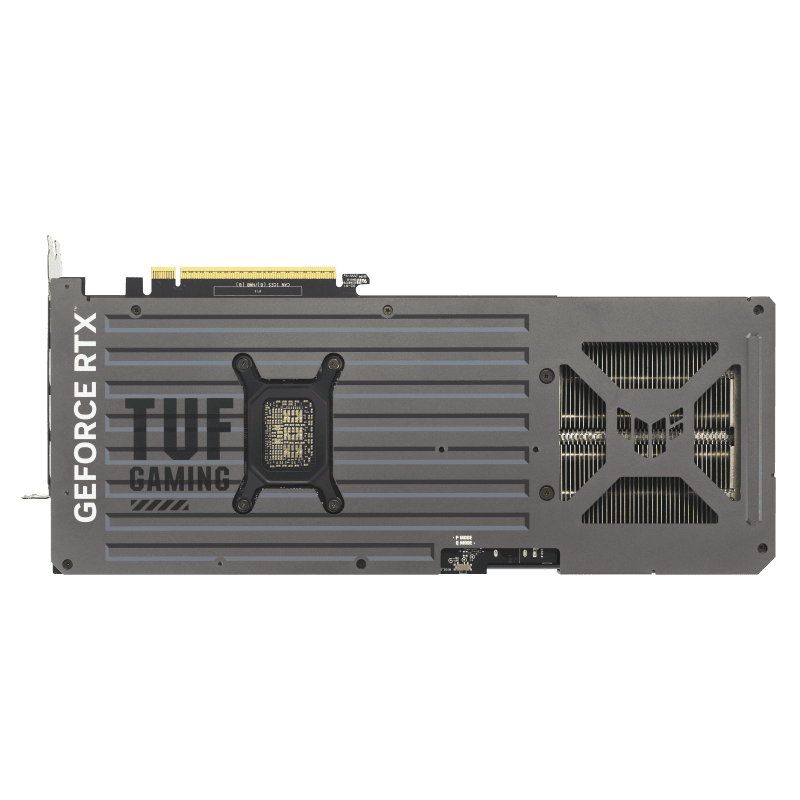
Effectively, the ASUS TUF Gaming GeForce RTX 5070 OC Edition graphics card is an almost direct replacement for cards equivalent to the ROG Strix Gaming RTX 4070 OC Edition. Based on our testing and the results we achieved, it is slightly better, at least.
Using Cyberpunk 2077 as our testing platform, running in 4K, graphics settings at the highest level, and with Ray Tracing enabled, the RTX 4070 averaged about 25 FPS. In contrast, the ASUS TUF Gaming GeForce RTX 5070 OC Edition graphics card hovered around 27 FPS.
Lowering the resolution to 2K and 1080P did see further improvements with slightly bigger differences. Still, these were typically a result of AI-based frame generation as opposed to bare-bones performance – the more frames you have to begin with, the better AI is at generating additional frames.
The ASUS TUF Gaming GeForce RTX 5070 OC Edition graphics card seems to be a direct replacement for the RTX 4070 OC Edition cards, but that isn’t to say they are bad. If upgrading to a 4070 would give you a decent performance increase, then yes, I would certainly consider going with the ASUS TUF Gaming GeForce RTX 5070 OC Edition graphics card. Otherwise, maybe stick with what you have already.
The Good
- Highly durable
- Up-to-date components
- Plenty of ports
- Easier to get than the RTX 4070 OC Edition Cards
The Bad
- Comparable to the RTX 4070 OC Edition Cards






 SuBZeRO2K
 Spotify
 Anchor
 iTunes