
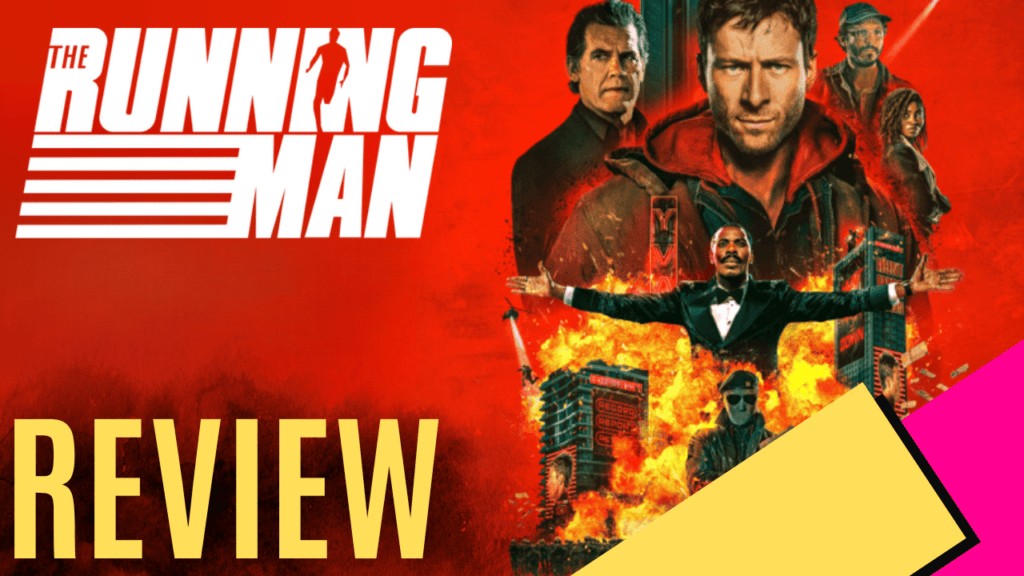
There has never been a better time to run to the theatre to see the latest blockbuster film, The Running Man! Brought to life by visionary filmmaker Edgar Wright, this adaptation presents a fresh take on the 1980 novel of the same name, aiming to differentiate itself from the original film.
Starring Glen Powell, a desperate man with a temper and an unwavering determination, will quite literally run for his life. A special thank you to Paramount for inviting MKAU to the early screening; without it, we would not have been able to bring this review to you.
A dystopian future, riddled with rampant poverty outside of the main city, sees Ben Richards (Glen Powell) on his last legs. A sick daughter, an overworked wife, a blacklist from workplaces a mile long, a dangerous recipe for pushing a man to do things he never would have even dreamed of before.
The early stages of the film work quickly to push the main character and the audience to the realisation that even with the best intentions to make an honest living, the system plays by its own rules. A game show where you need to outrun the public and its hunters for 30 days is the definition of a last resort for Ben. The question is, who is really playing the game?
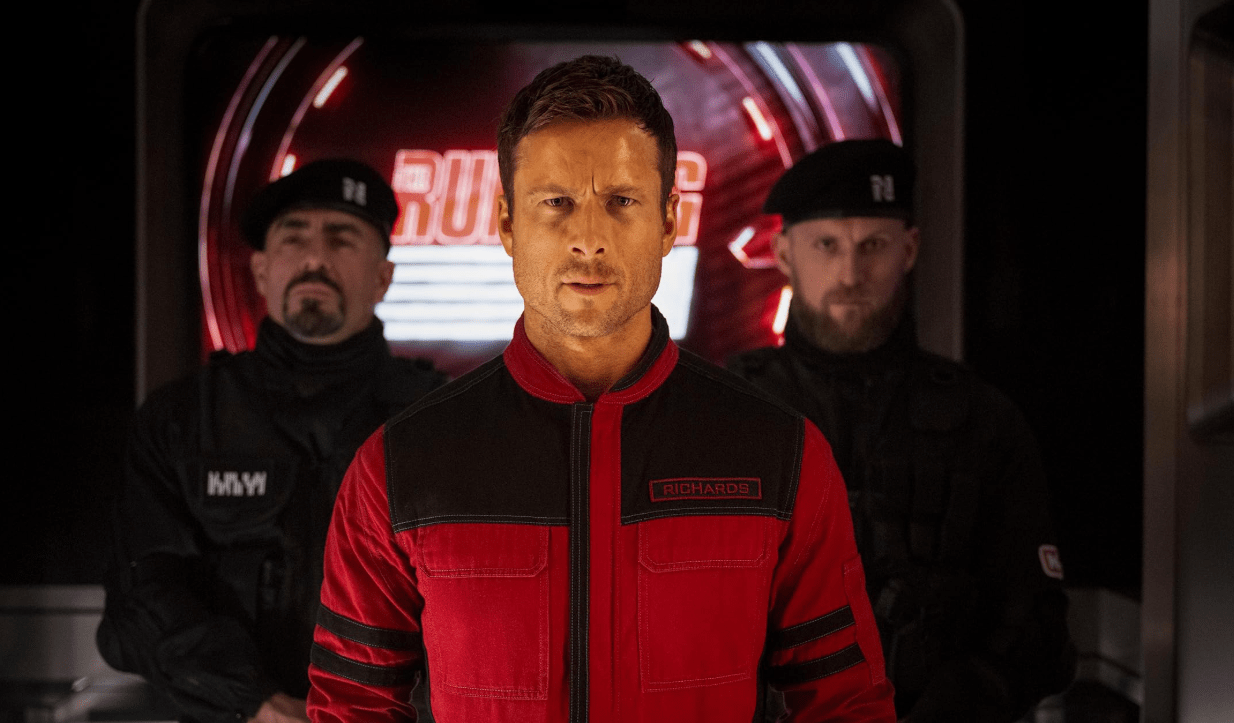
The unruly world, which is not shy about shedding blood or bashing your ears with profanity, is embodied through a multilayered performance of all characters, big and small. There was a little settling period at first of what seemed to be an over-the-top performance by Glen, which was until you were able to compare him to those that inhabit the world.
Characters such as Bobby T, played by Colman Domingo, who easily played the public against Ben with a shamelessly gaudy and provocative nature, gave gravity to Ben’s need to rise and overcome the intensity of the world he was struggling to survive in.
A consistent big bad corporate executive, Dan Killian, played by Josh Brolin, never overstayed his welcome and shook up the playbook with every conversation. I was even captivated by certain characters who shared the screen for just a few minutes.
Daniel Ezra delivered such an engaging performance that it danced the line of a fourth-wall break without stepping over it. The over-sensationalised and provocative nature of the culture shown was able to balance the tone with on-the-nose humour, uneasy tension and in-your-face radical thought propaganda in such a fast-paced environment.
I absolutely adore the consistency of real-world building in cinematography, with a strong emphasis on ‘show, don’t tell’. An Edgar Wright film has almost become a tale of camera poetry lately, and “The Runner Man” is a sight to behold.
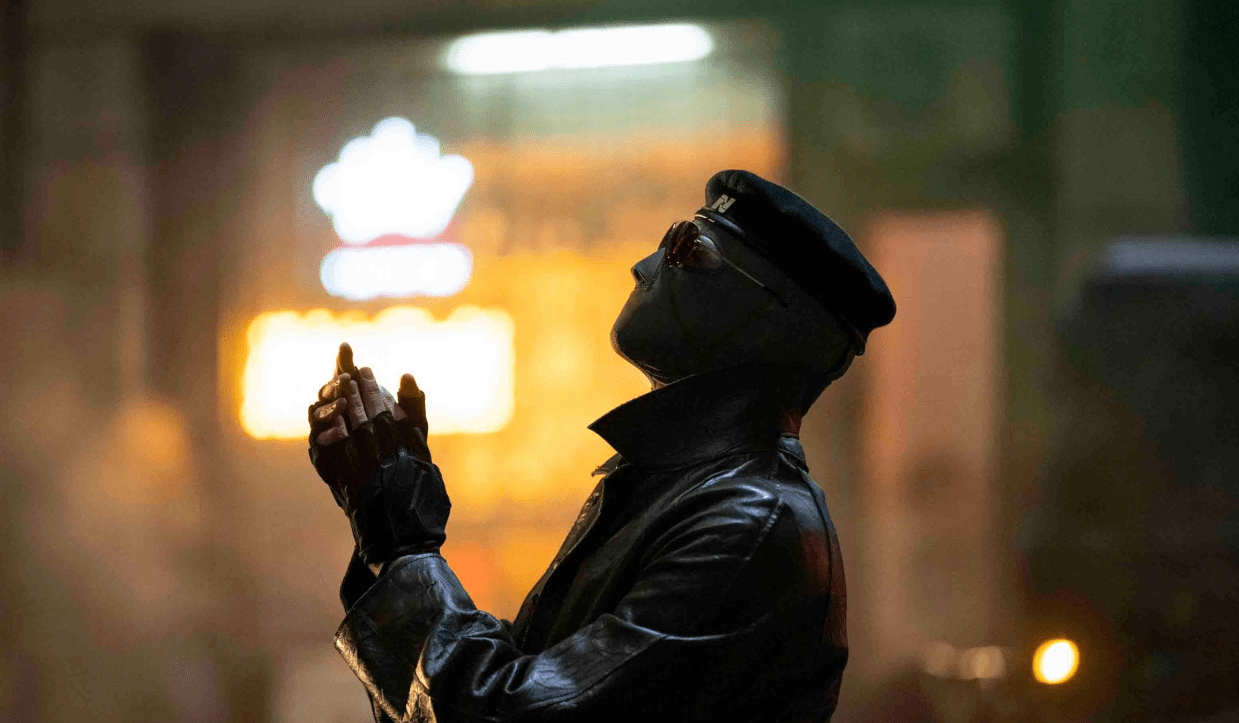
The confined and gloomy quarters of Ben’s home life are drowned out by the expanse of city lights and open landscape as he ventures forward in his journey. It wasn’t just a visual feast, as there were heart-pumping and impactful tones that followed a rhythm throughout the film, never letting you settle during the most intense moments and gently guiding you through the sombre ones.
The dazzling set pieces of show business are the gateway to some up-close and personal moments, as the camera effortlessly zooms in and out of the death-defying antics of a man outrunning a murderous group of hunters. Camera drones that broadcast the show help you keep up with the relentless pace of the film as it blurs the line between reality and what twisted vision they pass on to the in-universe audience.
The willingness to lean into the plot armour tropes with its own spin, and to throw caution to the wind and let the campy nature seep through a serious situation, cemented the charm of the film and made it better for it.
By the end of the film, I felt like I had run a mile in Ben’s shoes at a pace I wouldn’t dream of matching. I laughed at gratuitous violent moments and cheered for a man who flips off a camera and smiles. The Running Man owns a narrative that they could easily fall victim to as they stumble over their feet, but not Ben; he takes it in stride and runs with it.

The Good
- Cinematography was clear and crisp
- Humour and self-awareness became its strength
- Humour and self-awareness became its strength. - Pace and delivery of the story
The Bad
- Over the top performances can take a bit to settle into







 SuBZeRO2K
 Spotify
 Anchor
 iTunes