
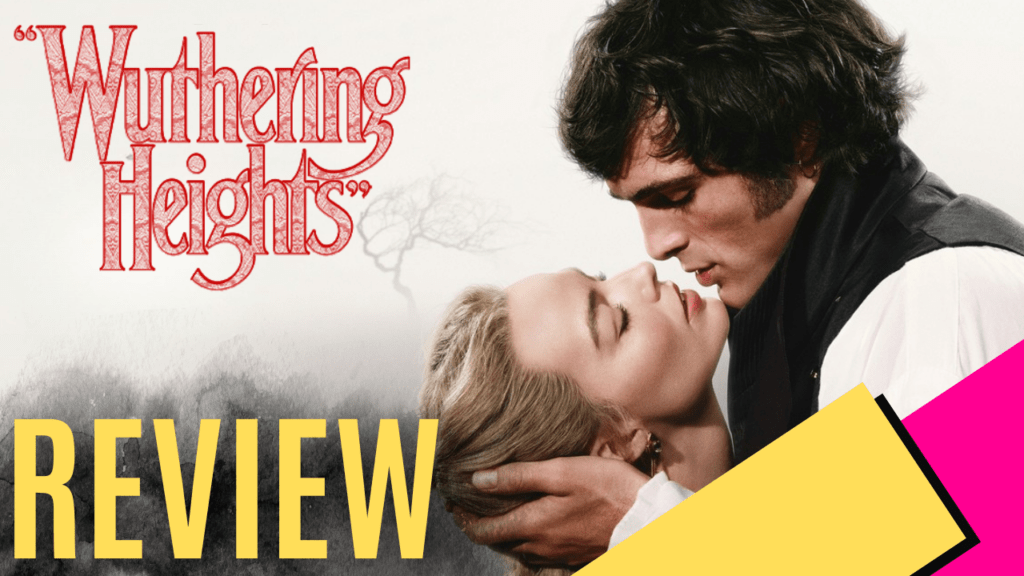
“I cannot live without my life. I cannot live without my soul”.
Have you heard about the controversial adaptation of Wuthering Heights yet? If not, you’re in the perfect place. A tragic and passionate story teeming with obsession and desire, Wuthering Heights is based on the famous 1847 Gothic love story written by British author Emily Brontë.
Starring Australia’s own Margot Robbie and Jacob Elordi as the titular Catherine Earnshaw and Heathcliff, Wuthering Heights has gained a devout following of romance lovers since its initial publication. Directed by polarising director Emerald Fennell, this reimagined retelling is currently available in theatres worldwide. Themes include: obsession, eroticism, regret, and loss.
Margot Robbie plays Catherine Earnshaw – dramatic, spirited, and selfish. Jacob Elordi plays Heathcliff – brutish, devoted, and horny. Set amongst the bleak, sprawling Yorkshire moors, Wuthering Heights begins as a story of the budding love between two impassioned, somewhat toxic people. A wealthy young girl, Catherine (played by Charlotte Mellington), meets young Heathcliff (played by Owen Cooper), a dishevelled young street boy that her abusive father (Martin Clunes) takes in.
Catherine is tasked with naming the boy herself, ultimately claiming Heathcliff to be her pet indefinitely. And thus begins the vaguely incestuous union between Cath and Heathcliff.
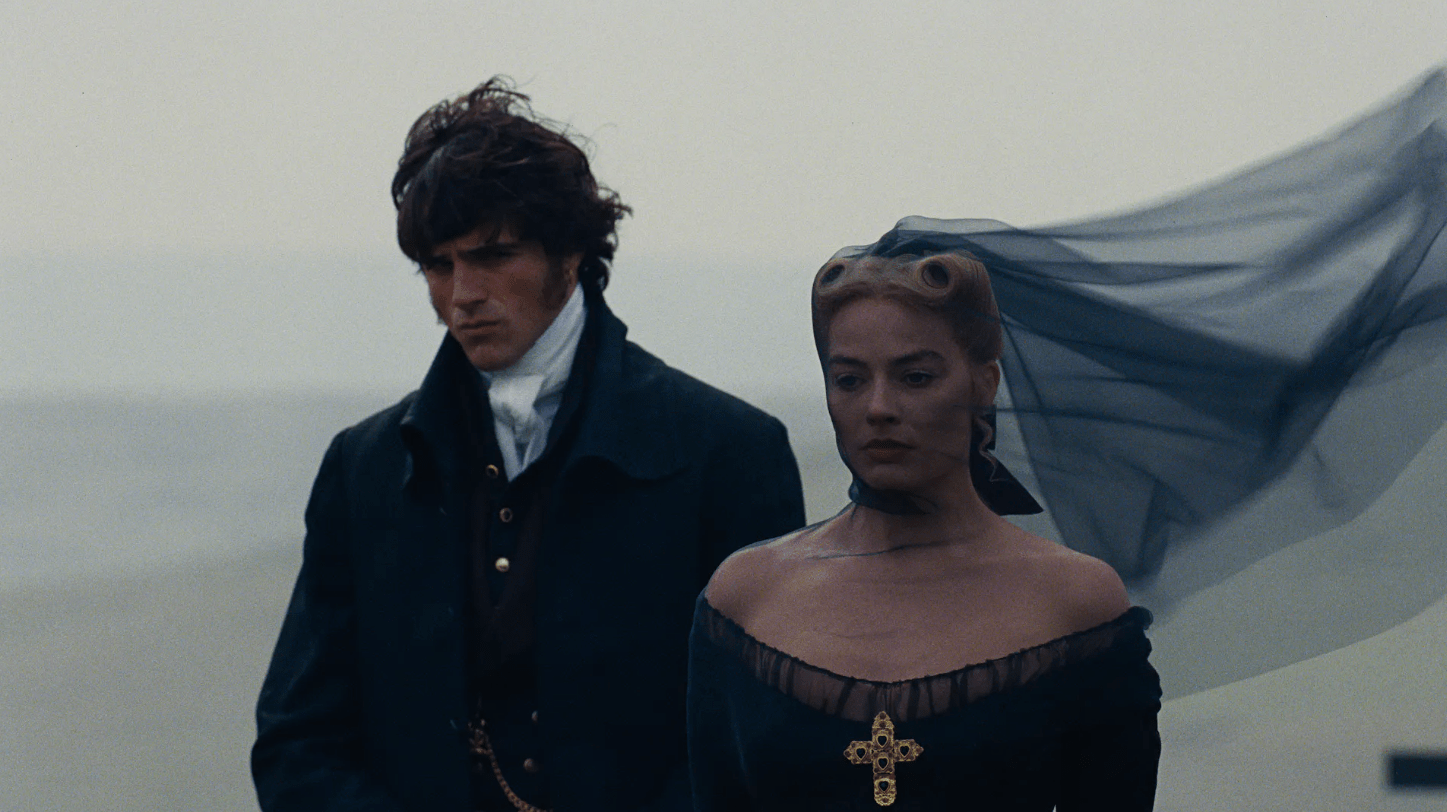
They are shown to immediately depend heavily on one another’s company – much to the dismay of Catherine’s live-in companion, Nelly (played by Hong Chau).
Not only is Catherine’s father an abusive alcoholic, but he also has a gambling problem. The Earnshaw family name eventually becomes fully tarnished by Dad and his ‘afflictions’. The fear of the Earnshaw family losing all their money leads to an advantageous union between Catherine Earnshaw and the wealthy Mr. Edgar Linton (played by Shazad Latif). News of their expected wedding drives Heathcliff absolutely mad, resulting in his departure from Catherine for several years.
During Heathcliff’s absence, Catherine learns to accept the new life she’s chosen – a financially secure life of status with the charming Mr. Linton, instead of a poor and humble life with the bestial Heathcliff. Catherine tries very hard to convince herself she’s made the right choice in society, but it’s obvious to everyone that she cannot exist without Heathcliff in her life.
During their time apart from one another, Catherine becomes pregnant with her husband, Mr. Edgar Linton. This pregnancy plays an extremely crucial part in the overall story, although we don’t see much regarding the pregnancy other than the barbarous Heathcliff getting super horny after finding out about it.
Visually, this movie is quite striking, and it is absolutely my favourite part of going to see it. From the title screen, designed with hair and bows, to those tragic final scenes. I saw aesthetics that will be forever burned into my memory.
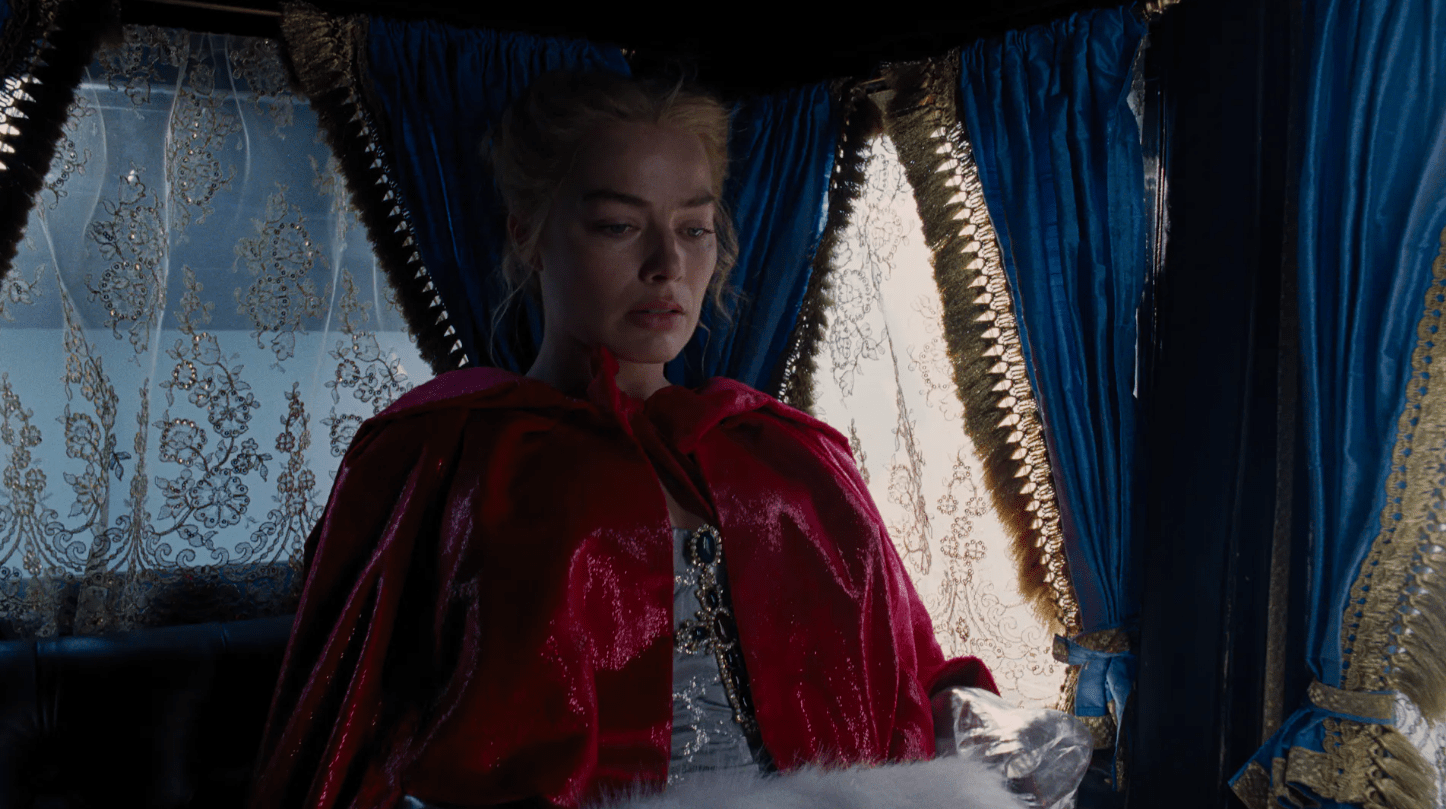
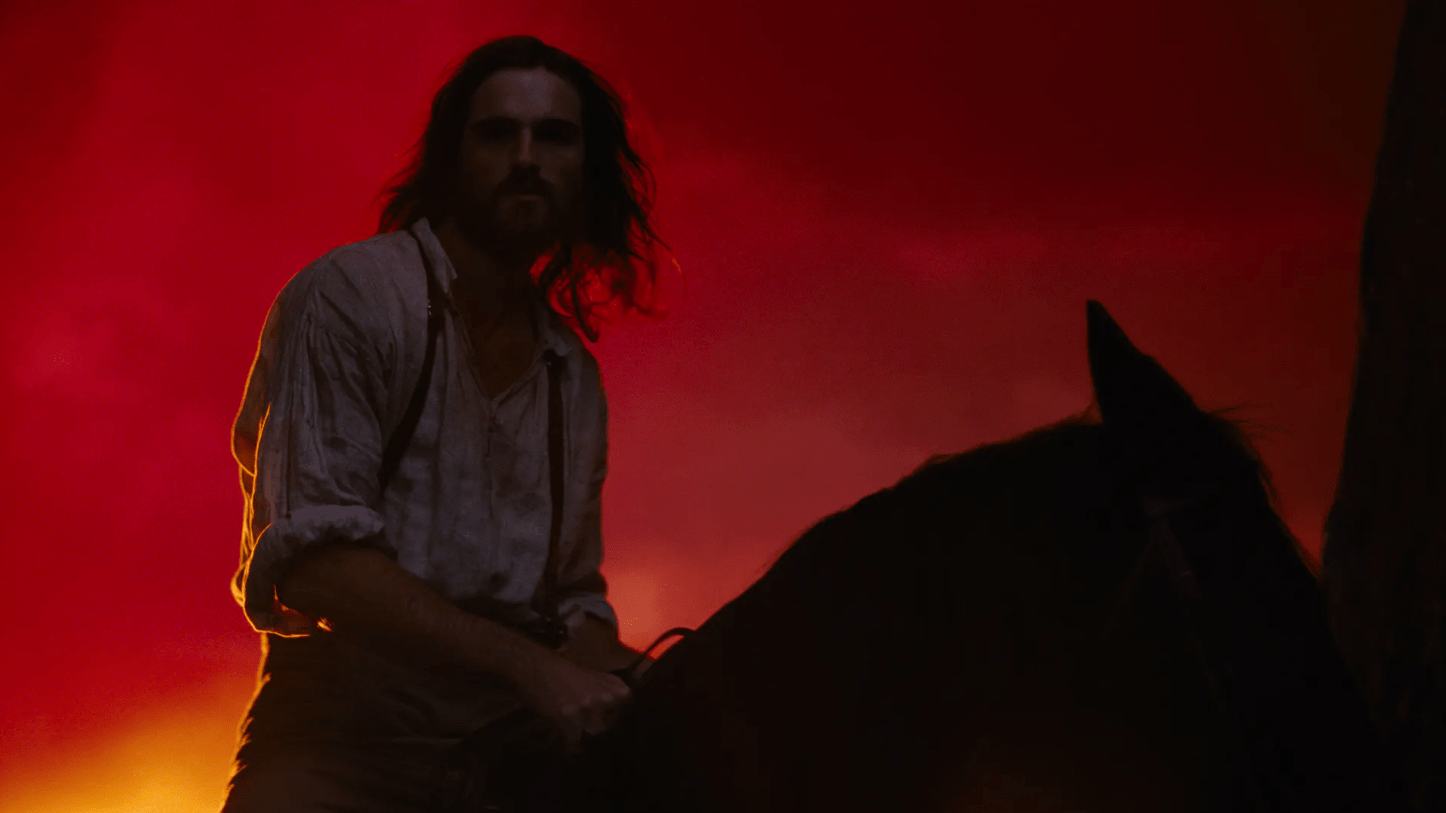
I was impressed by the soft, dreamy, and romantic visuals contrasting with the vibrant, passionate, and erotic visuals. I’m a huge fan of the red and white motif, a powerfully impactful visual technique that represents passion and purity, lust, and innocence. From the outfits to the set designs, the red and white colour variations were used perfectly and poetically.
I’d have to say the costuming for all the characters was beautifully designed. Especially when it comes to Catherine’s gowns. Corsets, cleavage, sparkling jewels, flowing veils, and trailing gown trains. I wasn’t explicitly a fan of Robbie’s acting in this film, but I very much enjoyed wondering what she’ll be wearing next. It was giving Wealthy Period Piece Barbie. The set designs used in both the Earnshaw and Linton manors were a feast for the eyes. Dark, extravagant, and ornately detailed. The fireplaces shown throughout the film were
something else. The enormous dollhouse in the dining hall, Catherine’s bedroom being designed to look like her skin, snowy winter trees with bows on them, flowing curtains dancing in front of massive open windows during the night, and the way the camera frames craggly, dying tree branches around the foggy, vast moors. Delightful. Don’t even get me started on the erotic visuals. Egg yolks being fingered, snail slime oozing down the screen, wet dough being mercilessly kneaded by strong hands.
That one scene when Catherine slowly pushes her fingers inside a fish’s mouth encased by aspic jelly? Yeah. Where the visual department flourished, I feel the music for Wuthering Heights was somewhat overlooked.
The film’s opening credits inform us that the musician Charli XCX scored the entire film. I have to say the Wuthering Heights soundtrack felt perfect for most scenes, until it was very obvious that you’re listening to a Charli XCX song. I’m one of those boring people who believe a period piece should have music true to its time. I get taken out of the fantasy too easily when I hear pop stars or modern classics singing targeted lyrics during scenes.
Wuthering Heights is frequently touted as “the greatest love story of all time”, but I’d have to disagree with that sentiment. Yes, love is surely involved. But this is a story about obsession, desire, lust, yearning, and regret. I wouldn’t go into this film expecting a romantic love story; I’d go into it expecting an obsessive and depressive love story. Wuthering Heights employs an erotic, dramatic, and occasionally comedic experience for viewers.
Although I found myself occasionally wondering if more would happen regarding the story, I absolutely want to rewatch this film for the visuals alone. Beautiful and unforgettable. I was particularly a fan of Alison Oliver as the eclectic, slightly psychotic, absolutely deranged Isabella Linton. She was so sweet and scary. I just don’t believe Emily Brontë was as horny as Emerald Fennell was when making this movie. I don’t know if that opinion will make you want to see the film more or less. But I think it’s worth a watch either way.

The Good
- Costuming is gorgeous
- Visually striking cinematography
- Beautifully gothic set design
- Alison Oliver as Isabella Linton
The Bad
- Lackluster dialogue
- Unfaithful adaptation of source material
- Charli XCX film score
- Overly sexualised caricature of love







 SuBZeRO2K
 Spotify
 Anchor
 iTunes