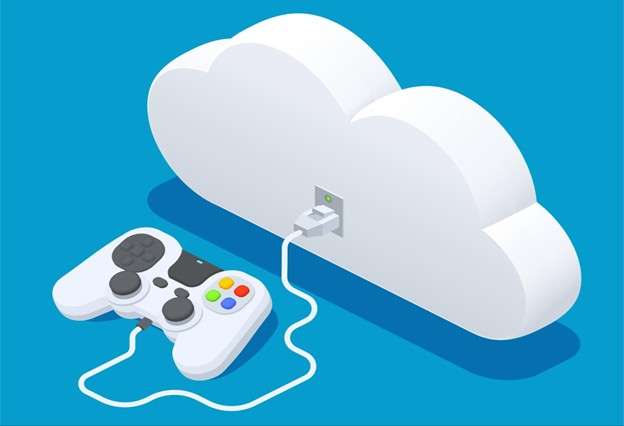
Hardware never stopped being a factor impacting the gaming industry. Gamers have been caught in a vicious cycle of upgrading since the inception of consoles up to the current date of high-performance gaming computers. However, in 2025, there is another model changing the way we play.
Cloud gaming – making titles available through the internet stream – is not a buzzword anymore. It is taking over as a significant aspect of the gaming ecosystem and will fulfill new, advanced gaming experiences in ways previously unseen.
So what is the motivation behind this change, and what does it portend to gamers?
Why Cloud Gaming Is Growing
Accessibility Anywhere
With services like the Xbox Cloud Gaming or NVIDIA GeForce NOW and PlayStation Plus Premium, AAA games are no longer played on an expensive computer. Users can now stream the games like Cyberpunk 2077, Halo Infinite, and God of War Ragnarok and play them on any smartphone or Smart TV, as well as on a middle-end laptop. The experience is determined by the speed of the internet, although in the well-connected areas, the performance is found to be on par with the local hardware.
Less Hardware Pressure
Soaring graphics card costs and console stockouts were a thorn in the flesh of gamers over a number of years. Cloud gaming switches the power, and the process does its work on remote servers, and the player is largely in control of the screen and input. This makes upgrades not as necessary as accessories, such as controllers and stable displays, which are useful.
Subscription-Driven Future
Libraries with dozens of titles available to players without regard to storage space or initial costs are now available in services. Other gamers are still inclined to physically possess their games, as opposed to streaming them, though such incentives to play (as to, say, Xbox Game Pass or PlayStation Plus) are increasingly becoming easy and trendy methods to get into the game.
The Challenges Holding It Back
- Internet infrastructure: Latency and bandwidth challenges continue to be a challenge, particularly in rural areas that are underserved. Playing such games as Call of Duty or Valorant can be dulled when being streamed.
- Ownership vs. access: The fear of stopping access to their digital library on the termination of the subscription or licensing is still a cause of concern for many players.
- Ecosystem fragmentation: Cloud gaming platforms are also competing on exclusives, but, similar to video streaming, they are also fragmented. You can subscribe to several titles to access all the desired titles.
The Big Picture of Cloud Gaming
Cloud gaming is a subset of a greater change in the intersection of technology, entertainment, and even finance and gaming.
- Esports / Streaming integration: It would be like being able to jump into the same game that you are watching a professional match or your favorite streamer, and then do it without any downloads or a powerful console.
- Experiences of content across devices: It is increasingly common to start the game on a console, go to the tablet and continue playing, and finally finish playing on TV without losing progress.
- Digital economies: Cloud gaming is also starting to experiment with digital economies and cryptocurrencies. While this is still new and figuring itself out, we can see it happening in places like Ethereum casinos.
How Gamers Benefit
Cloud gaming offers:
- Portability: Play on different gadgets in or out of the house.
- Affordability: It is not mandatory to pay a lot of money for hardware upgrades regularly.
- Quick Installation: Games do not require long installations.
And according to industry insights, the future of the game is not about playing, but ecosystems. Gamers are no longer just customers who buy a product. They’ve become active participants. They belong to an economic network and strong-knit communities, being directly engaged in the production of new content, as well as determining what will go viral.
What the Future Holds
- Smarter networks: As 5G and fiber networks get bigger, latency will decrease, and cloud gaming will come significantly closer to matching the traditional systems.
- Hybrid gaming models: Others are even developing systems in which certain aspects of a game can be run locally, and the scenes with heavy processing are done on the cloud. This may provide high performance with a lesser lag.
- Cloud-native games: Games are beginning to be designed cloud-specifically by developers. These may also consist of bigger multiplayer experiences or special features that cannot be done with local hardware only.
- Social & interactive layers: The next generation platforms can be embraced and modified with more community functionality – instant invitations, joint lobbying, or co-op streaming – creating a mixing of spectating and playing like never before.
Conclusion
Cloud gaming will not be a straight-out replacement of consoles or PC, but it is making itself a strong competitor in 2025.
Cloud gaming is the future, which already comes to life, not only to casual gamers willing to play blockbusters without buying expensive hardware, but also to tech-oriented people willing to get down to the digital application of technologies.



 SuBZeRO2K
 Spotify
 Anchor
 iTunes