
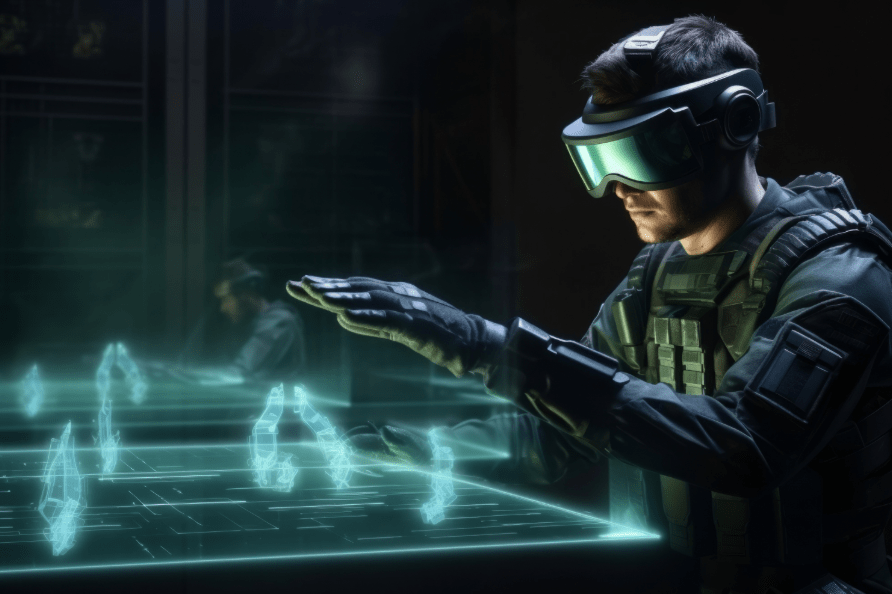
Anyone who has ever joined a tense multiplayer session knows the frustration. A split-second delay, a sudden lag spike, or the dreaded disconnection can destroy the flow of a game. Multiplayer stability is not simply a technical luxury—it’s the core of competitive balance and player satisfaction. As the gaming industry grows—projected to exceed $300 billion by 2030 according to Accenture—network demands scale with it. Millions of players are connected, but only milliseconds separate victory from defeat.
Why the Network Breaks Under Stress
In theory, internet connections should be fast enough by now. Fiber, 5G, satellite coverage, and high-speed Wi-Fi have improved dramatically. But real-world traffic is messy. Data doesn’t always take the shortest route. Servers get congested. ISPs throttle bandwidth. Distant matchmaking systems force players into unstable lobbies. Add to this the global nature of esports—teams competing across borders—and the system quickly cracks.
Tip! VPN for iOS or another device can protect you from many problems with multiplayer games. When VPN for iOS is active, you are not exposed to cyber risks of public Wi-Fi networks, you can prevent throttling and even optimize the flow of traffic. But you need to install VeePN VPN or another VPN with fast and reliable enough servers. The best VPN apps can sometimes even reduce latency and ping in games.
VPN Load Balancing as a Rescue
This is where VPN load balancing enters the discussion. Instead of routing game data through one fixed tunnel, multiple VPN servers can be used simultaneously. Traffic is spread intelligently, ensuring no single connection collapses under pressure. Traditionally, load balancing has been handled by static algorithms or manual configuration. It works to an extent, but it’s not enough for the unpredictable world of multiplayer gaming.
How AI-driven VPN Turns the Tables
So, how AI-driven VPN methods transform this picture? Artificial intelligence doesn’t rely on guesswork or rigid rules. It adapts in real time. When AI is integrated into VPN load balancing, the system constantly monitors latency, packet loss, jitter, and server capacity. Imagine the network as a living organism that instantly shifts traffic when a bottleneck appears. Instead of waiting for a connection to break, AI anticipates instability before it reaches the player’s screen.
A concrete example: if a player in Berlin is connecting to a U.S. server for a tournament, AI-driven routing may decide to split traffic between three different VPN paths. If one becomes unstable, packets are instantly rerouted to maintain smooth gameplay. The player never notices the change, but their competitive edge remains intact.
Stability Becomes Predictable
The beauty here is that multiplayer stability no longer feels like a gamble. According to a 2023 report by Ericsson, over 60% of gamers cite lag as the top frustration in online play. AI-driven VPN load balancing directly addresses this pain point. Instead of reducing lag “sometimes,” it makes stability a predictable feature. The system learns from previous sessions, recognizes usage patterns, and self-optimizes. The longer it operates, the better it becomes at maintaining a flawless connection.
Switching Perspectives: The Player and the Developer
From the player’s perspective, smoother connectivity equals more enjoyable matches, fewer interruptions, and fairer gameplay. Competitive esports organizations especially stand to benefit. Their players won’t be handicapped by distance or unstable servers.
From the developer’s side, this innovation reduces the burden of server overprovisioning. Many studios overspend on infrastructure to avoid crashes. If AI-driven VPN balancing spreads traffic efficiently, fewer resources are wasted. The infrastructure cost is optimized, while user experience actually improves.
A Silent Ally in Cross-Platform Play
Cross-platform gaming complicates things further. Different consoles, PCs, and even mobile devices attempt to synchronize data streams. Without stable connections, cross-platform matchmaking collapses. AI-driven VPN load balancing can operate as the silent ally, harmonizing data transfer across devices. One moment a player is on a console in Tokyo, another on a phone in São Paulo, and yet the lobby remains stable. That’s the future direction gaming communities are heading toward.
A Brief Technical Dive
Let’s not oversimplify: the magic lies in adaptive algorithms. AI can deploy reinforcement learning techniques, teaching itself which routes perform best under certain conditions. Neural networks evaluate latency fluctuations and reroute within milliseconds. Unlike humans or static scripts, AI doesn’t tire, doesn’t overlook details, and doesn’t need to wait for failure to make adjustments.
Traditional VPN load balancing could reroute once instability was detected. AI-driven systems reroute while instability is still developing. That’s the revolutionary leap.
Resistance and Concerns
Of course, not everyone embraces new methods immediately. Skeptics argue that AI-driven VPN systems introduce complexity. What if the AI itself malfunctions? What about data privacy when intelligent systems monitor connections? These are valid concerns, but early trials suggest that automated systems are more secure than human-monitored ones. Machine decisions are faster, more consistent, and less vulnerable to negligence.
The Statistical Horizon
Let’s tie this back to numbers. A small-scale 2022 study by Cloudflare showed that dynamic routing reduced packet loss by up to 48% compared to static load balancing. When AI systems were added to the equation, stability improved by more than 70% in heavy traffic simulations. These statistics hint at an upcoming revolution: not just marginal improvement, but a substantial shift in how we understand multiplayer connectivity.
Looking Ahead
The transformation is not decades away. Some VPN providers already experiment with AI-enhanced balancing models, primarily targeting enterprise clients. The leap into gaming is inevitable. Once esports leagues and major studios adopt these systems, the ripple effect will be massive. Casual gamers, indie developers, and everyday online communities will benefit from technology once reserved for large-scale corporations.
Final Thoughts
Lag, jitter, and disconnects have haunted multiplayer experiences for years. But the tide is turning. With AI-driven VPN load balancing, stability moves from uncertainty to expectation. Networks stop reacting and start predicting. Players stop worrying about connection drops and focus entirely on gameplay. Developers stop overspending on unnecessary infrastructure.
Multiplayer gaming won’t just feel smoother—it will feel fairer, global, and sustainable. That’s not a small improvement. That’s a revolution.




 SuBZeRO2K
 Spotify
 Anchor
 iTunes