
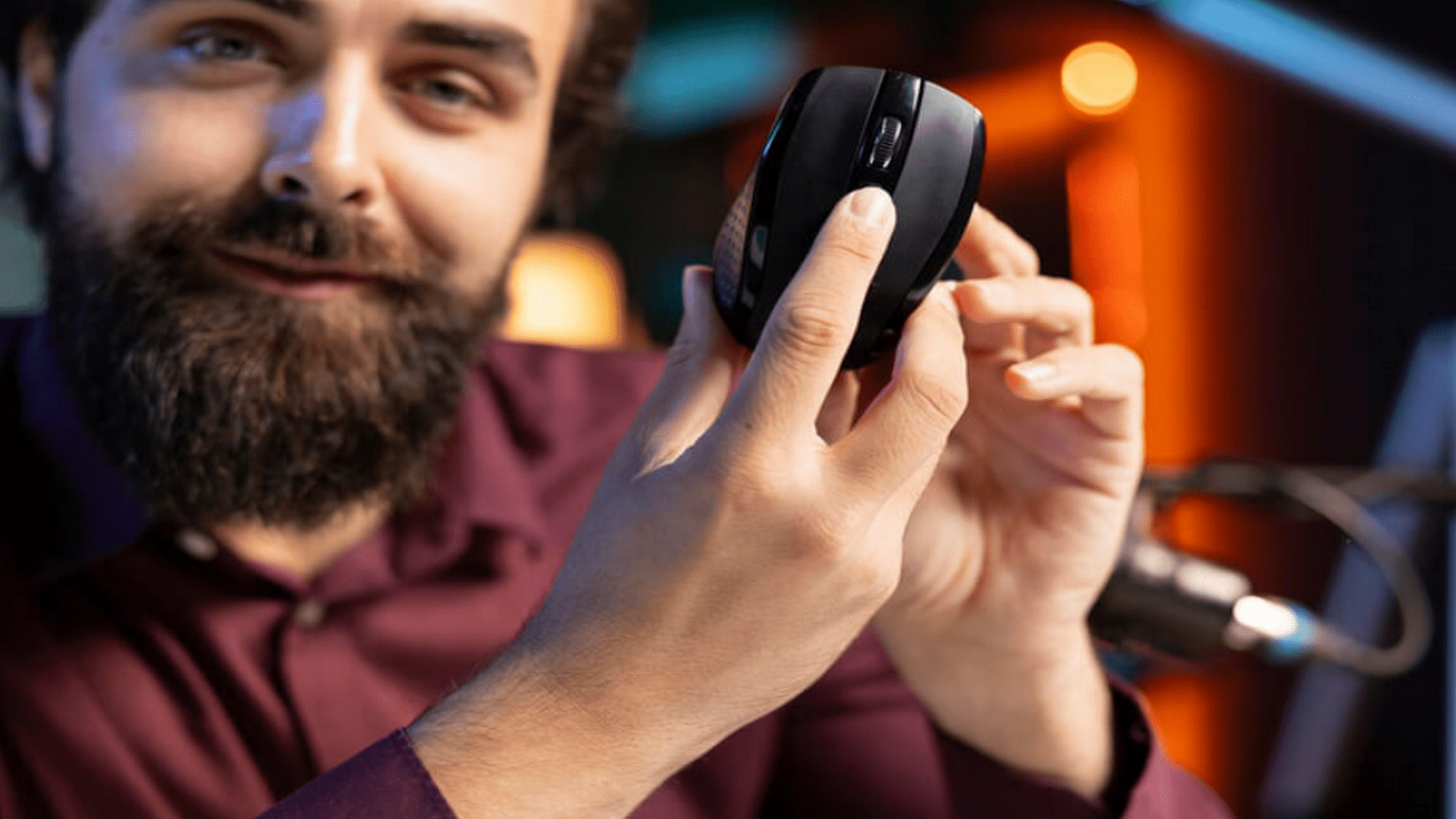
Spend enough time playing games, and you’ll notice how every player has an opinion on mice.
Everyone’s got a preference, a brand they swear by, or a reason they refuse to ever go wireless. And there’s a very real reason for that.
Your mouse is the thing that connects your brain to the game. It’s what takes your intention and actually does it on screen.
If that connection feels heavy, sloppy, delayed, or inaccurate, it doesn’t matter how good your aim is. You’ll miss, you’ll misclick, or you’ll second‑guess yourself.
But with the right mouse, every drag feels smooth, and every flick feels crisp.
And once you’ve felt that difference, going back is not an option.
What Makes a Gaming Mouse Different From a Normal One?
A basic USB mouse works fine for browsing the web. But gaming mice are built for real‑time decision‑making. They are designed to eliminate hesitation and delay.
Here are the big differences you’ll feel:
Sensor Quality
This is the heart of the mouse. Better sensors track movement more precisely and consistently.
Cheap mice often jitter, accelerate unexpectedly, or lose tracking on shiny surfaces.
DPI and Sensitivity Options
DPI (dots per inch) means how far the cursor moves for each centimetre your hand moves. Good gaming mice let you switch DPI on the fly – handy when switching between sniping and general movement.
Polling Rate
This is how often the mouse tells your computer where it is. A higher polling rate means smoother motion on screen.
Buttons You Can Actually Use
Extra buttons aren’t just for MMO players. A couple of well‑placed side buttons can make reaction time faster.
Build and Shape
Comfort matters. Ever notice how your hand starts aching after long sessions? A bad mouse will get in the way of your focus.
Why Pros Care About the Little Details
Professional players test gear obsessively. They’ll swap mice between sets. They’ll calibrate surfaces and try different grips.
Why?
Because at the pro level, players make decisions in split seconds. One tiny slip, a flick that doesn’t register, and a round is over.
High‑end mice aim to reduce everything that isn’t intention, meaning:
- no jitter
- no skipped frames
- no acceleration
- consistent feel across movements
This is why so many players discuss gear on forums endlessly. Because once you’ve felt a mouse that tracks exactly where you want it to, you start to recognise its impact on gameplay.
Grips, Size, and Comfort – Yes, It Actually Matters
You might think “a mouse is a mouse,” until you play for hours with one that doesn’t fit your hand. There are three main grip styles:
- Palm Grip – whole hand rests on the mouse.
- Claw Grip – fingertips and part of the palm, more tension.
- Fingertip Grip – just fingers touch the mouse, the rest floats.
Each grip works better with different shapes and weights. A mouse that feels good with a palm grip might feel awkward if you use a claw grip.
So try before you buy. Or at least read detailed impressions from people with similar grip styles.
Wireless vs Wired – Which Side Are You On?
This is one of the biggest debates in gaming gear.
Wired mice used to dominate because wireless lagged behind. No longer.
Modern wireless mice can have response times just as quick as wired ones.
But there are trade‑offs:
Wireless Pros
- No cables in the way
- Cleaner desk setup
- Freedom of movement
Wireless Cons
- Battery life concerns
- Can be heavier (depending on model)
- Potential interference in crowded wireless spaces
Wired Pros
- Consistent power
- No battery to worry about
- Usually cheaper
Wired Cons
- Cable drag can affect movement
- Less clean setup
The truth? Both can be excellent. It’s down to preference, playstyle, and hardware quality.
Gaming Surface and Why Your Desk Mat Matters Too
A high‑end mouse feels great, but put it on a cheap, glossy surface and tracking suddenly becomes sloppy. Surface texture changes how sensors interpret motion.
That’s why gaming mouse mats exist – they provide a consistent texture for sensors and reduce slip.
And yes, seriously pro players pair specific mats with specific mice for consistency.
The Software Behind the Mouse
Most gaming mice ship with software that lets you:
- Adjust DPI
- Program buttons
- Create profiles per game
- Change lighting effects
This might sound cosmetic, but it lets you customise the gear to your playstyle.
For example, in shooters, you might want:
- Lower DPI for precision
- Side buttons for crouch and throw
- Quick DPI switches for scope adjustments
Software turns your mouse into a tool, not just a pointer.
How Casual Gamers Benefit Too
You don’t have to be a pro to feel the difference. Casual gamers often skip good gear because they don’t think it matters.
But that’s like saying a bike is the same regardless of tyres. Even if you’re just playing daily games, a responsive mouse reduces finger fatigue and makes everything feel smoother.
A Note on Choosing Reliable Gaming Platforms
If you spend time online exploring gear and games, you’ll notice that trusted review platforms are incredibly helpful. They save time and help separate hype from substance.
Even in other genres, like casino gaming, reputable sites matter. For example, well‑established review hubs like Pokiemachines.com pokie site reviews highlight quality games, reliable platforms, and honest player feedback so you know what you’re getting before you dive in.
The same idea applies to gaming gear: look for trusted, detailed, experience‑based reviews rather than flashy marketing claims.
What You Should Spend On a Gaming Mouse
Price doesn’t always equal performance. Some mid‑range mice outperform expensive ones because they focus on sensor quality and comfort over other things.
Here’s a simple guide:
- Under $50: Decent for casual play, but expect limitations
- $50-$100: Ideal for most players – good sensor, comfort, solid build
- $100+: Premium features like ultra‑lightweight, wireless excellence, and customisation
If you’re serious about gaming – whether shooters, MOBAs, or fast strategy games – spending in the mid‑range usually gives the best value.
Gear You Can Grow With
At the end of the day, a gaming mouse isn’t just an accessory. It’s one of the most personal parts of a setup. It’s what you touch every second you play.
A good mouse won’t instantly make you a better player. But it eliminates hardware limitations, so your decisions, skills, and timing actually matter in every situation.
Focus on comfort, sensor quality, and responsiveness. And remember: tech should support your play, not get in the way of it.



 SuBZeRO2K
 Spotify
 Anchor
 iTunes