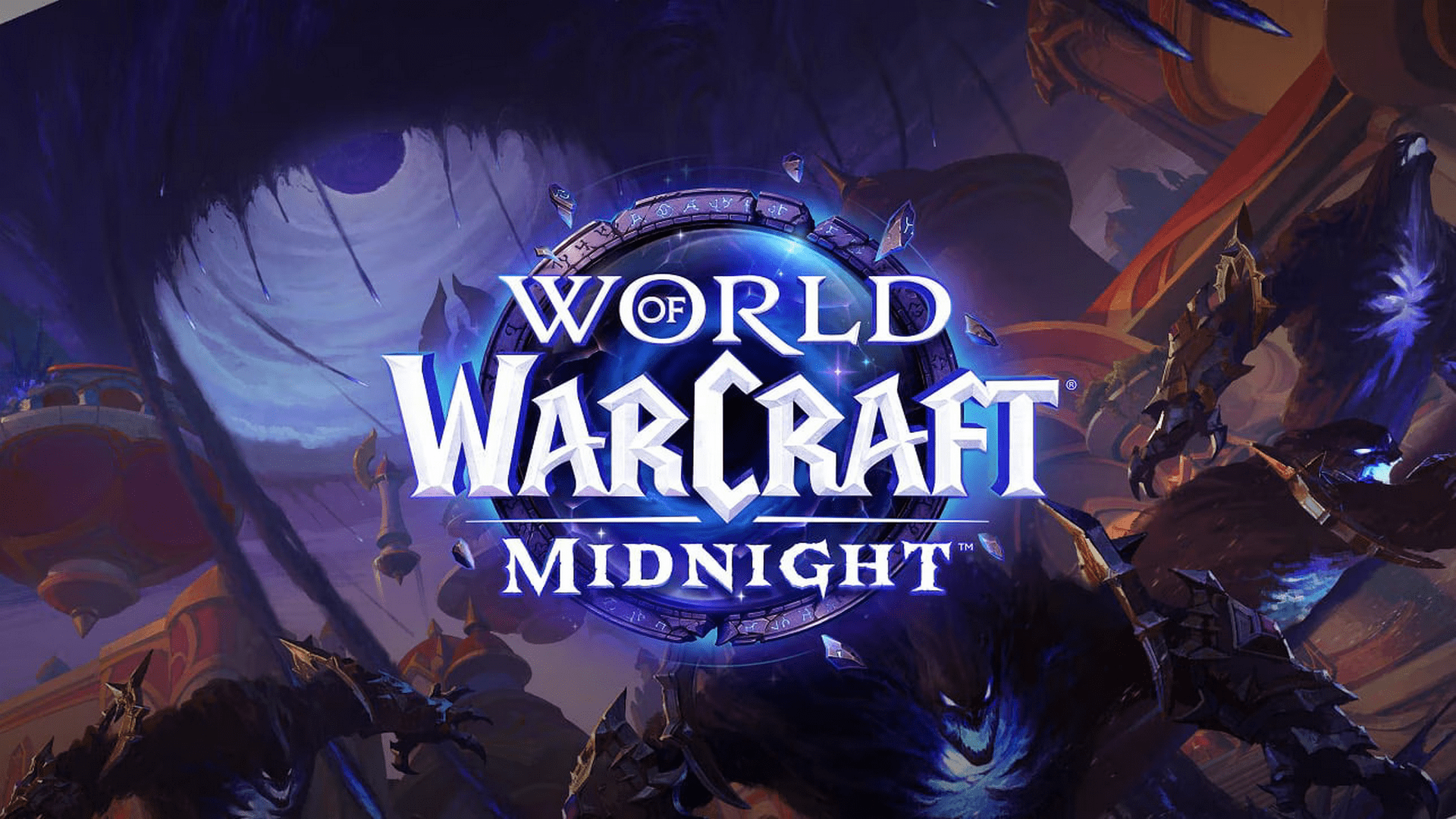
Blizzard’s second chapter in the World Soul Saga aims to reshape Azeroth through light, void, and player choice.
Recently, MKAU Gaming sat down with Associate Game Director Paul Kubit to discuss Blizzard’s upcoming expansion, World of Warcraft: Midnight, where he revealed a wealth of information. Let’s get into it!
World of Warcraft: Midnight is the eleventh expansion pack and the second chapter in the World Soul Saga trilogy, following The War Within. While The War Within focused on subterranean threats and political upheaval, Midnight shifts sharply toward the cosmic conflict between Light and Void, with the Blood Elf’s Sunwell now endangered.
As we’ve come to expect from the World of Warcraft opening cinematics, the expansion introduction video kicks off dramatically, with antagonist Xal’atath constructing a colossal Void Spire capable of striking Azeroth like an orbital weapon. Its target: the Sunwell, the spiritual and magical heart of Blood Elf civilisation, first introduced in 2007’s World of Warcraft: The Burning Crusade expansion. From there, players are thrust into a sprawling campaign, with new characters and old rivalries renewed.
A Story About the Light, the Void, and Everything In Between
Rather than painting the Light as heavenly good and the Void as diabolically evil, Midnight leans into morality. Returning characters Turalyon (Warcraft II), Alleria (Warcraft II), and their son Arator (The Burning Crusade) are caught between opposing cosmic forces, testing both their bloodline and morals. Meanwhile, Void Elf leader Magister Umbric (World of Warcraft) represents a growing theme: using the Void without surrendering to it.
Blizzard is also introducing new faces, including the twin Amani Troll leaders Zul’jara and Zul’jon, as well as Orwenya, a mysterious member of the reclusive Haranir. These storylines converge as players confront Xal’atath’s Devouring Host and uncover uncomfortable truths about both the Light and the Shadow.

Zones: Rebuilt Classics and Strange New Frontiers
Players will begin their Midnight journey in a fully reimagined Eversong Woods, the starting zone for the Blood Elf faction, healed of the Scourge’s corruption and updated with modern visuals and full flight capability. Silvermoon City, the Blood Elf capital, serves as the expansion’s main hub, though only partially Horde-only; a shared space where Alliance and Horde cooperate against the Void threat will be implemented.
Other major regions include:
- Zul’Aman: A revitalised forest kingdom of the Amani Trolls, blending ancient ziggurats with dense jungles. Players will help the trolls reconnect with their lost Loa after years of spiritual exile.
- Harandar: Home of the Haranir, a hidden druidic race living beneath Azeroth’s surface among the roots of the World Trees. This fungal jungle features glowing mushroom forests and darker bioluminescent depths.
- The Voidstorm: The final endgame zone, formed entirely of Void energy. It’s hostile, alien, and driven by a brutal survival logic: the strong consume the weak.
Paul has stated that, unlike past expansions, players can tackle the middle chapters in any order. Players can choose whether to explore Zul’Aman, Harandar, or follow Arator’s personal Light-focused storyline first.

A New Allied Race: The Haranir
Should players succeed in recruiting them, the Haranir become a new Allied Race. These quilled, furred humanoids feature extensive customisation options, including multiple body types, skin tones, quill patterns, and glowing eyes. Their aesthetic blends druidic nature themes with subterranean culture.
Delves, Dungeons, and an Unusual Raid Lineup
Delves return from The War Within, now expanded to include outdoor spaces, allowing mounted combat. Designed for 1–5 players with dynamic scaling, they remain a bridge between solo play and group content.
At launch, Midnight introduces:
- 8 new dungeons, unlocked through story progression rather than strict level gates.
- 3 raids in Season One:
- The Void Spire (6 bosses)
- March on Quel’Thalas (2 bosses)
- The Dream Rift (a single-boss raid, echoing classics like Onyxia and Magtheridon)
All dungeons are playable in Follower Mode, allowing players to run them solo with AI companions.

Housing Finally Comes to Azeroth
Player housing has finally arrived! With creative freedom in mind, objects can be resized, rotated, recoloured, and made to float. Homes are clustered in shared neighbourhoods of up to 55 plots, encouraging social interaction and cooperative Endeavors.
Decor is earned through regular gameplay: raids, dungeons, reputations, and exploration, ensuring housing ties directly into the wider MMO experience.
New Demon Hunter Spec: Devourer
Demon Hunters gain a third specialisation: Devourer, a ranged DPS spec powered by Void energy rather than Fel. Highly mobile and focused on soul manipulation, it adds a new playstyle to the traditionally melee-focused class. Void Elf Demon Hunters also become playable via a short unlock quest.
Prey: A New High-Risk Outdoor Mode
One of Midnight’s standout features is Prey, an opt-in hunting system where elite enemies stalk the player in the open world. These ambushers can strike at any moment, layering unpredictable danger onto routine activities.
Greater difficulties introduce brutal modifiers — shadow clones, timed kill demands, and escalating debuffs — offering cosmetic rewards and high-end solo gear for those willing to risk it.

Making Azeroth More Accessible
Blizzard is also revamping onboarding systems:
- New players are funnelled through Dragonflight after Exile’s Reach, with a full expansion story explaining both the lore and gameplay.
- Returning players can enter a “catch-up” adventure to relearn combat without dealing with cluttered UI or outdated quest logs.
- PvP gains Training Grounds, a battleground where players can practice against AI teams to learn fundamentals without harsh matchmaking.
UI improvements will replicate popular third-party addon functions and apply them to the base game, including damage meters, expanded nameplate customisation, and encounter clarity.
Transmog is now slot-based, meaning visual appearances persist even when upgrading gear. Players can save multiple outfits and swap them at will, with optional auto-switching based on context, e.g., auto-apply a specific transmog when in housing, or in a capital city, in a raid, etc.
Final Verdict: The Midnight Hour looms with intrigue and quality of life
Rather than leaning solely on spectacle, World of Warcraft: Midnight will redefine players’ roles in story structure, class design, social systems, and even personal expression through housing.
With a looming battle of Light vs Void, rebuilt classic zones, new raid structure, and long-awaited features, Midnight feels less like a routine expansion and more like a new life for the famed MMO franchise.
If Blizzard can deliver on its promises, Midnight may prove to be one of World of Warcraft’s most transformative chapters yet.
We send our thanks to Paul Kubit for sharing his time. Keep your ears glued to the MKAU Podcast as our interview with Paul will be released in the coming days!




 SuBZeRO2K
 Spotify
 Anchor
 iTunes