
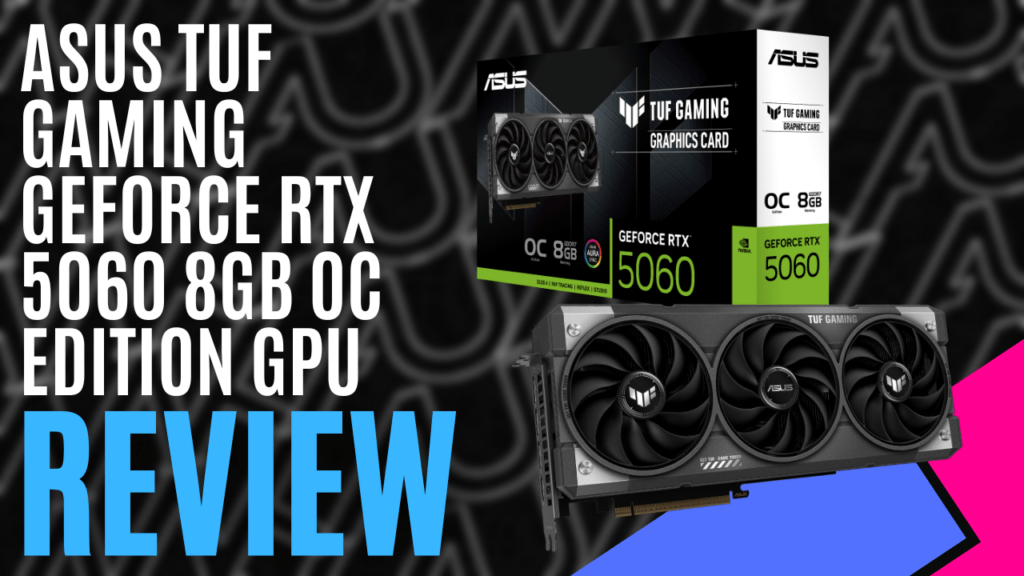
Earlier this year, ASUS allowed me to check out the ASUS TUF Gaming GeForce RTX 5080 and 5070 OC Edition GPUs, so it was only a matter of time before I got my hands on the ASUS TUF Gaming GeForce RTX 5060 OC Edition graphics card. Although we’re working down the list, I’m still curious to see how it holds up against the best, as well as what we currently have in the benchmark system ASUS helped us put together.
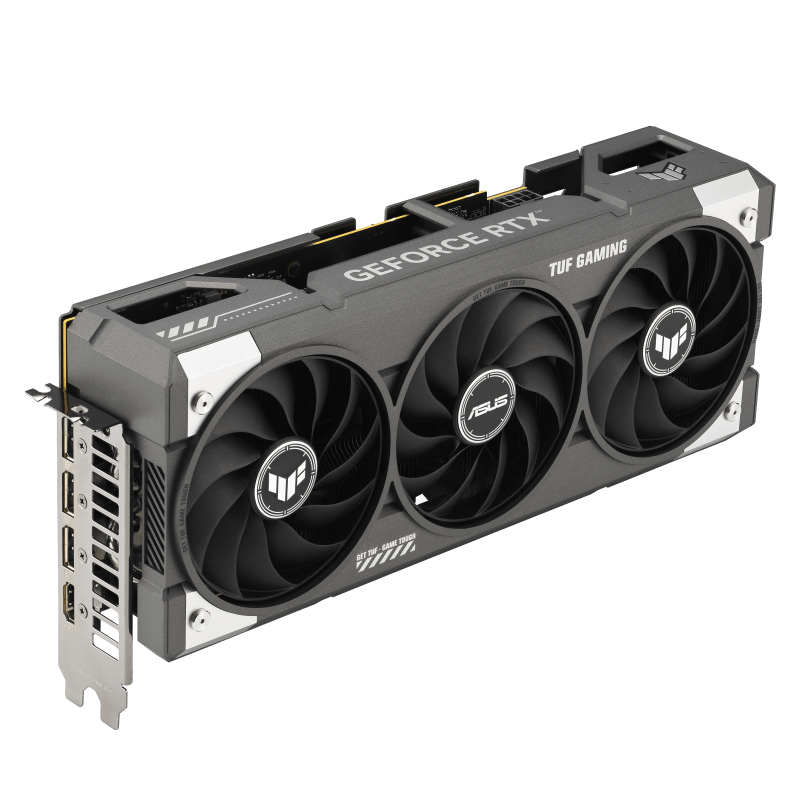
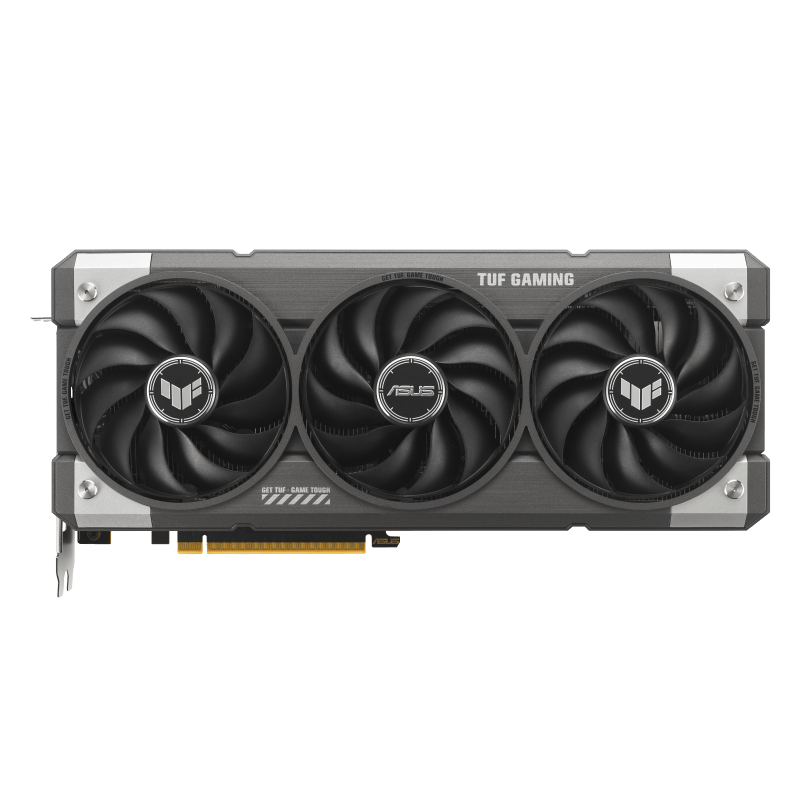
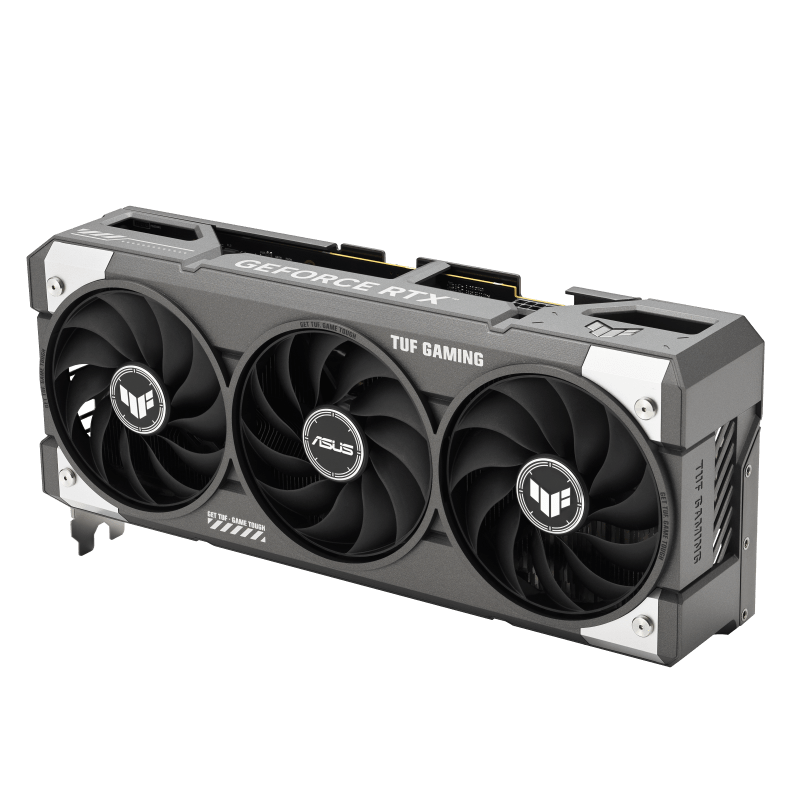
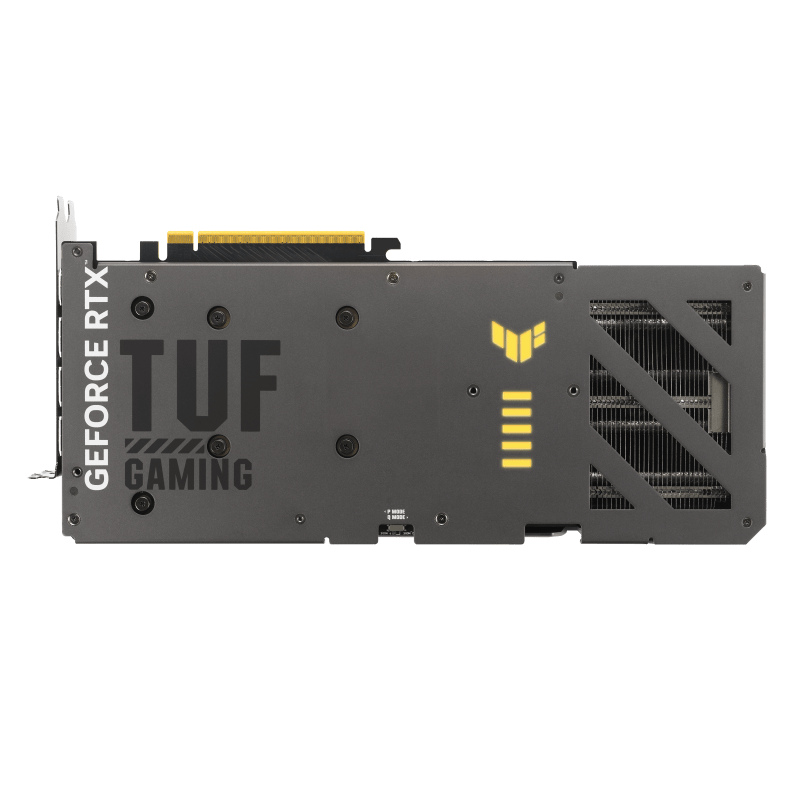
Sharing many of the same rugged design and build elements as its more powerful siblings, the ASUS TUF Gaming GeForce RTX 5060 OC Edition is built to last. A protective coating over the PCB prevents short circuits and corrosion caused by moisture, dust, and debris, while three counter-rotating Axial-Tech fans and a MaxContact heat spreader keep the board running cooler for longer.
The die-cast shroud and aluminium backplate borrow industrial design elements, delivering both function and form, with the vented exoskeleton allowing unobstructed airflow through the radiator. They also provide a rock-solid foundation for the PCB, helping to prevent it from flexing. However, if this does happen, ASUS GPU Guard steps in, utilizing a special adhesive to prevent the chip from cracking.
Out of the box, it can achieve OC clock speeds of up to 2677 MHz, although you may be able to squeeze it a little harder with GPU Tweak III. It comes with 8GB of GDDR7 VRAM, capable of pushing up to 28 Gbps through a 128-bit memory interface, featuring 3840 CUDA cores.
AI performance, on the other hand, only slightly exceeds the RTX 4060 at 648 TOPS, and although that is enough to give you access to DLSS 4, frame generation, and Ray Tracing, there’s a catch, but I’ll touch on that later.
Like the ASUS Prime Radeon RX 9060 XT OC Edition GPU I recently reviewed, the ASUS TUF Gaming GeForce RTX 5060 OC Edition slots into a PCIe 5.0 expansion slot and uses a single 8-pin power connector with a recommended 550W power supply, but in terms of base-line performance, it can’t quite keep up. It certainly can’t compete with the older ROG Strix Gaming GeForce RTX 4070 OC Edition we have in the benchmarking PC ASUS has helped us put together.
As it stands, the current system is built around the ROG Strix Z790-A Gaming WiFi II Motherboard and an ROG Strix Gaming GeForce RTX 4070 OC Edition GPU. It’s cooled by the ROG Strix LC III 360 AIO Cooler, powered by the TUF Gaming 1000W Gold White Edition PSU, and housed inside the all-white TUF Gaming GT302 ARGB case.
With the ROG Strix Gaming GeForce RTX 4070 OC Edition installed, the system is capable of running Cyberpunk 2077 with Ray Tracing set to Ultra, DLSS 4, and frame generation enabled; it consistently holds around 65 FPS with a resolution of 4K. The ASUS TUF Gaming GeForce RTX 5060 OC Edition, on the other hand, felt like it was struggling, and in some cases, it tanked. However, we are comparing an entry-level card against a mid-to-high-tier card.
The issue, unfortunately, comes down to the 8GB VRAM. Even though it’s faster, it fills up quickly, and once that memory is filled, things quickly go south, even when dropping the resolution to 1080P. For a game like Cyberpunk 2077, the sweet spot appears to be playing in 1440P without frame generation and without Ray Tracing, where it holds just shy of 60 FPS, or between 70 and 80 FPS at 1080P.
It’s clear the RTX 5060 OC Edition is very much an entry-level GPU, best suited for competitive titles, less demanding games, or anyone happy to tweak settings for smooth gameplay, rather than pushing everything to the limit.
The ASUS TUF Gaming RTX 5060 OC Edition GPU feels like a card that wants to do more, and while it initially appears capable, the 8GB VRAM holds it back. Everything else about it is genuinely solid. The cooling is great, and the build quality is top-tier. ASUS has packed in all the right tech, but I still found myself wanting more.
It’s a strong foundation for a budget-friendly build if you’re gaming at 1080P or lower 1440P workloads, especially with DLSS and frame generation on your side. Still, anyone chasing high-fidelity visuals will quickly hit the 8GB limit.

The Good
- Rugged and durable design with industrial styling
- Solid performance at 1080P and lighter 1440P
- Great thermal management
- Supports DLSS 4, Ray Tracing, and frame generation
The Bad
- Insufficient VRAM restricts performance potential
- A marginal upgrade over its predecessor






 SuBZeRO2K
 Spotify
 Anchor
 iTunes