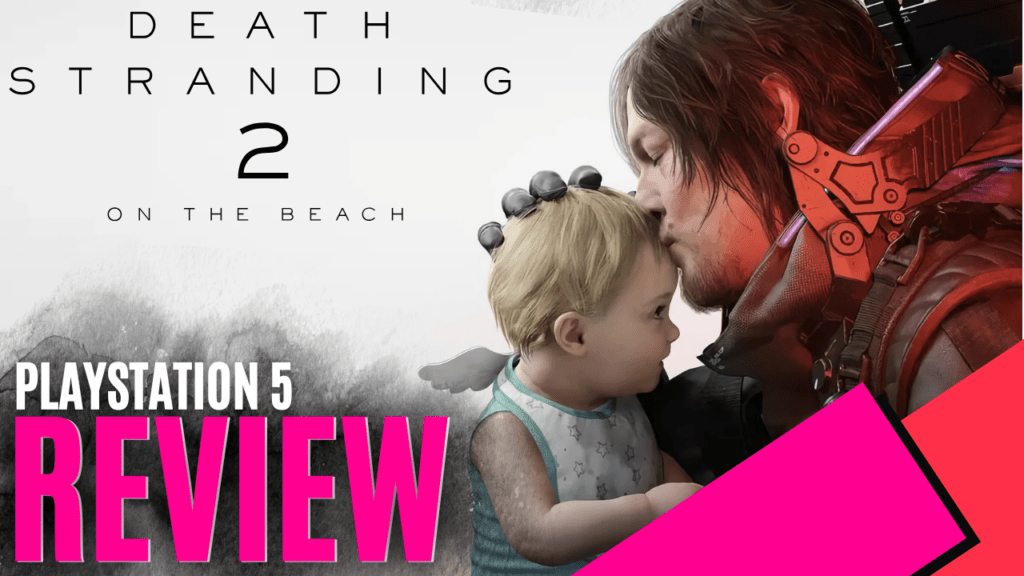
When Death Stranding was released in 2019, it received a mixed reaction from the gaming industry and fans alike. Years later, some have come around on the game labelled as a “walking simulator” by harsh critics, while others remain unchanged. I was a firm believer from the very start. However, Death Stranding quickly became one of my favourite games of all time.
Hideo Kojima and his team at Kojima Productions, backed by Sony Interactive Entertainment, delivered a truly unique and thought-provoking experience, one whose strange, almost meditative gameplay loop clicked with me. Death Stranding felt like a once-in-a-lifetime project from Kojima, and I never thought we would even get a sequel, let alone it land in my hands for review, but Death Stranding 2: On the Beach is here, and after an epic opening credits sequence, one thing is clear, it’s ready to carry on the legacy of its predecessor.
Death Stranding 2: On the Beach picks up 11 months after the events of the first game. Sam and Lou are in hiding, living a quiet life near the Mexican border, finally finding some peace after everything they’ve been through. But that peace doesn’t last long. Fragile arrives with a new mission, tasking Sam to cross the border and bring Mexico onto the network. After some significant events, ones I’ll leave for players to discover themselves, Sam and Fragile find themselves halfway across the world in Australia. A new continent for Sam to bring together.
Now, for me, it’s hard to go any further without talking about Australia. When I first heard the sequel was set in my home country, my excitement, which was already very high, skyrocketed. And I must say, it’s genuinely refreshing to see Australia captured faithfully like this. Our vast red soil landscapes, the eucalyptus trees dotting our forests, the vegetation littering the ground and our unmistakable wildlife scattering about.
It’s not just a stunning backdrop; it’s indistinguishably Australian. I’m willing to put it out there that it’s the best version of Australia I’ve ever seen in a video game. Even some of our natural disasters make an appearance.
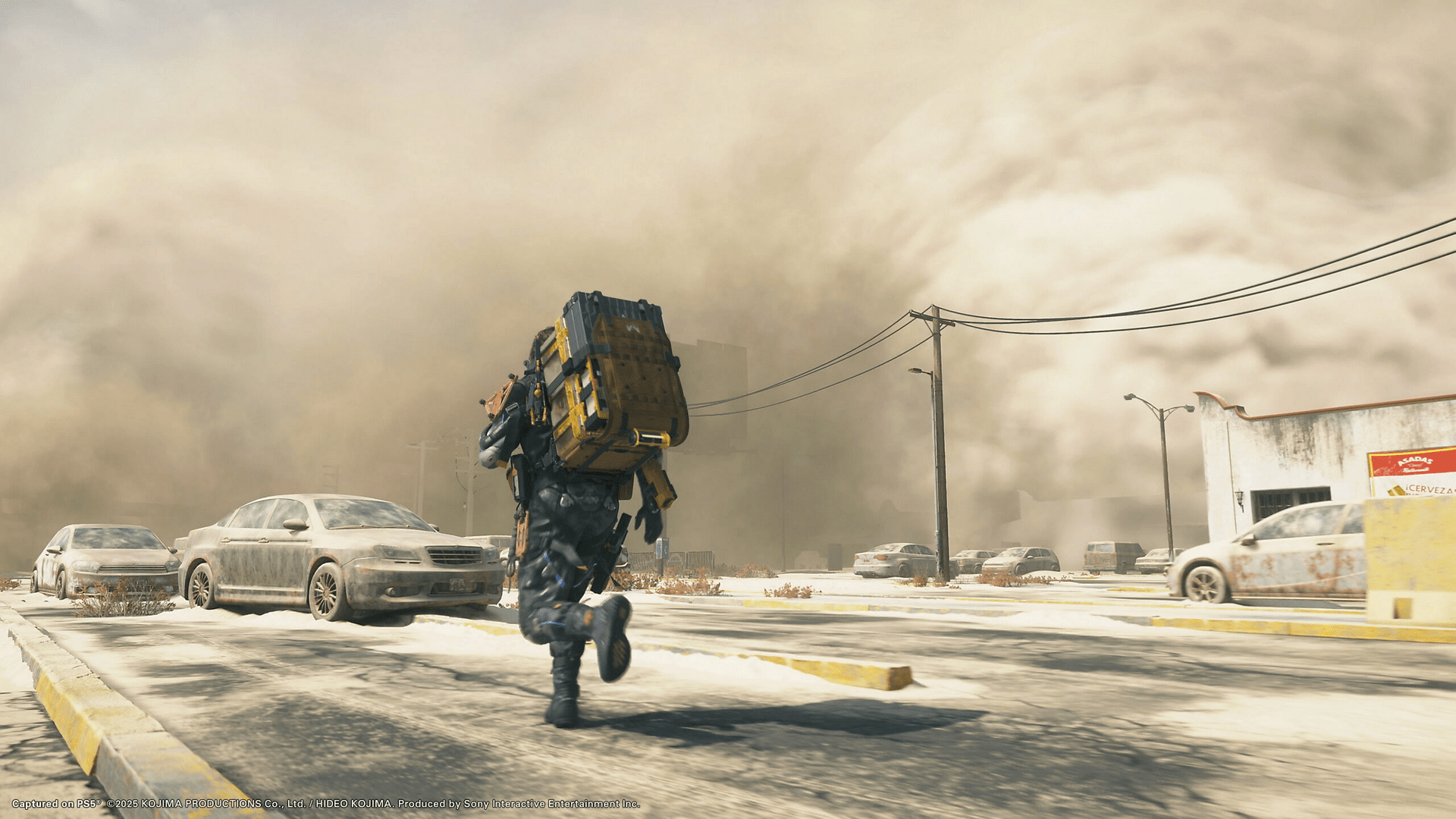
Earthquakes that trigger rockslides, avalanches that can sweep you away, flash floods that wash away structures, and our all too familiar bushfires that can trap you in an instant. They’re all part of a vastly upgraded weather and environmental system that the first game introduced. You’ll have to contend with all of it while trying to link up the continent. Though weather isn’t the only thing you’ll have to contend with.
MULEs and the new Brigand camps are scattered across Australia. And, of course, the ever-present threat of Beached Things (BTs) still keeps you on edge. Enemy AI is much more intelligent across the board. Thankfully, one of the most noticeable improvements from the first game is the combat. That’s thanks to a range of new tools at your disposal. The new sniper rifle gives you the advantage of range when dealing with Brigands. And as for the BTs, a handy new piece of tech, which I won’t spoil, is quite fun to use when dealing with them. Even Yoji Shinkawa’s beautifully designed bosses are more enjoyable to fight and are less clumsy encounters this time around, thanks to the improved equipment at your disposal.
Of course, not everything is trying to kill you. This is a strand-type game after all, so the connections you build with other players are everywhere. You might arrive at a cliff or a river, only to find a ladder or bridge left behind by someone who walked that path before you, which you can now use to climb or cross. Early in my journey, I placed a climbing anchor without much thought. Now, 30 hours later, it has nearly a thousand likes from other players whose journeys became just a little easier because of my small action. But the moment that truly stuck with me was during a bushfire. I was trapped, with no tar cannon in my inventory and no way forward, until I spotted a tar cannon left behind by another player. It let me push back the fire and carve a path to safety.
It’s an amazing social system that, even though Death Stranding 2 is a single-player game, ensures you never feel alone. You gain a real sense of community that comes from the bonds you form with other players. A system I wish more games would implement.
The core gameplay of Death Stranding 2 remains essentially the same. In the first game, you were essentially a UPS delivery man trekking across post-apocalyptic America. But now that we’re in Australia, it feels much more fitting to say you’re working for Australia Post instead. Jokes aside, the core gameplay loop of delivering cargo was the one thing I wanted to stay the same between Death Stranding and its sequel, and I’m so happy it has. Bringing new distribution centres or preppers onto the network often unlocks useful upgrades, making your next delivery that little bit easier or more efficient.
Speaking of making deliveries easier. Building the roads, just like in the first game, remains as rewarding as ever. And with the addition of the new monorail system, you now have even more ways to streamline travel and feel the lasting impact of your efforts. The entire gameplay loop of making deliveries is genuinely addictive, and, as I mentioned at the start of this review, it becomes almost meditative and peaceful for me.
Some of the people you meet along the way will feel very familiar. Many well-known actors appear as preppers or staff at distribution centres, and spotting them during deliveries is always a fun surprise. I didn’t recognise every single one, and I’ll keep the names a secret so you can be just as surprised as I was.
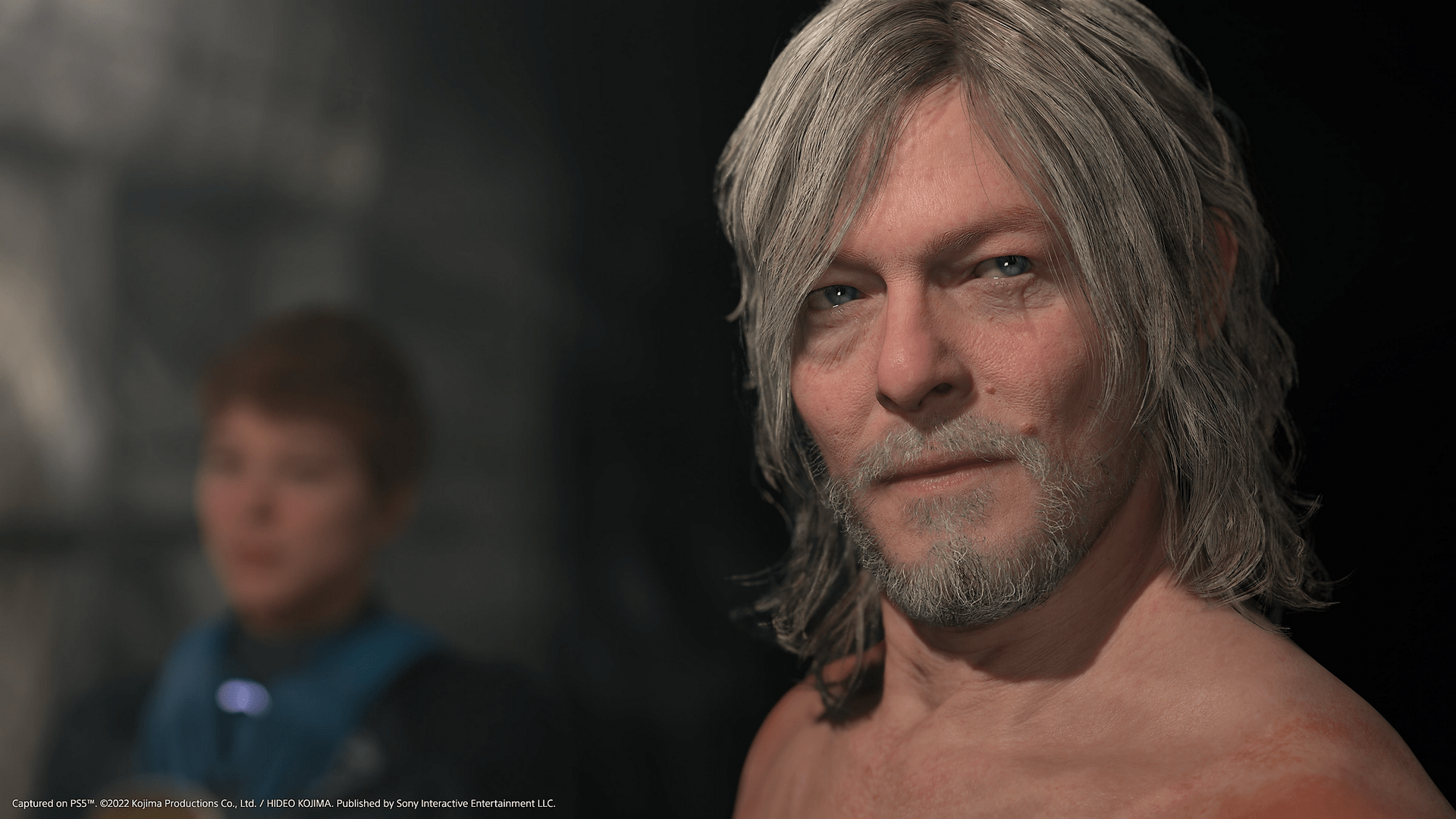
Of course, it wouldn’t be a Hideo Kojima game without a stacked cast, and Death Stranding 2 is no exception. There are some phenomenal performances sprinkled throughout. Lea Seydoux, unsurprisingly, is fantastic as the aforementioned Fragile, and Norman Reedus once again nails it as Sam.
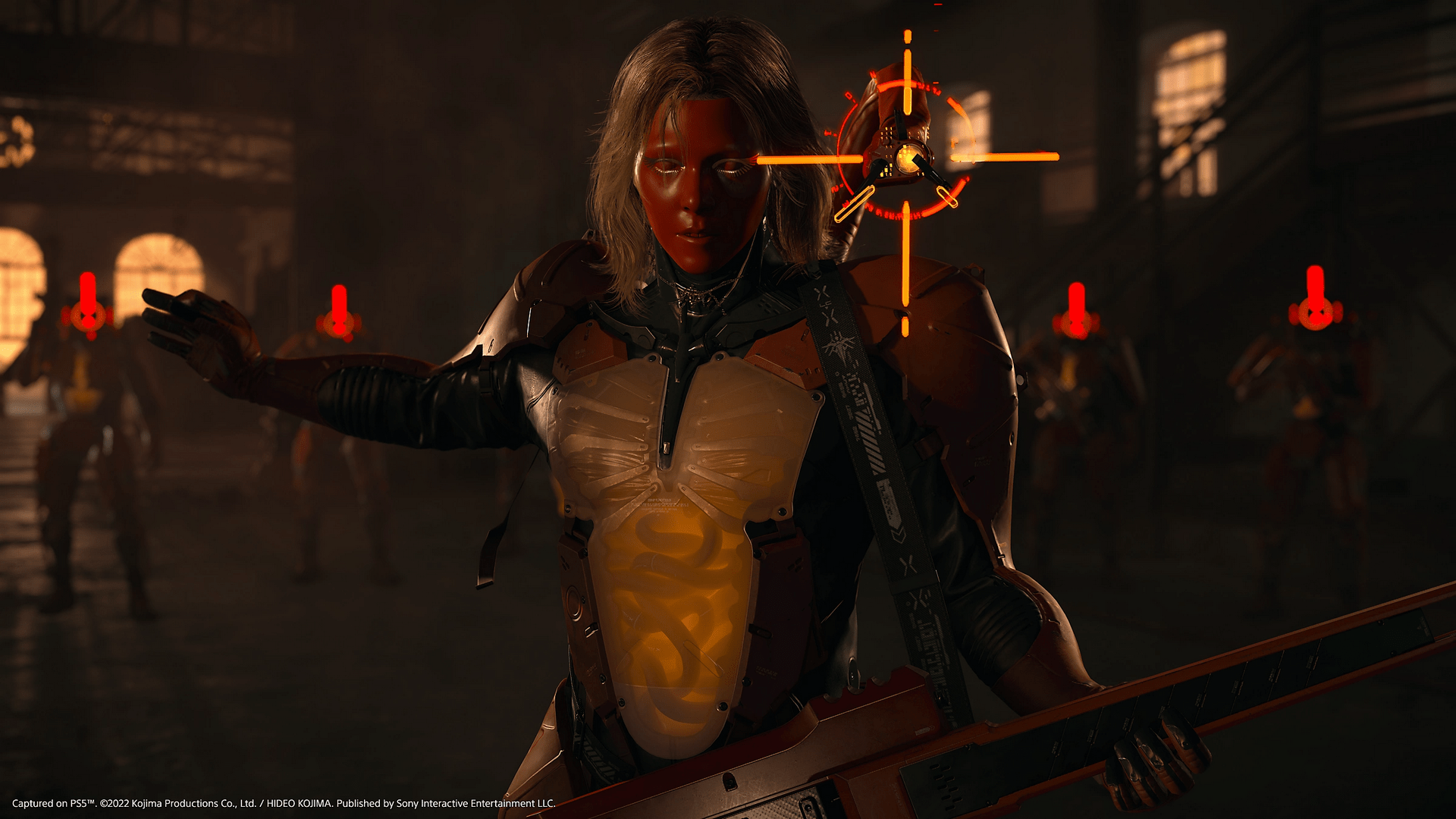
But my favourite performances came from a few new and returning faces. Shioli Kutsuna is a standout as Rainy, who, despite a tragic past, is resilient and powerful. Luca Marinelli brings a unique energy to Neil, and of course, Troy Baker delivers one of his best performances yet as Higgs. It’s a massive, emotionally charged blockbuster of a story from start to finish, and in my opinion, a stronger and more focused narrative than the first game.
One thing that’s just as strong as the first game is the soundtrack. Kojima’s taste in music remains top-tier, with tracks from CHVRCHES, Gen Hoshino, Magnolian, and Woodkid perfectly complementing key gameplay moments. It was especially moving to hear Low Roar return, as they were a major highlight for me in the first game. Even though frontman Ryan Karazija has sadly passed away, his music lives on.
Alongside the licensed music, Ludvig Forssell once again delivers a phenomenal score that captures the beauty, loneliness, and scale of this post-apocalyptic world. Add both together and you have a soundtrack that will last the test of time, even outside of the game.
Before I wrap up, I have to give a special mention to the Decima engine. Death Stranding 2 is easily one of the most photorealistic games I’ve ever played. Even on a base PS5, the visuals are stunning. I can only imagine how jaw-dropping it must look on a PS5 Pro, and now I’m seriously tempted to upgrade to see it in all its glory.
In conclusion, Death Stranding 2: On the Beach is everything I ever could’ve wanted from a sequel. It brings back the same satisfying gameplay loop, delivers an improved and emotionally charged narrative, and showcases the best recreation of Australia I’ve ever seen in a video game. I’m not exaggerating when I say this could very well be Hideo Kojima’s magnum opus.

The Good
- Breathtaking recreation of Australia
- Emotionally charged and more focused narrative
- Combat is more approachable now
- Absolutely stacked cast full of brilliant performances
- Near-photorealistic visuals
- Excellent soundtrack and score




 SuBZeRO2K
 Spotify
 Anchor
 iTunes