

Tripwire Interactive returns to its blood-soaked roots with Killing Floor 3, a sequel that inherits the gory legacy of its predecessors while struggling to redefine itself in the modern era of live service shooters.
Built in Unreal Engine 5 and set in a dystopian 2091, the game continues the franchise’s familiar loop: survive escalating waves of Zeds, mutated monstrosities unleashed by the sinister Horzine Corporation, as a member of Nightfall, a rebel resistance squad. On paper, it has all the ingredients of a successful follow-up. In execution, it’s a more complicated picture.
Killing Floor 3 is, first and foremost, a visual upgrade. Powered by UE5, it leans hard into grotesque detail. Zeds are rendered with precision, flesh tears, bones snap, and on the battlefield in a way only Tripwire could perfect. The new “M.E.A.T. 2.0” system delivers on its promise: dismemberment is not only gruesome but dynamic. Enemies continue crawling and writhing long after losing limbs, elevating the tension and emphasizing the game’s commitment to spectacle.
Map design also steps up. Environments are bleak but atmospheric, with flickering lights, environmental traps, destructible walls, and elements like ziplines and turrets giving each stage some tactical texture. Movement, too, has evolved. Dash and slide mechanics inject agility into combat, allowing players to dodge and escape the chaos with more finesse than ever before.
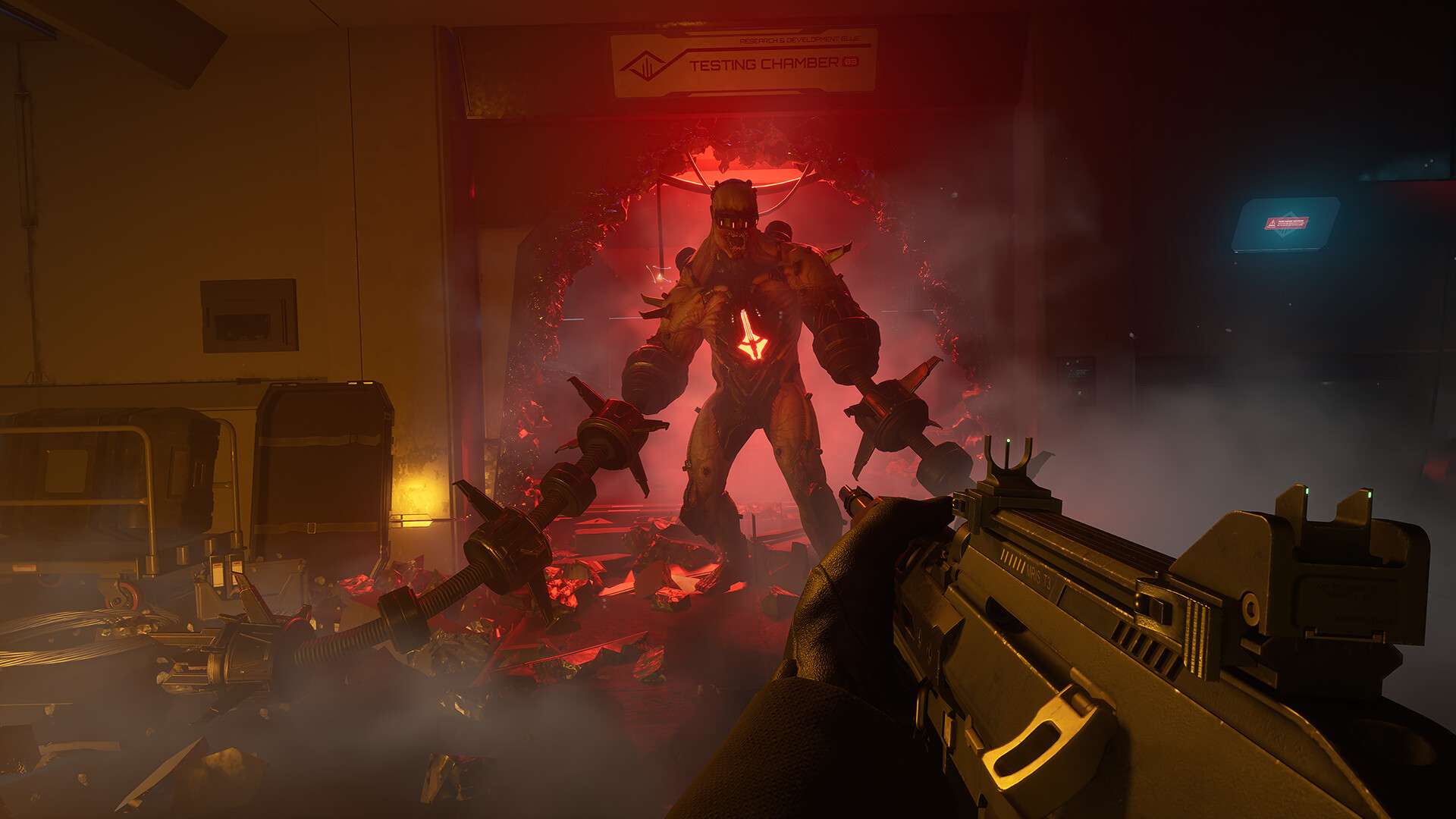
The redesigned Specialist class system brings new abilities and skill trees to the front. Some roles feel especially tuned for high-impact support, thanks to new healing options. Boss encounters have also improved, showing varied attack patterns and mobility not seen in previous entries.
Despite its strengths, Killing Floor 3 is ambitious but stumbles in areas where Killing Floor 2 still shines.
Let’s start with performance. On Xbox Series X, the game is inconsistent. Frame rate drops, stuttering, and enemy pop-in are frequent, especially during high-action moments. For a game centered around intensity and chaos, this level of technical instability is a serious drawback.
Combat, once the franchise’s masterpiece, feels out of place. Weapons lack the punch and kinetic feedback of KF2. Audio is often flat, animations are underwhelming, and the differences between guns within the same class feel minimal.
Progression is another area gone awry. Gone is the simple, satisfying perk levelling system of Killing Floor 2. In its place is a rigid 30-level Specialist structure, where proficiency points unlock new abilities every two levels. While this adds structure and choice, tying loadouts and skills to individual characters removes the flexibility that once defined the series’ class-based chaos. It feels less like empowerment and more like a grind.
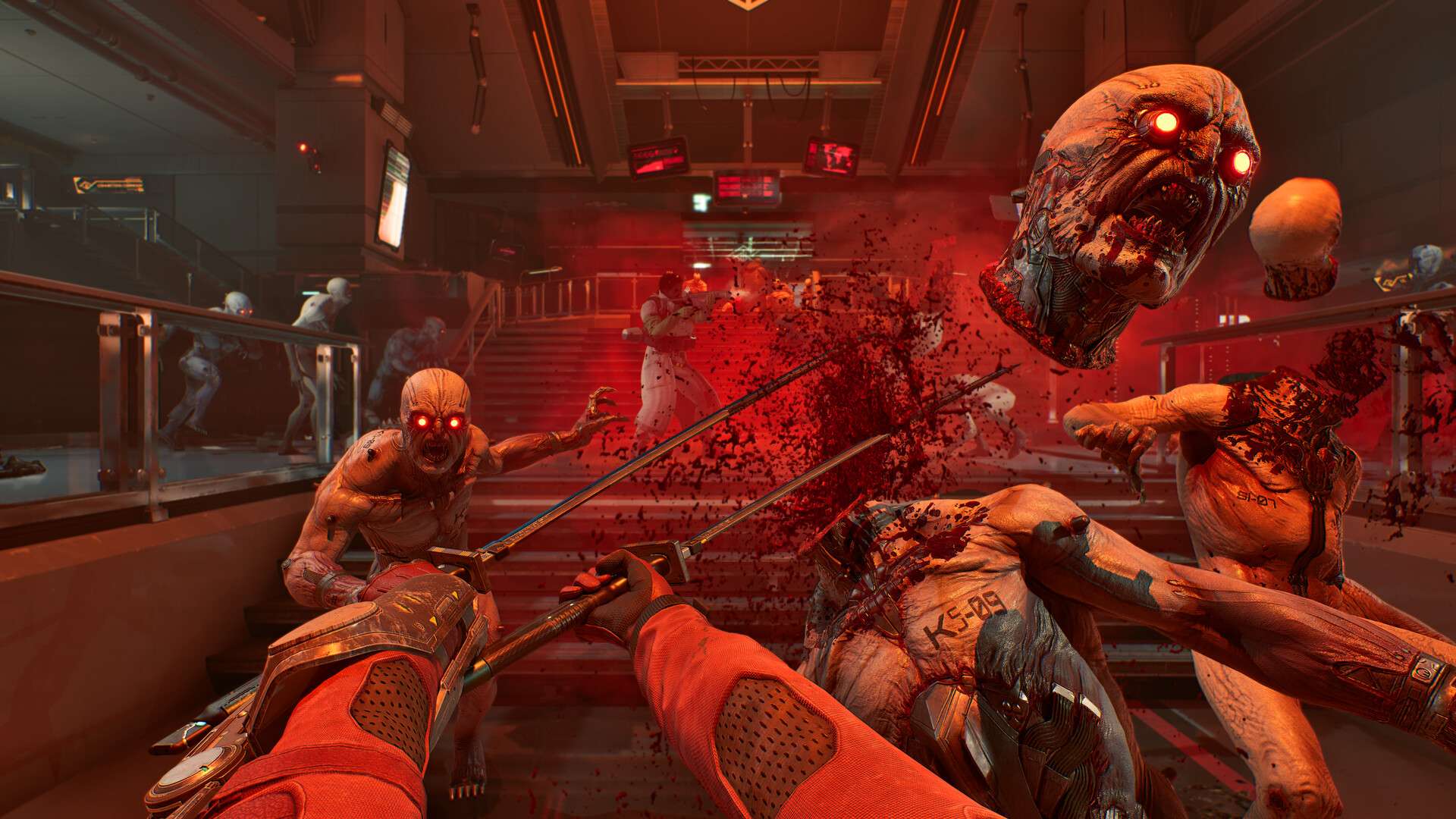
Live-service elements also creep in. Cosmetic monetisation, battle pass-style systems, and an overall emphasis on progression over personalisation veer the franchise closer to homogenised modern multiplayer fare. Add to that the removal of long-time mechanics like door welding, and Killing Floor 3 feels like it’s discarding depth in favour of flashier, but shallower alternatives.
With only eight maps and a single game mode (Survival), repetition sets in fast. The absence of traditional difficulty levels like “Suicidal” and “Hell on Earth” strips the game of the skill levelling that the other games had. Likewise, the lack of features like in-game text chat and platform progression syncing, while crossplay is supported, makes the online experience feel less cohesive. Even the in-game hub, named “Stronghold,” is visually striking but slow and clunky to navigate.
Perhaps most disappointing of all is the tone. Killing Floor 2’s grindhouse energy has been largely replaced by a more serious, sci-fi atmosphere. Memorable trader quips, gallows humour, and chaotic energy are all toned down. The game lacks personality compared to polish.
Killing Floor 3 is a sequel that’s marred by uneven execution and puzzling design choices. While the improved visuals, new traversal options, and class rework show promise, the game loses much of the chaotic charm, tight gunplay, and smart progression that made its predecessor a cult favourite.
It feels like a game caught between two identities, torn between evolving with modern shooter trends and preserving what made it special in the first place. For newcomers, it’s a passable entry point with some explosive, blood-drenched moments. For long-time fans, it’s a step backward, a shinier, shallower version of a once beloved formula.

The Good
- Visually impressive with detailed gore effects
- Boss encounters are more engaging
- Class ultimates introduce interesting tactical variety
The Bad
- Inconsistent performance on powerful hardware
- Gunplay lacks impact and satisfaction
- Rigid progression system replaces flexible perks
- Light on launch content and game modes




 SuBZeRO2K
 Spotify
 Anchor
 iTunes