In the past, I never really gave the indie scene the attention it truly deserved. It’s easy to get caught up in big-budget releases and familiar franchises, but spending more time with smaller titles has made one thing clear: some of the most creative and memorable experiences are happening outside the AAA space.
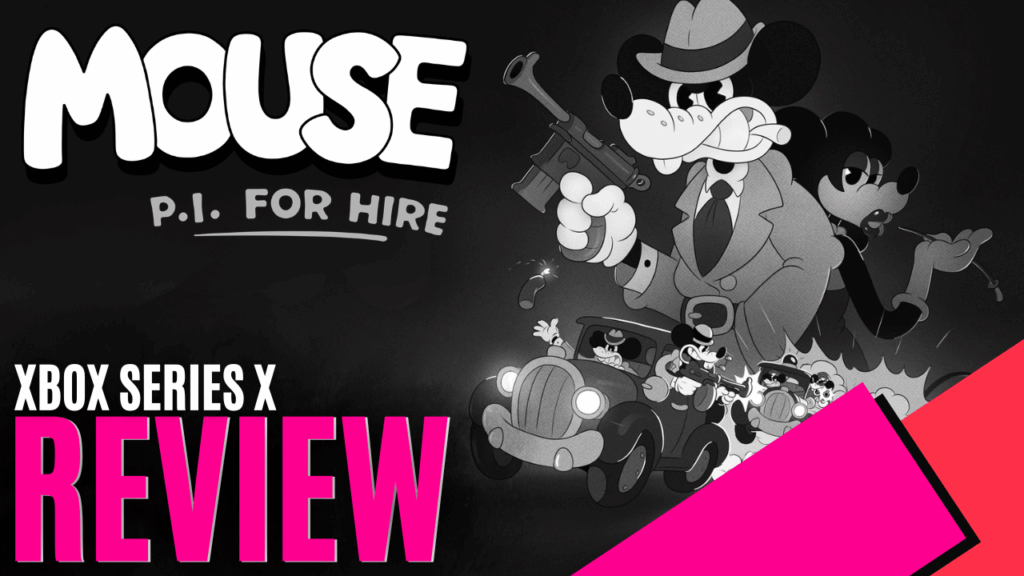
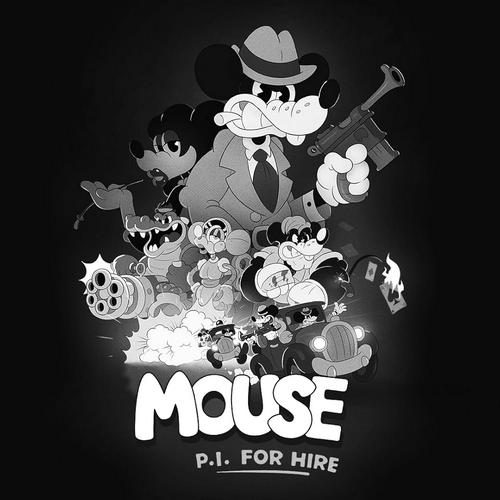
MOUSE: P.I. For Hire is a perfect example of that. You step into the shoes of Jack Pepper, a war veteran turned private investigator, navigating the gritty streets of Mouseburg. What begins as a simple missing persons case quickly spirals into something much darker, pulling you into a noir-inspired story filled with corruption, gangs, and crooked cops. It’s everything you might expect from a late 1920s detective film, and the game leans fully into that identity through its presentation and style.
Continuing with the 1920s theme, MOUSE: P.I. For Hire uses rubber hose animation, a style inspired by early cartoons like Steamboat Willie, which feels especially fitting given the era and its iconic characters. Every character, enemy, and environment is brought to life with hand-drawn detail, giving the game a constant sense of movement, while exaggerated expressions provide plenty of personality. Combined with the black and white presentation, subtle film grain, and vintage effects, it creates the feeling that you’re playing through a living cartoon rather than a traditional shooter.
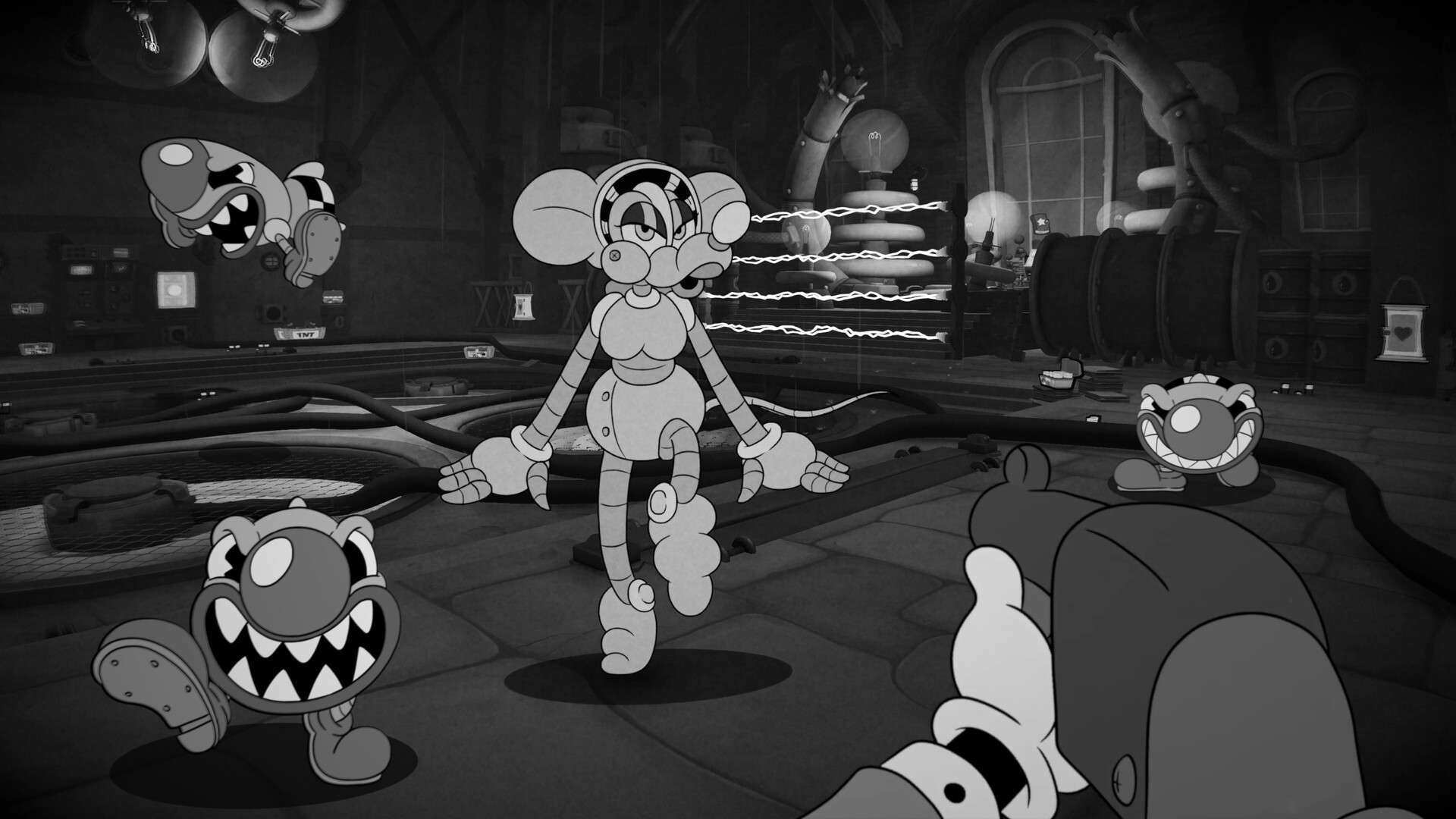
That visual style feeds directly into how the game feels to play moment to moment. At its core, MOUSE: P.I. For Hire is a fast-paced first-person shooter, leaning into that classic “boomer shooter” design where movement is key and standing still is rarely an option. Gunfights are chaotic in the best way, with enemies coming at you from all angles while you weave through environments using wall-running, grappling, and double jumps to stay one step ahead.
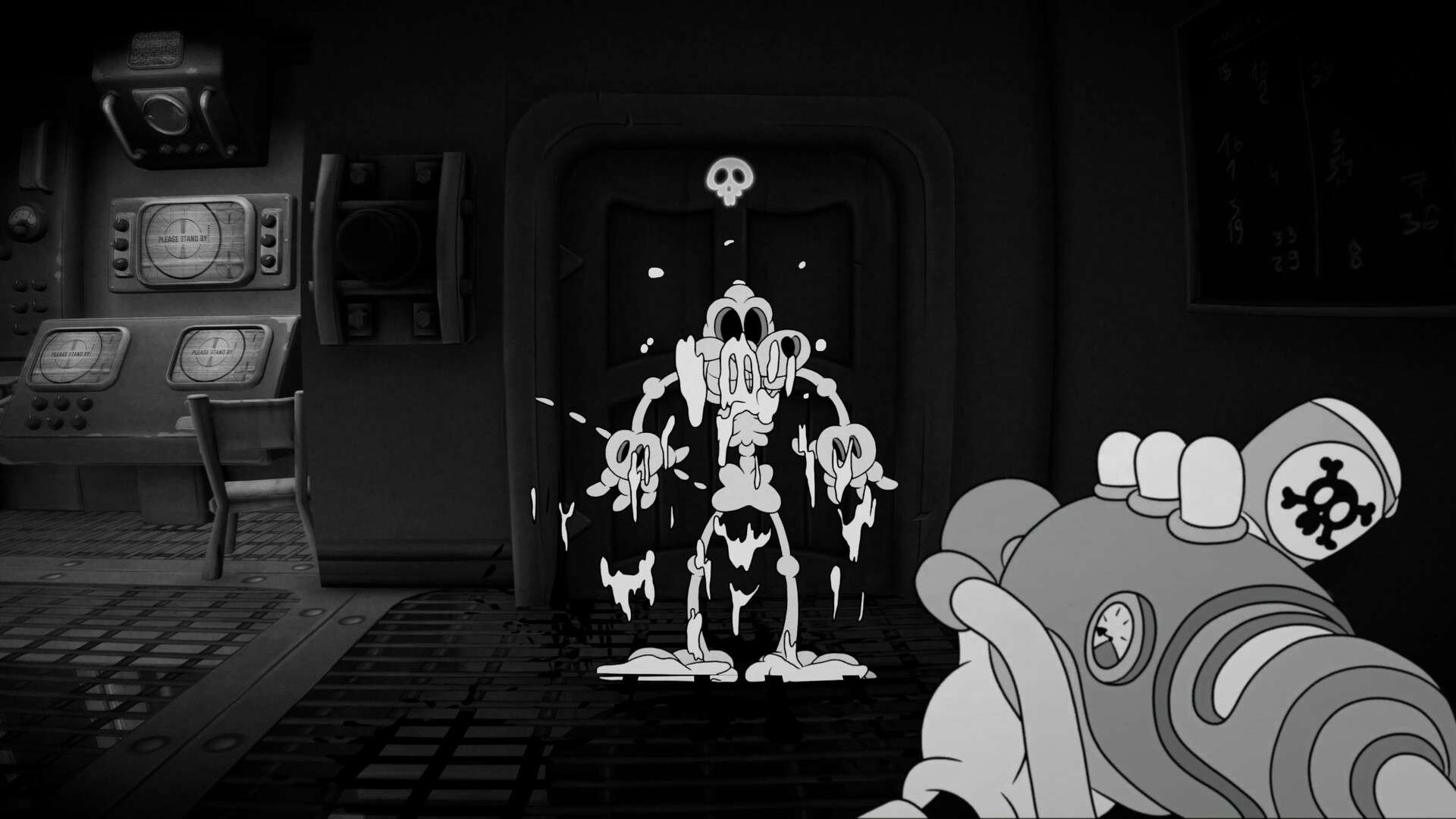
Weapons follow the same cartoon logic as the visuals, which makes them both fun and unpredictable. From rapid-fire machine guns to more experimental tools, everything feels like it belongs in this exaggerated world. There’s a satisfying weight to each shot, balanced with just enough absurdity to keep things from ever feeling too serious.
Power-ups build on that animated identity in a way that feels both nostalgic and effective. One standout example sees Jack cracking open a can of spinach and downing it in one go, instantly bulking up with oversized muscles straight out of a classic cartoon. It’s a clear nod to that old-school animation era, but it also works mechanically, giving you a temporary surge in strength that lets you tear through enemies before the effect wears off.
Mouseburg isn’t just a backdrop; it feels like a character of its own. One moment you’re navigating dimly lit alleyways, the next you’re moving through film studios, opera houses, or more unexpected locations that keep the pacing fresh. There’s a nice balance between pushing forward through the main story and taking the time to explore, with collectibles and side elements rewarding players who want to dig a little deeper.
Tying everything together is the game’s sound design. The jazz-driven soundtrack does a lot of heavy lifting when it comes to atmosphere, with music shifting seamlessly between relaxed investigation moments and high-energy combat, reinforcing both sides of the experience without ever feeling out of place. On the other hand, the sound effects lean heavily into the old cartoon styling, pulling inspiration from classic slapstick animation with exaggerated boings, pops and whistles.
MOUSE: P.I. For Hire is a reminder that creativity often thrives when developers take risks. The visuals, gameplay, soundtrack, and story all work toward the same goal, blending old-school inspiration with modern ideas in a way that feels fresh rather than recycled. It’s an experience that sticks with you well after you’ve put the controller down.

The Good
- Strong visual identity inspired by 1920s cartoons
- Creative weapons and power-ups that enhance the cartoon theme
- Soundtrack perfectly complements the noir atmosphere
- Varied environments that keep the experience engaging
The Bad
- Combat can feel overwhelming
- The detective story sometimes takes a backseat to boomer shooter gameplay




 SuBZeRO2K
 Spotify
 Anchor
 iTunes