
Movierooms: Cinema Management is the latest offering from developer “Mad Pumpkins”. The developer wants you to “Become the manager of your own Cinema in this thrilling new Tycoon”! I was sent a playtest copy, so sit back and let’s see what this latest offering of the tycoon game has to offer.
Loading in, you have two options: you can play the Sandbox mode or the story mode. In the story mode, you either start in France in the 1900’s or Italy in the 1930’s. Once you complete your mission in one of the two starter cinemas, this unlocks more time periods, including the 1950’s, 1970’s, 1990’s, 2006, 2020, and 2051 in various countries, so there is a good progression system to keep you occupied. During these times, music theatres are extremely basic; hence, you select a space for your cinema room, add a door, an old-school projector, and a few seats, and away you go.
There is no snapping system for the room, but a handy snapping system for the internals to ensure you can line everything up. Currently, you essentially have one pot plant, two lights, and one poster you can add as decorations, not a lot of variety, but it is in theme with the time period. Interestingly, you have to rent movies to play in your theatre. This, I believe, is where the developers have tried to differentiate from most titles: the movies are real and were released in the decade you are playing in.
Once you have selected a movie, you then have to schedule it over the day. Do you keep playing the same movie all day, or do you rent another title to break it up? Do you go cheap and buy the westerns or spend money on romance movies? The choice is yours, but remember the better the movie rating, the more you will pay to hire it. You then have to employ a staff member to operate the projector, as there was no automation back then.
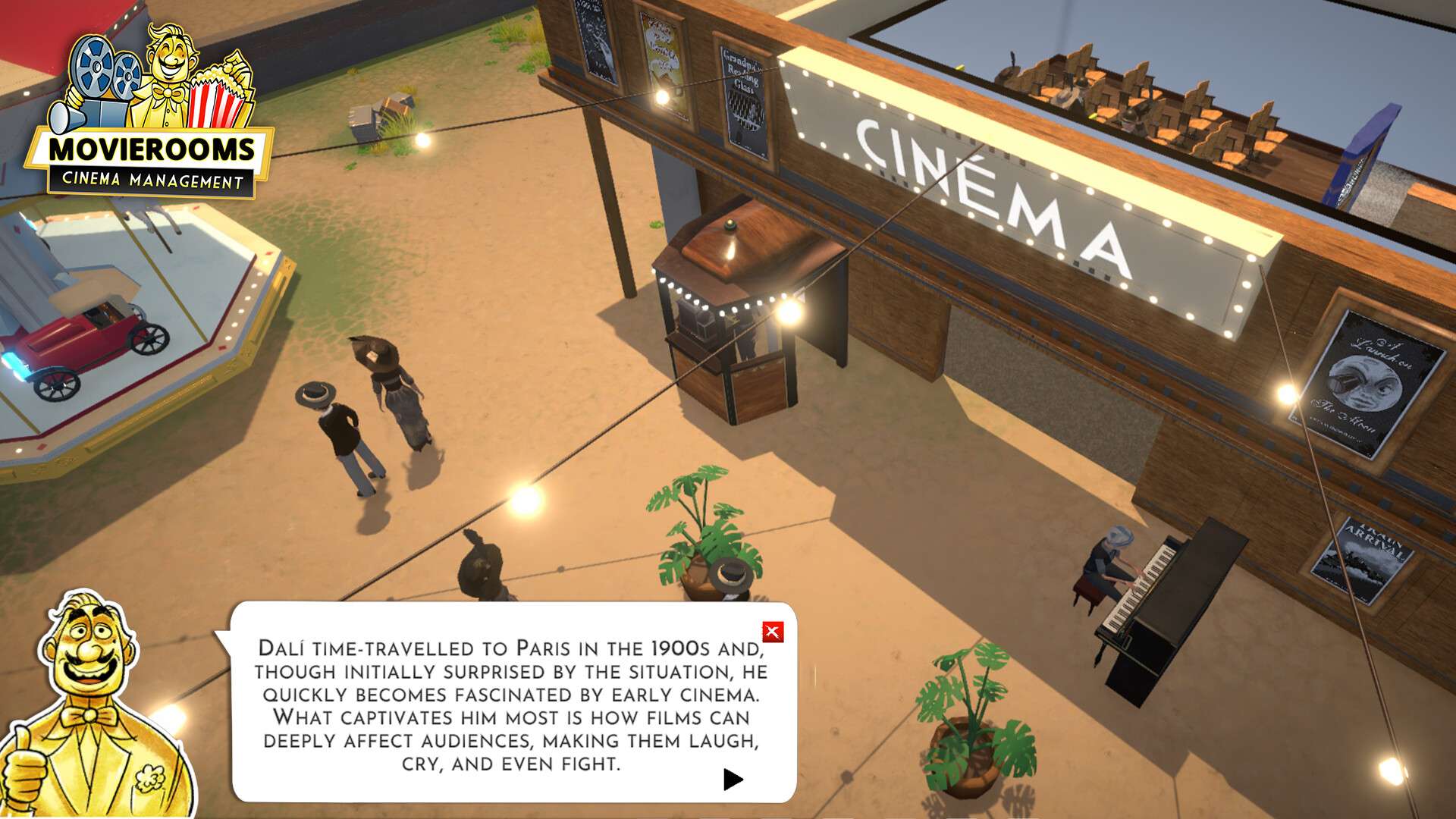
Next step, building a toilet block, once again with the basics, and then a staff break room, as keeping the staff happy is part of the game. You can change the rooms’ tiles, carpet, or wall colour, so there are some options in this department. Then it’s time to open the doors and try to get some of that money back!
Having built my small theatre in Italy, I had spent $19 000 and was selling tickets for $25, so I believe there is still some work to do there with pricing. I had a thought, what if I increase the prices of the movies and snacks to gain more money? The management page is still a work in progress. You are advised that when you select the tab, you cannot change anything.
You do have some missions to complete and daily quests, which keep it interesting. Various film stars will travel back through time for the release of their movie and issue you a challenge; it’s a nice little feature. One of my daily tasks was to catch three rats, so there is some humour there as well. There is a working marketing department to increase your customer patronage. You can choose to advertise via flyers, radio, newspapers, or magazines.
You also have to make sure you have enough staff for cleaning, serving customers, fixing projectors, and other equipment. If you don’t provide a break room, they will quickly become disengaged and won’t work as hard. You can promote them as their skills improve to help keep their morale up.
There is a neat archive section where you can read up on all the equipment in your movie theatre; it’s a little history lesson that helps you educate yourself. Finally, you have a statistics section where you can review your balance sheet, monitor staff morale, and receive feedback from your customers.
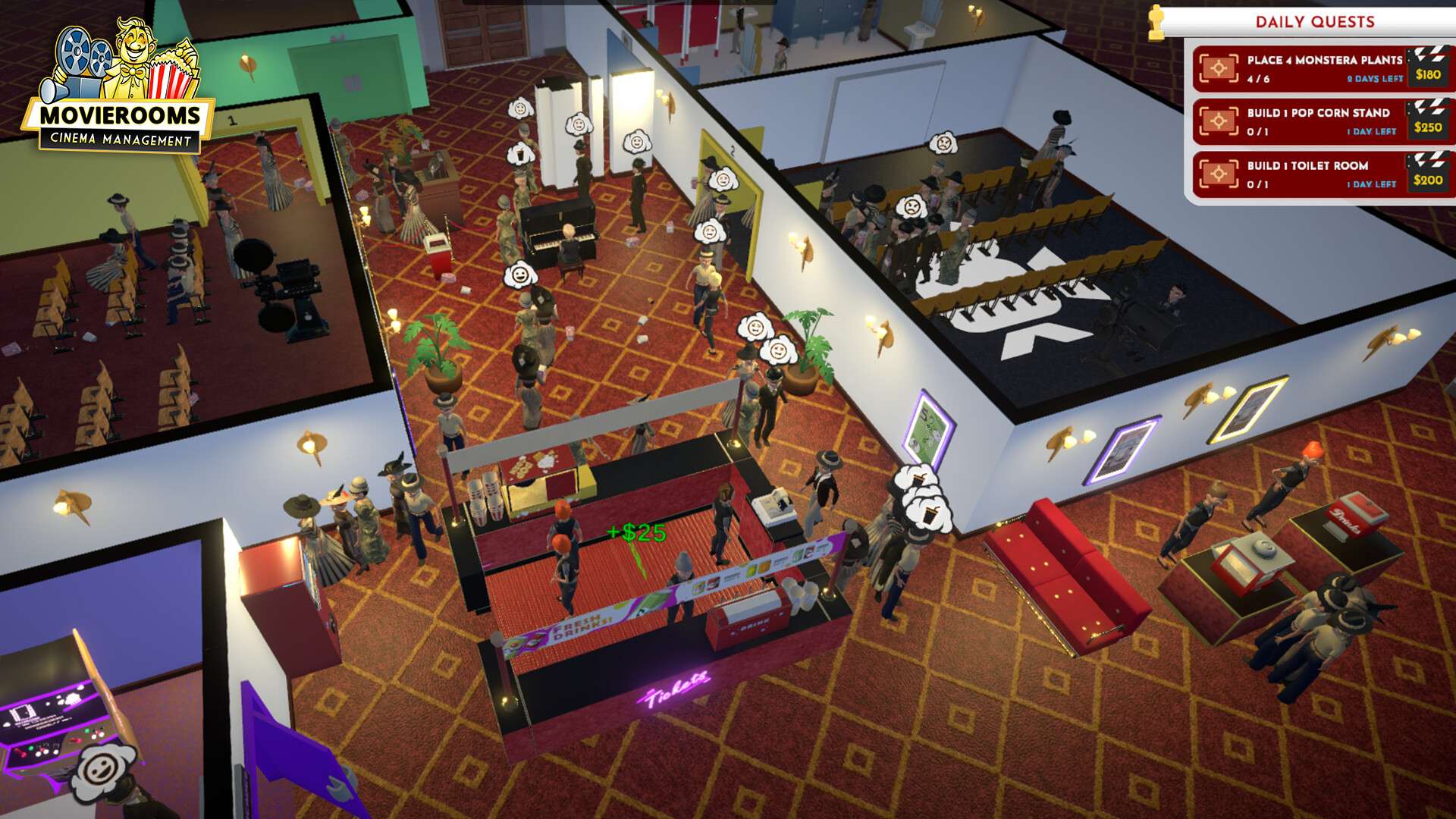
Graphically, the game is very appealing. Think genres like “Theme Hospital”, and you will have hit the nail on the head. The characters wear period-correct clothing and wander around the cinema. When the movies are playing, the staff are operating the projectors, and you see part of the movie on the screen. The main building you set your theatre up in is surrounded by a basic city; it doesn’t have much appeal and feels more like an afterthought than a living city.
In the early days, your customers arrive on a tram, which is great to see; the doors open, and they all pour out. In later years in Sandbox mode, there is a carpark but no cars; customers just appear.
The music, while it sounds period-correct, I really disliked it to the point that I actually turned it off within a few minutes of playing. It was too upbeat and in-your-face to fit a relaxing management game. The notifications are also too tedious. You get notified about everything, including when plants aren’t watered, which is grinding. Personally, an on-screen notification would suffice without the ping. There are no sounds from the customers either at the moment.
Overall, Movierooms: Cinema Management has great potential. I can see where the developers are going; they might not be quiet there just yet, but the framework is. If you are a movie buff and enjoy management games, this one is for you. Unfortunately, I have to score the game on how it is currently, not what it could be, but I will definitely be keeping my eye on this one in the future.

The Good
- Beautiful Graphics
- Historical events and movies are real
- Mission system so you don't just focus on cinema management
The Bad
- Limited options for decorating your theatre
- Lack of a management system to increase prices
- Constant notifications
- Music and lack of character sound effects






 SuBZeRO2K
 Spotify
 Anchor
 iTunes