
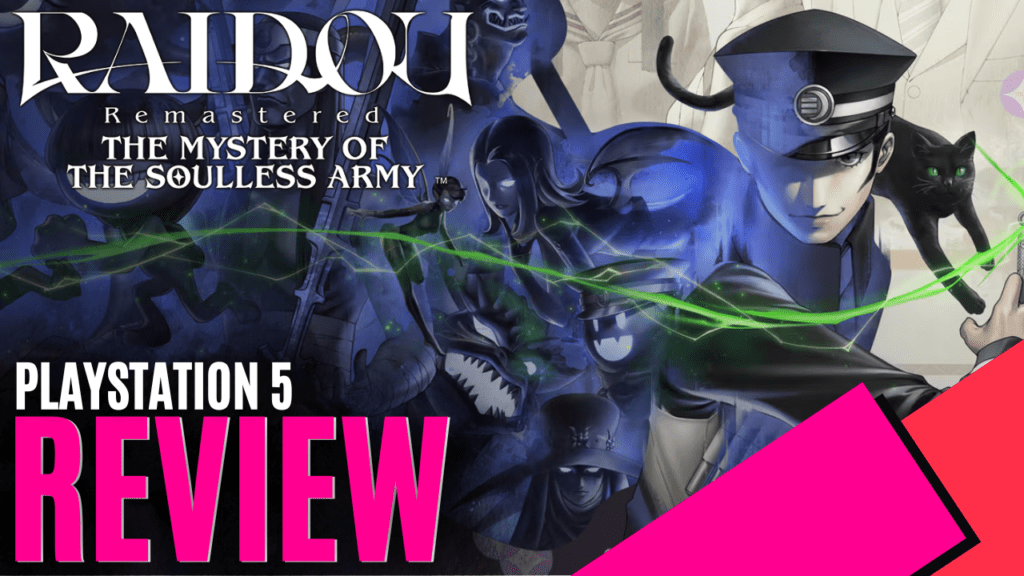
Shin Megami Tensei: Devil Summoner – Raidou Kuzunoha vs. The Soulless Army was initially released in 2006 on PlayStation 2. Raidou, the demon-summoning badass, is stepping out from the shadows again in RAIDOU Remastered: The Mystery of the Soulless Army.
For anyone familiar with ATLUS and their Shin Megami Tensei series, RAIDOU Remastered: The Mystery of the Soulless Army on PlayStation 5 will be a throwback for new fans and a look back at one of the origin games that led to ATLUS’ later successes down the line including Metaphor: ReFantazio and the Persona series. The Shin Megami Tensei RAIDOU Remastered game was a new experience for me. While the remaster certainly has had some notable performance upgrades, the game feels like it’s caught somewhere closer to the past than the present and future of gaming.
RAIDOU Remastered plays more like a JRPG that takes an action-based combat style rather than the usual turn-based style I had expected from an ATLUS title (except games like Persona 5 Strikers).
In this iteration, Raidou Kuzunoha is known as a Devil Summoner, a detective solving mysteries while fighting demons in the dark realms. Fighting demons with demons is a crucial part of Raidou’s profession. His other job as a detective fuses seamlessly with his alter-ego, gathering clues and investigating a series of strange and supernatural happenings in a fictionalised version of Taisho-era Tokyo in early-20th-century Japan. There’s clearly more than run-of-the-mill crimes occurring; something much more sinister is at play.
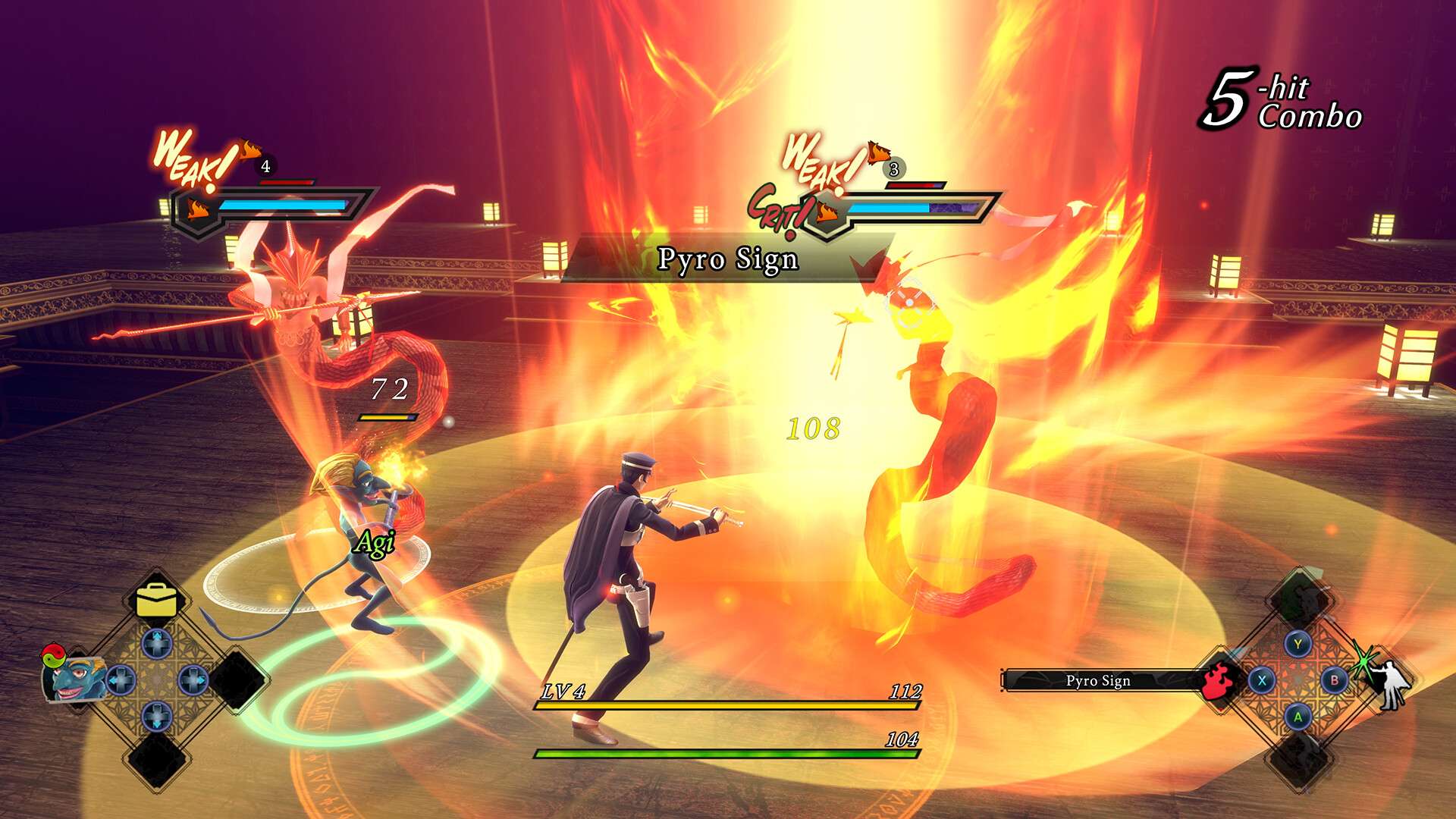
Using the Art of Confinement, Raidou can capture and convince demons to join his side, building connections to them inside and outside battle and levelling them with new abilities. Raidou’s stats increase alongside them as he levels up, and players can spec into wherever they would like to boost Raidou’s strength, defence, or luck.
Raidou has a hefty arsenal of skills in combat alongside his demonic support. With some sword abilities, gunplay, elemental attacks, and combos, there are many ways to tackle combat. With a hefty amount of mechanics to take in, I often forgot how much I had to utilise. Combat felt somewhat unsatisfying, with no real satisfaction when slashing at an enemy; using the gun felt clunky, and I tended to avoid it instead of using demons and whatever elemental and sword attacks I had. Combat encounters mostly feel repetitive, especially during the long-winded level-up screens for each summon and Raidou post-battle.
The detective gameplay in the real world focuses on talking to locals and gathering clues. The nice touch I found was the integration of using demon summons to “investigate” and eavesdrop in areas Raidou can’t get access to. Demons are great for scouting and paving the way forward in the dark realms. I found the dialogue quite long-winded; some episodes felt slower-paced than others, but small moments of humour helped brighten the mood for a few moments.
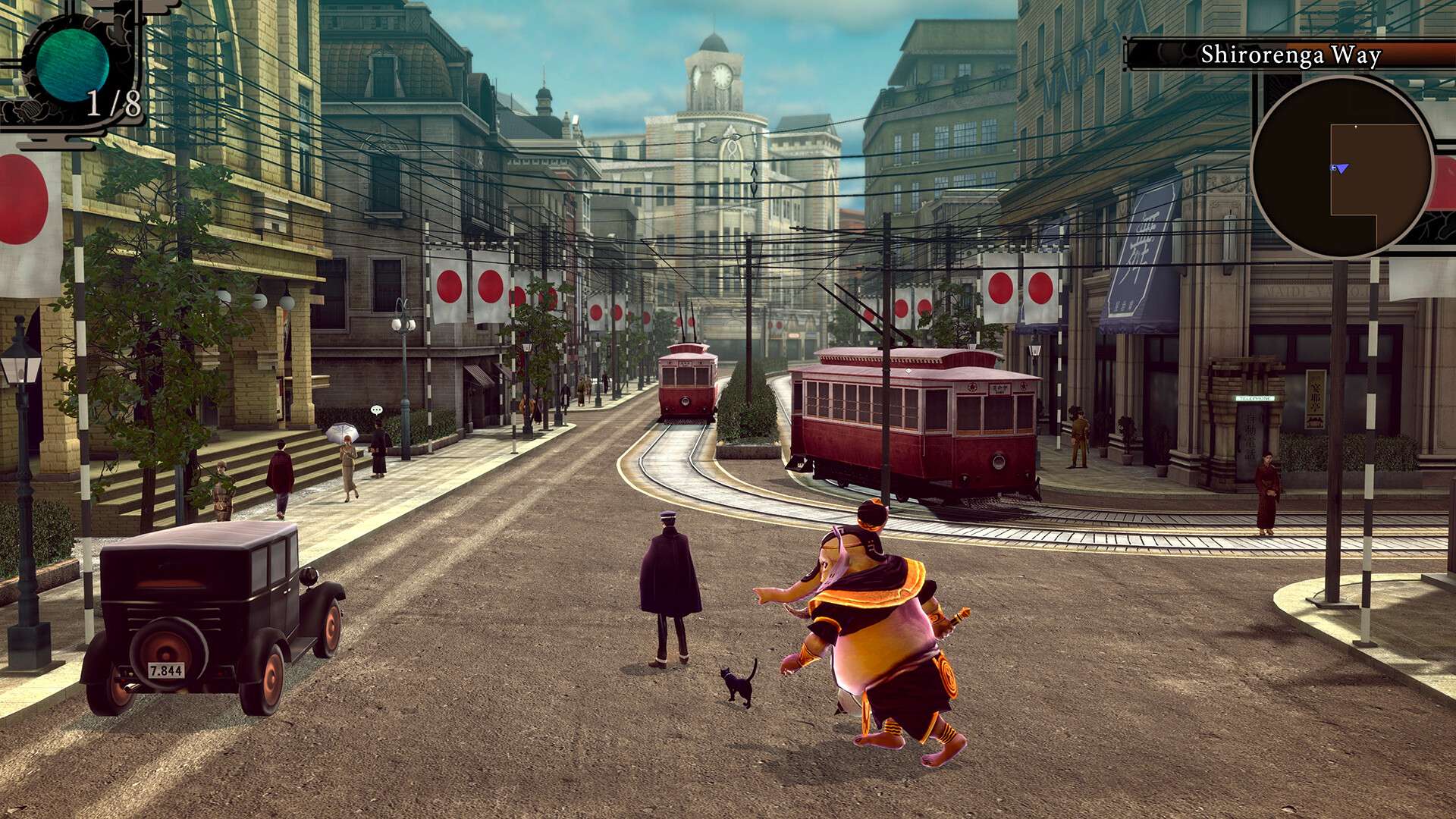
The game runs great on PlayStation 5, with no noticeable performance drops (at a stable 60fps) and minimal time in loading screens. While it’s certainly a step up from the original PlayStation 2 version visually, with upscaled character models, better environment textures, and updated UI to reflect the Persona series design, it still felt dated. Likewise, the audio hasn’t been re-recorded and sometimes sounded muffled and tinny, especially when swiping a sword and during some dialogue in cutscenes. The music holds up, with that incredible jazzy vibe I came to love from ATLUS’ previous games, but with an ominous ambience that works well.
ATLUS has been on a roll over the past few years from 2016’s Persona 5. Persona 3 Reload heightened my expectations for RAIDOU Remastered: The Mystery of the Soulless Army, which, unfortunately, a remaster, didn’t hit the same highs as a from-the-ground-up remake of a classic title. It’s by no means a bad game. I struggled to connect with Raidou’s world mainly because my expectations for modern gameplay, visuals and audio have been set so high. It’s a shame not to see a fully remade version of the game for modern times.
RAIDOU Remastered: The Mystery of the Soulless Army may be more appreciated by fans of the original PlayStation 2 title, but for me, there wasn’t enough thrill in the detective work or in fighting to stand up to the modern-era of ATLUS games. RAIDOU Remastered: The Mystery of the Soulless Army may have served better if it was a from-the-ground-up remake. However, it’s fascinating to see a piece of history leading to the incredibly polished modern ATLUS games I absolutely adore.

The Good
- Interesting blend of detective and supernatural element
- Variety of abilities and gameplay
- Atmospheric, funky soundtrack
The Bad
- Slow-paced story and excessive dialogue
- Clunky, repetitive combat
- Minimal visual and audio overhauls




 SuBZeRO2K
 Spotify
 Anchor
 iTunes