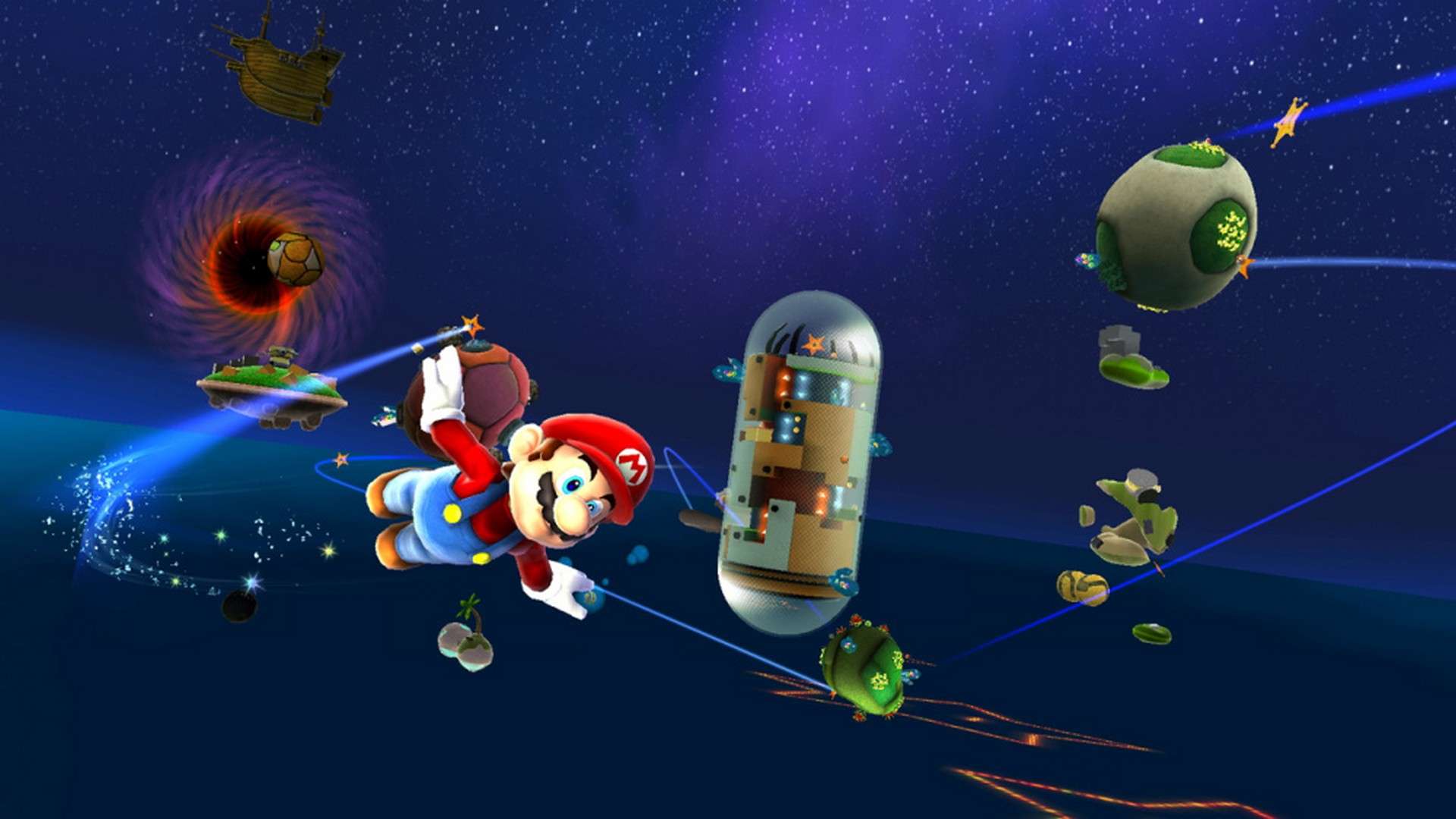
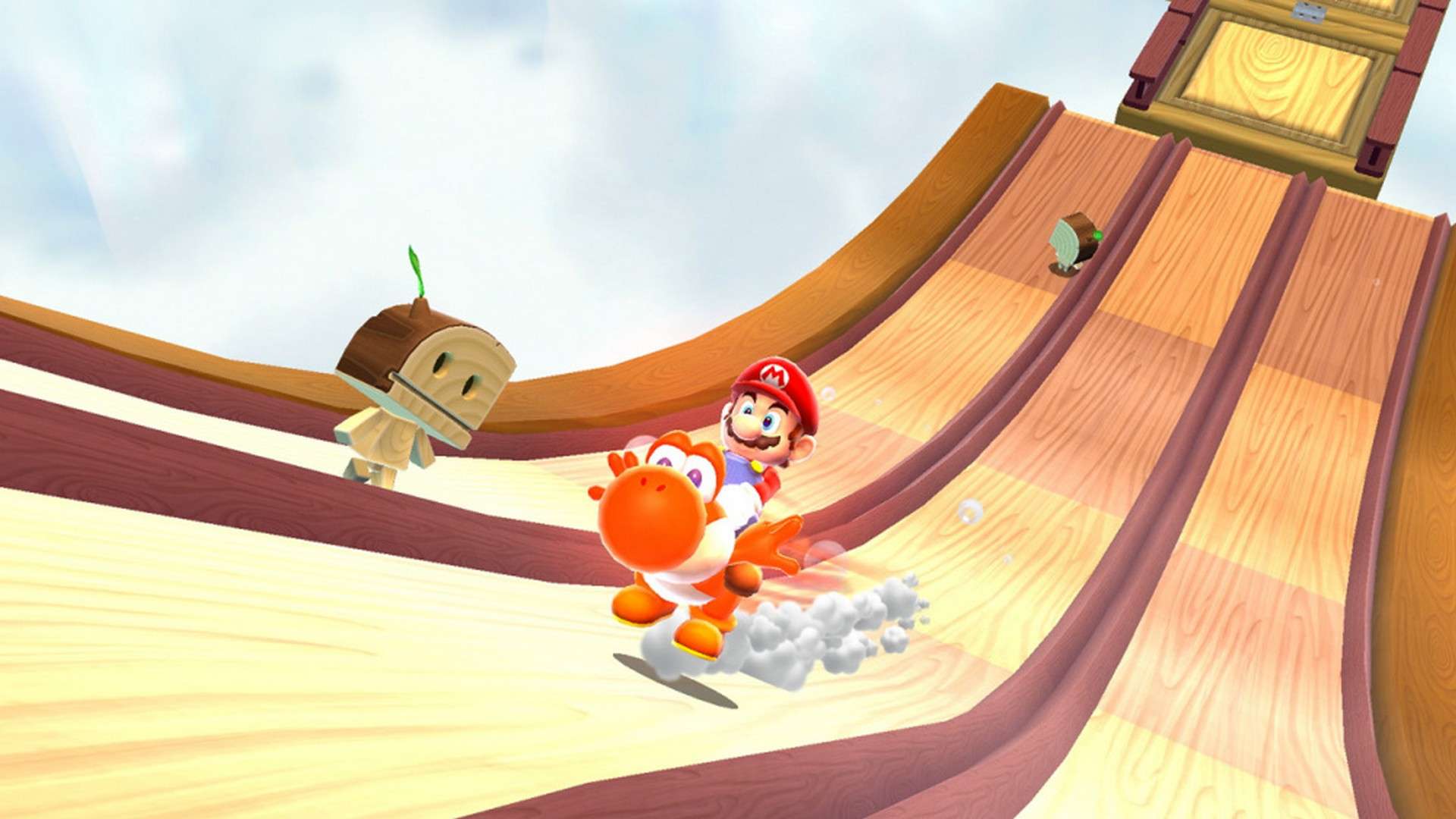
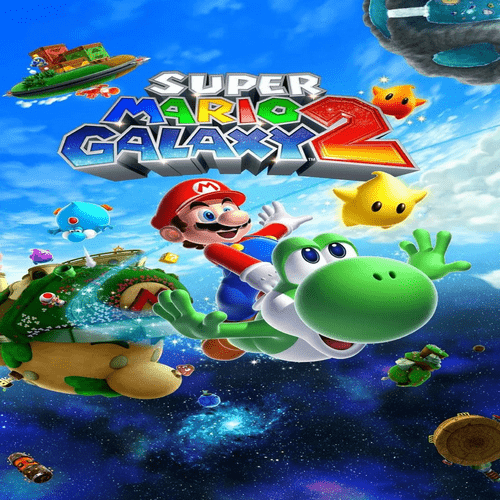
In 2007, Super Mario Galaxy was released on the Nintendo Wii and sent the famous Italian Plumber from Brooklyn into outer space for a whole new out of this world gameplay experience. It also introduced new characters such as Rosalina and the Lumas, who quickly became icons of Nintendo. Three years later, the sequel, Super Mario Galaxy 2, was released on the Nintendo Wii U, carried over the same game mechanics and even brought back Yoshi for Mario to ride, protrude his long tongue, and devour food and enemies.
Both Super Mario Galaxy games are some of the finest 3D platforming games of all time and are orbiting their way onto Nintendo Switch as Super Mario Galaxy + Super Mario Galaxy 2 to celebrate the Super Mario Bros. 40th Anniversary!
In Super Mario Galaxy, Bowser kidnaps Princess Peach and takes her to the centre of the universe, where he is creating his own galaxy to control the whole universe. It is up to Mario and his new friends to travel galaxy after galaxy until they find her. The sequel, Super Mario Galaxy 2, is a retelling of the previous game with a similar story, but with a more streamlined gameplay-focused approach and a storybook beginning rather than a full narrative. The overall focus of the second game is more on new creative levels and challenges.
The original Super Mario Galaxy was already released on the Switch as part of Super Mario 3D All-Stars, along with Super Mario 64 and Super Mario Sunshine, so it seems odd that Nintendo would re-release it a second time. Thankfully, both games can be purchased together as a bundle with a little discount or separately for those who want to save their money and focus on a single game.
This is an excellent opportunity for Mario fans who haven’t had the chance to play either game, and long-time fans can relive both classic games on modern hardware. Not having to hunt down a Wii or Wii U console is a big plus, too, and both games are also compatible on the Switch 2.
The gameplay style of both games reflects how they were on their original hardware. The Wii used the Wii Remote and Nunchuk, utilising its motion controls, and the Wii U used the Gamepad, utilising its touchscreen for gameplay. Players will have a few different control options on the Switch.
In docked mode, players can use the Joy-Cons or a Pro Controller to control Mario and perform all the actions he had on the Wii and Wii U versions, but use the gyro controls to aim and collect or shoot the stars. In handheld mode, players can not only use the same control schemes, but also the touchscreen to collect or shoot the stars instead of using the gyro controls.
In the first Super Mario Galaxy game, players can now perform Mario’s spinning attack at the press of a button instead of shaking the controller, but that option is also available too if players want a similar experience to how both games played on their original hardware. The Super Mario Galaxy game that’s part of Super Mario 3D All-Stars doesn’t have the option to perform the spinning attack with the press of a button, so the latest version that comes bundled with the second game is the superior version of the two.
One drawback with the control scheme is the camera controls in both games. Because the Wii Remote and Nunchuk didn’t have a second joystick, the first Super Mario Galaxy game was limited in how you controlled the camera. The second game on the Wii U did fix this issue a little bit by allowing players to move the camera more horizontally, but it was still limited. Unfortunately, the Switch versions of both games don’t fix this issue either.
Not being able to tilt the camera up or down to help with depth perception can be annoying, and it can be confusing when Mario is upside down while running underneath a planet and players are unsure which direction to press. Thankfully, as annoying as this is, it doesn’t ruin the overall gameplay, especially when it matters most, like during boss battles, and fans will be having too much fun to care about it.
On top of being some of the most fun 3D platform games of all time, they were also some of the best looking too on their original hardware. Both games are known for their bright and colourful galactic art styles and smooth animation. The first game on the Wii looked great at the time, but looking back on it now, it was clearly a product of its time – by today’s standards, they’re extremely pixelated.
The version included on Super Mario 3D All-Stars did smooth out the graphics, making it look a lot better, and now the latest version on the Switch has gone even further, smoothing out the graphics even more. Both games now look better than they ever did, both in-game and during cutscenes, and can all be enjoyed in 4K.
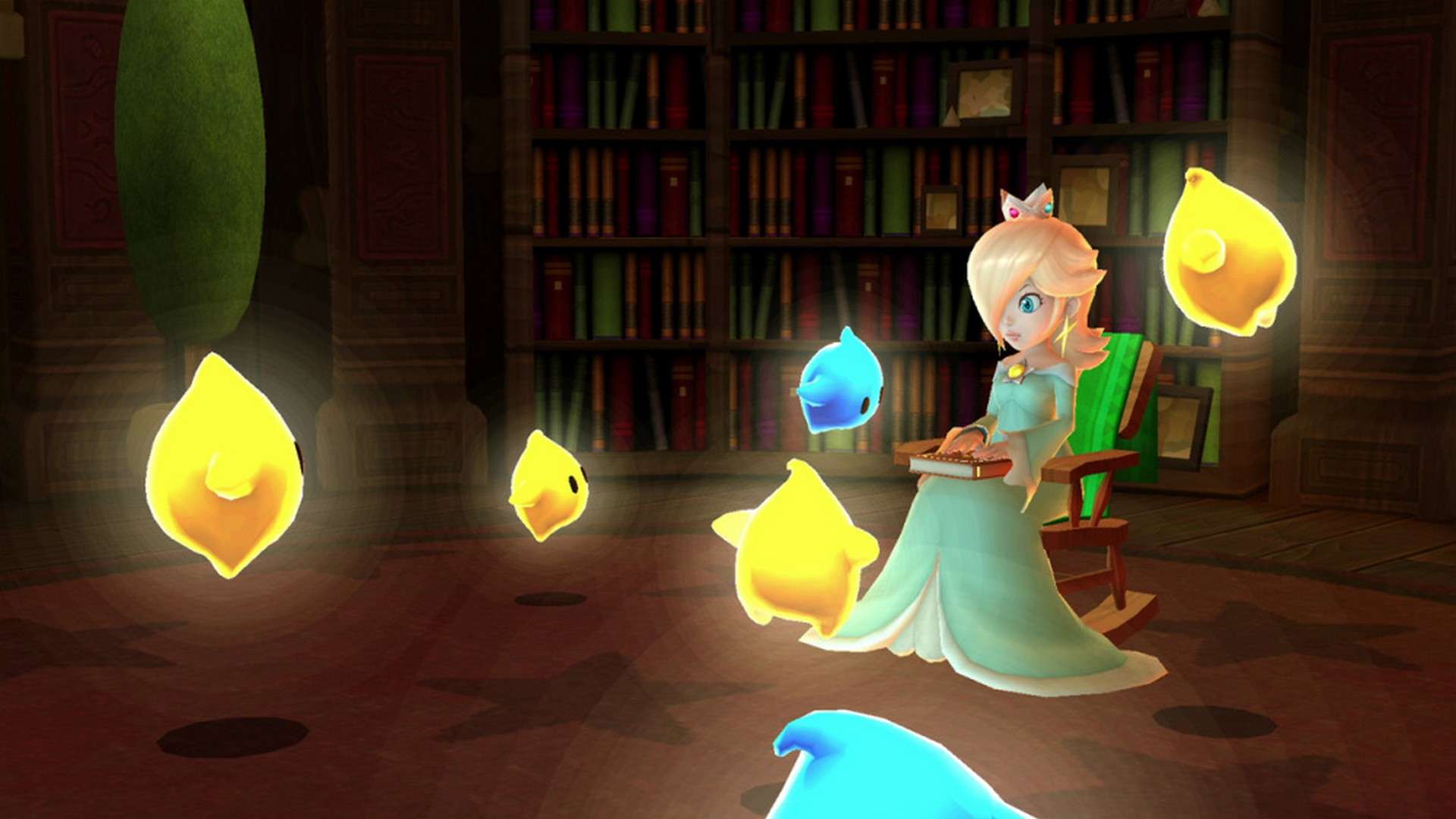
The Switch versions of both games retain all the same music as the originals, composed by Mahito Yokota and Koji Kondo, plus Ryo Nagamatsu joining for the second game. The soundtrack features orchestral music, including the main theme song for the Galaxy game, plus many new upbeat tracks and remixes of classic tunes from past Mario games.
With the Switch versions using the original audio from both games, that also means we get to hear Charles Martinet as the voice of Mario one more time, after he had to step down from the role that defined his career.
Super Mario 3D All-Stars had a limited release, but Super Mario 64 is already available to play as part of the Nintendo Switch Online subscription, and Super Mario Sunshine is due to be added sometime soon. Now, every major Super Mario game is available to play on modern Nintendo consoles, allowing fans new and old to go back to play these classics for the first time or relive some of their favourite games in the Mario franchise.
Both Super Mario Galaxy games look and play better than ever before. The Italian Plumber from Brooklyn is celebrating his 40th Anniversary and is ready to defy gravity on Nintendo Switch in Super Mario Galaxy + Super Mario Galaxy 2.

The Good
- 2 all-time classic Mario games updated for modern Nintendo consoles
- Improved gameplay mechanics from their original versions
- Graphics and cutscenes updated for 4K
- Uses original music, audio, and voices
- Can be purchased as a bundle or separately
The Bad
- Doesn’t fix the camera issues from the original games



 SuBZeRO2K
 Spotify
 Anchor
 iTunes